
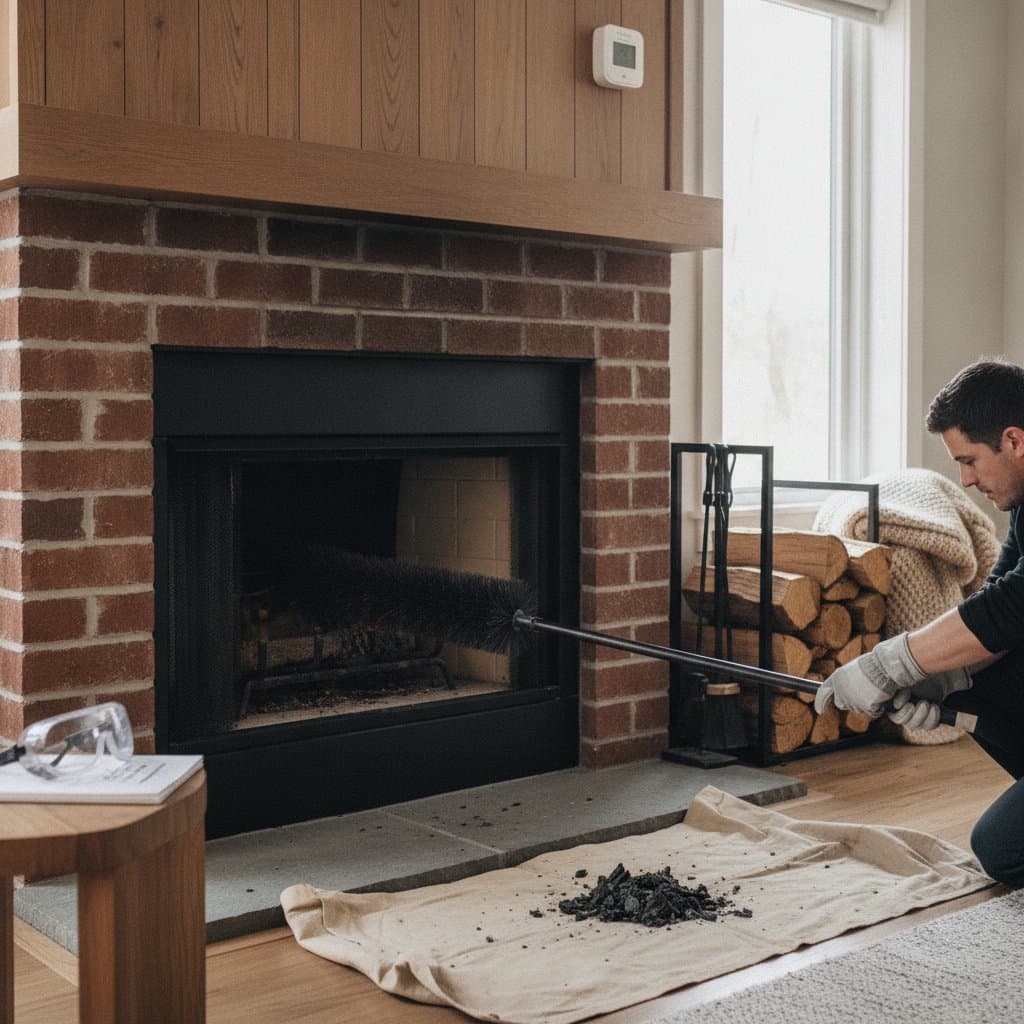
Essential Chimney Preparation for Safe Winter Fires
A warm fire brings comfort on cold evenings. A safe fire starts with a ready chimney. Many homeowners overlook chimney care until smoke backs up or a strange smell appears. A little preparation before lighting the first log keeps your home safe and your fireplace running smoothly. This guide walks through every step of chimney prep, from inspection to cleanup, so you can enjoy the season with peace of mind.
Key Signs Your Chimney Needs Attention
Before starting your inspection, look for early warning signs. These clues help you decide if a full cleaning or repair is needed.
- Strong odors coming from the fireplace, especially when it is not in use.
- Soot or creosote flakes falling into the firebox.
- White stains or rust marks on the outer bricks or metal surfaces.
- Smoke in the room when starting a fire, showing poor ventilation.
- Cold drafts entering through the flue, which may signal a damaged damper.
Each of these signs points to a buildup or structural issue that should be handled before winter burns begin.
Common Chimney Repair Costs
Costs vary by damage type. Having a rough range helps plan your maintenance budget.
| Service Type | Average Cost Range |
|---|---|
| Basic Cleaning | Low to moderate |
| Minor Masonry Repair | Moderate |
| Chimney Cap Replacement | Low |
| Full Liner Replacement | High |
| Crown Sealing | Moderate |
A suggested bar graph can compare common chimney service costs. Saving on small fixes early prevents larger expenses later. Even a simple cap replacement can protect against water leaks that damage walls and ceilings.
Expert and User Tips
Several home maintenance forums highlight the value of scheduling a chimney check at the start of each heating season. Users report fewer smoke odors and better airflow after cleaning. Certified sweeps often suggest using seasoned hardwoods. These woods burn hotter and leave less creosote. Softwoods like pine tend to create more residue. Alternate them with denser logs for safer fires.
A long time homeowner shared that labeling inspection dates inside a maintenance log helps track service intervals and detect patterns. Another tip is to install a spark arrestor screen if your region experiences dry conditions.
Safety Warnings You Should Follow
- Never use chemical chimney cleaners unless approved by a professional. Some can corrode metal liners.
- Keep flammable items, including furniture and rugs, at least three feet from the hearth.
- Always open the damper fully before lighting a fire.
- Wait until ashes are fully cool before disposal. Use a metal container with a lid.
Monthly Winter Maintenance Steps
Once your chimney passes inspection, plan monthly checks through winter. Look for soot buildup, animal nests, or water stains. If you notice any changes in smoke flow, schedule a quick sweep.
A clean chimney not only protects your home but also enhances comfort and efficiency. Every fire burns brighter and cleaner when air moves freely.




