Essential Fall Chimney Checks to Protect Your Home
A cool autumn evening and a crackling fire sound perfect. Few homeowners realize how much danger can hide inside a chimney that has not been inspected for months. Creosote buildup, loose bricks, or a blocked flue can turn that cozy scene into a serious fire hazard. Fall is the ideal time to inspect, clean, and prepare your chimney before cold weather sets in. A proper fall chimney check forms a key part of home safety.
Why Fall Is the Right Time for a Chimney Check
A chimney works hardest during colder months. This timing makes autumn the perfect season for inspection. After months of inactivity, debris, animal nests, and moisture can collect inside the flue. Once the first fire is lit, all those materials become fuel for a dangerous chimney fire.
Scheduling maintenance in fall also gives time to fix structural issues before winter weather makes repairs more difficult.
Quick Answer: The Essential Fall Chimney Checklist
Before diving into details, here is a quick summary of what every homeowner should cover:
- Inspect the chimney exterior for cracks, missing mortar, and leaning.
- Check the chimney cap and crown for damage or rust.
- Examine the flue for creosote buildup, blockages, or animal nests.
- Test the damper to ensure it opens and closes smoothly.
- Clean the firebox and look for loose bricks, gaps, or soot buildup.
- Evaluate the smoke chamber for obstructions or rough mortar joints.
- Inspect flashing where the chimney meets the roof for leaks.
- Check carbon monoxide and smoke detectors near the fireplace.
- Schedule a professional sweep if buildup exceeds one eighth of an inch or if damage appears.
These steps will keep the chimney safe, efficient, and ready for the colder months ahead.
Exterior Inspection: The First Line of Defense
A chimney exterior condition often reveals what is happening inside. Start the inspection outside, from top to bottom.
Chimney Structure
Walk around the home and look for leaning, cracks, or crumbling mortar. A damaged chimney structure can let moisture in, which weakens bricks and mortar joints. Minor cracks under one eighth of an inch wide can often be sealed with a high temperature masonry caulk. Anything larger needs a mason attention.
If the chimney rises more than ten feet above the roofline, make sure it has lateral bracing for stability. Taller chimneys without support can shift or crack under wind pressure.
Chimney Crown and Cap
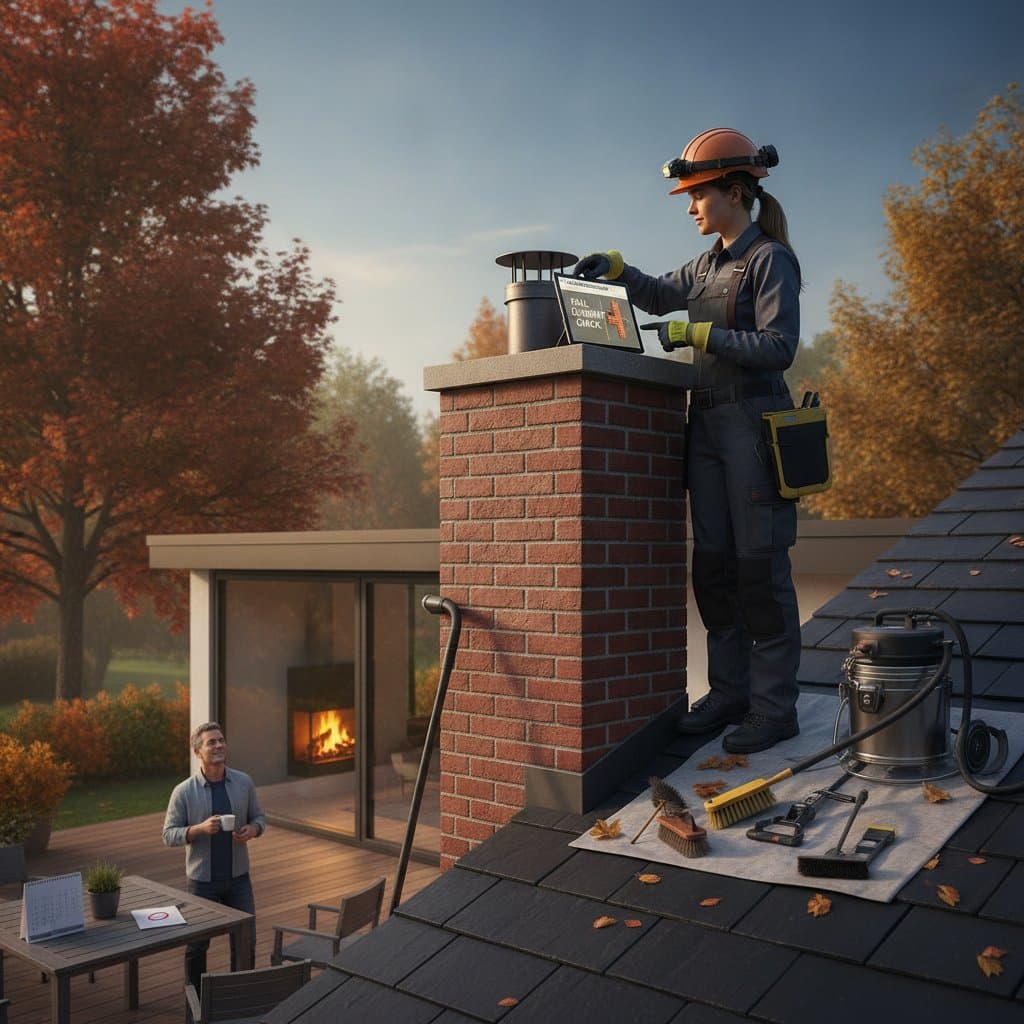
The crown is the cement layer at the top that seals the chimney from rain. It should slope slightly outward to shed water. Look for cracks wider than a pencil tip. A damaged crown allows moisture to seep into the masonry and freeze during cold weather, leading to expansion and cracking.
The cap, usually made of stainless steel or copper mesh, keeps out rain, leaves, and animals. It should fit snugly without rust or gaps. If it is missing, replace it immediately. A quality cap costs between fifty and three hundred dollars, depending on size and material.
Flashing and Roof Junction
Inspect where the chimney meets the roof. Flashing should lie flat and be sealed along all edges. If rust stains, gaps, or lifting appear, re seal with roofing cement or replace the flashing entirely. Water leaking through flashing can rot roof decking and framing.
Interior Inspection: The Hidden Hazards
Once the exterior looks sound, move inside to the fireplace and flue. These areas require a careful eye and sometimes specialized tools.
Firebox and Damper
The firebox should have tight mortar joints and no loose or cracked bricks. Gaps let heat reach combustible framing behind the masonry. If the fireplace uses firebrick panels, check for chips or missing mortar. Replace any panel with damage larger than a quarter inch deep.
Operate the damper. It should open fully and close tightly, leaving no air gaps. A stuck or warped damper can waste energy and allow smoke inside. Clean it with a wire brush and apply high temperature lubricant to the hinge if it squeaks.
Flue and Creosote Buildup
Creosote is a black, tar like substance that forms when smoke cools and condenses on chimney walls. If buildup is thicker than one eighth of an inch, it can ignite and cause a chimney fire. Measure this with a flat screwdriver. If it scrapes off in shiny flakes or sticky tar, it is time for cleaning.
Use a flashlight and mirror to check the flue interior. Look for cracks, debris, or blockages. Birds and squirrels often build nests during warmer months. If the full length cannot be seen, hire a chimney sweep who uses a video inspection camera.
Smoke Chamber and Smoke Shelf
Above the damper lies the smoke chamber, which funnels smoke into the flue. Rough or corroded mortar joints here can cause turbulence and poor draft. A smooth, parged surface helps smoke flow efficiently upward. The smoke shelf behind the damper often collects debris or soot, so vacuum it out carefully with a shop vac.
Chimney Liner Condition
Modern chimneys typically include a clay tile, stainless steel, or aluminum liner. The liner protects the masonry from heat and corrosive gases. Shine a light upward and look for cracks, missing tiles, or rust. A damaged liner should be repaired before use.
Common Mistakes Homeowners Make
Even diligent homeowners can overlook key issues. Avoid these common slip ups when checking the chimney.
- Neglecting the crown. A cracked crown lets in water that ruins brickwork from within. Always inspect it closely.
- Skipping annual cleaning. Even if only a few fires were burned last season, soot and creosote accumulate quickly.
- Ignoring the smoke test. Lighting a small piece of newspaper in the fireplace before the first full fire helps test the draft and detect blockages.
- Relying solely on visual checks. Not all damage is visible. Professional inspections can reveal hidden cracks or liner separation.
- Using chemical chimney logs as a substitute. Cleaning logs may loosen soot, but they do not replace a full sweep.
Accessibility and Safety Considerations
For homeowners with limited mobility or homes with steep roofs, climbing to inspect the chimney exterior may not be safe. In such cases, use binoculars from the ground for visual inspection. For interior checks, handheld inspection mirrors or flexible cameras can help view hard to reach spots.
If the home includes elderly residents or children, ensure carbon monoxide detectors are installed at least fifteen feet from the fireplace. Position smoke alarms on the ceiling of each level of the home. These devices provide crucial early warnings if the chimney malfunctions.
DIY or Professional Help: Choosing the Right Path
A confident DIYer can handle basic checks and light cleaning, but some tasks require professional skill.
DIY Friendly Tasks
- Scraping light soot from the firebox and damper
- Vacuuming ash and debris from the smoke shelf
- Sealing minor mortar cracks with fireplace mortar
- Testing and lubricating the damper
- Installing or replacing a basic chimney cap
Professional Tasks
- Full flue cleaning and video inspection
- Repairing cracked liners or crowns
- Repointing masonry joints
- Installing insulated stainless steel liners
- Addressing smoke draft or odor problems
A certified chimney sweep can diagnose structural, airflow, and moisture issues that are invisible to the untrained eye.
Cost Guide for Fall Chimney Maintenance
Knowing what to expect prevents sticker shock and helps budget for preventive care.
| Service Type | Typical Cost Range | DIY Feasibility | Notes |
|---|---|---|---|
| Basic chimney inspection | 75 to 150 dollars | Moderate | Includes visual and structural checks |
| Chimney sweep cleaning | 150 to 350 dollars | Low | Requires specialized brushes and vacuums |
| Crown repair | 150 to 500 dollars | Low | Should be handled by a mason |
| Chimney cap installation | 50 to 300 dollars | High | Easy DIY with ladder access |
| Liner replacement | 800 to 2500 dollars | None | Professional installation required |
| Flashing repair | 200 to 600 dollars | Moderate | Roofing skills recommended |
Small maintenance tasks cost little compared to the price of rebuilding a chimney damaged by neglect.
Scheduling Your Fall Chimney Maintenance
The best time to schedule service is before the first cold snap. Chimney professionals book quickly once temperatures drop, so plan ahead to avoid delays. Mark a recurring reminder each fall for inspection and cleaning. Combine it with other seasonal tasks such as checking smoke alarms, cleaning gutters, and sealing windows.
Homeowners who use wood burning stoves should inspect flues more frequently. Softer woods like pine produce more creosote than hardwoods such as oak or maple, so adjust the cleaning schedule based on usage and fuel type.
Habits That Support Long Term Chimney Performance
A few small habits can extend the life of the chimney and keep it working safely year after year. Burn only seasoned hardwood to reduce creosote formation. Keep the damper closed when the fireplace is not in use to prevent drafts and moisture entry. Schedule an annual professional inspection even in years of light use. These consistent actions protect the home and maintain efficient operation through many winters.