
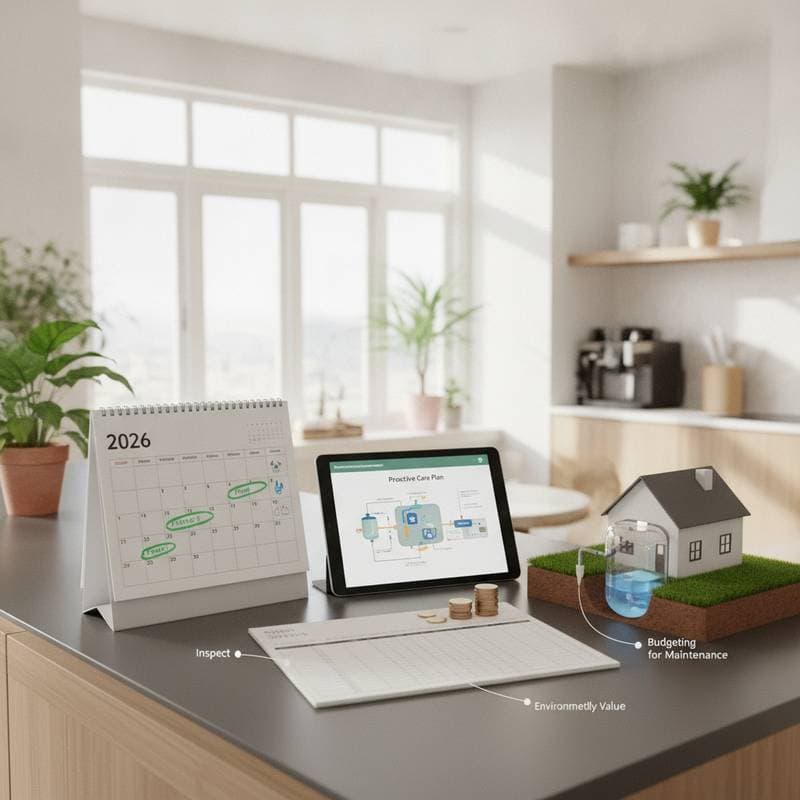
The Septic Maintenance Schedule Homeowners Need
A well maintained septic system protects property value, household finances, and local water quality. Neglect often leads to backups, groundwater contamination, and odors that require extensive cleanup. A consistent schedule of inspections, pumping, and daily habits prevents these issues and extends system life by many years.
This guide provides a practical yearly plan based on household routines and professional standards. It covers monthly checks, seasonal tasks, safe cleaning methods, and criteria for selecting service providers.
Establishing a Practical Maintenance Routine
System performance varies with household size, soil type, and water volume. A structured routine addresses these variables through regular observation and timely service.
Monthly Habits
Track daily water use to avoid overloading the tank. Run laundry loads on separate days and repair leaks immediately. Switch to septic safe, biodegradable cleaners to preserve beneficial bacteria. Keep vehicles and equipment off the drain field to prevent soil compaction. Note slow drains or odors near the field and arrange inspection at the first sign of trouble.
Seasonal Tasks
Spring rain and thawing soil can saturate the drain field. Inspect for wet spots or odors and schedule pumping if more than three years have passed since the last service. In summer, increased water use from guests or irrigation raises system load. Check filters and lids for damage and remove deep rooted plants near the field. Before winter, insulate exposed pipes with straw and clear debris from tank access points. During cold months, reduce laundry cycles on frozen ground and avoid piling snow over the drain field.
Daily Practices That Protect System Function
Small changes in household routines reduce solids and water volume entering the tank.
- Install low flow fixtures to cut unnecessary volume.
- Spread laundry across several days rather than completing multiple loads at once.
- Dispose of grease, coffee grounds, and food scraps in the trash instead of the drain.
- Skip chemical additives and garbage disposals that add solids or disrupt bacterial balance.
- Record every pumping and inspection date for future reference.
Avoid draining hot tubs into the system. Never flush wipes labeled flushable, as they accumulate and cause clogs.
Selecting Qualified Service Providers
Licensed septic specialists deliver thorough inspections that general plumbers may overlook. Request written reports that include sludge and scum measurements. Confirm insurance coverage and local certification. Obtain at least three estimates and verify that each provider will uncover both tank lids and clean filters.
Homeowners report that slightly higher fees for complete service often prevent repeat visits or unnecessary excavation.
Sustainable Maintenance Options
Phosphate free detergents limit algae growth in nearby water bodies. Effluent filters capture solids before they reach the drain field. Grass cover prevents erosion while allowing oxygen exchange. Rainwater collection for outdoor use reduces overall system demand.
Local agencies can supply lists of approved products and landscaping guidelines that maintain compliance.
Protecting Long Term System Performance
Consistent records and prompt response to early warning signs keep repairs infrequent. Schedule the next professional inspection if sludge depth approaches one third of tank capacity. These steps maintain reliable operation and preserve property value for decades.




