Fall Roof Maintenance to Prevent Costly Moss Damage
Moss on a roof might look harmless at first. It can cause structural damage, shorten the lifespan of roofing materials, and lead to costly repairs if ignored. Fall is the ideal season to take preventive action. Cooler air and moderate rainfall make it easier to inspect, clean, and treat your roof before winter moisture sets in.
Why Moss Grows on Roofs
Moss thrives in damp, shaded environments where moisture lingers after rain. Roofs shaded by trees or surrounded by tall structures face higher risk. The rough surfaces of asphalt shingles trap moisture and organic debris. This creates an ideal growth surface.
Once moss establishes itself, it holds water against the roof surface. This can lead to rot, leaks, and weakened shingles. Algae and lichen often accompany moss. They form slippery surfaces and trap moisture that weakens protective layers over time.
The Cost of Ignoring Moss Growth
Allowing moss to grow unchecked leads to more than cosmetic issues. Moss roots can lift shingles and create gaps where water enters the roof deck. This intrusion can rot underlayment and insulation. It may result in interior ceiling stains and mold growth.
Repairing these problems can cost thousands of dollars. Preventive cleaning and treatment typically cost a few hundred dollars. This cost difference shows why preventive maintenance is a valuable fall investment.
Inspecting Your Roof in Fall
A thorough inspection helps identify moss, damaged shingles, and drainage issues before winter storms arrive. Safety should always come first. Use binoculars from the ground or hire a professional roofing contractor if the roof is steep or slippery.
Look for these signs during inspection:
- Green patches or fuzzy growth near shaded roof areas or under overhanging trees.
- Dark streaks or stains that may indicate algae or lichen.
- Curling, cracked, or lifted shingles where moss has taken hold.
- Clogged gutters or downspouts filled with moss fragments or organic debris.
- Soft spots or sagging areas that suggest moisture damage under the surface.
Document findings with photos or notes. This record helps track recurring issues and shows whether treatments are effective.
Cleaning Moss Safely and Effectively
Cleaning moss requires care to avoid damaging shingles. Never use pressure washers. They strip away protective granules and shorten the roof lifespan. Use a gentle approach designed for residential roofing materials instead.
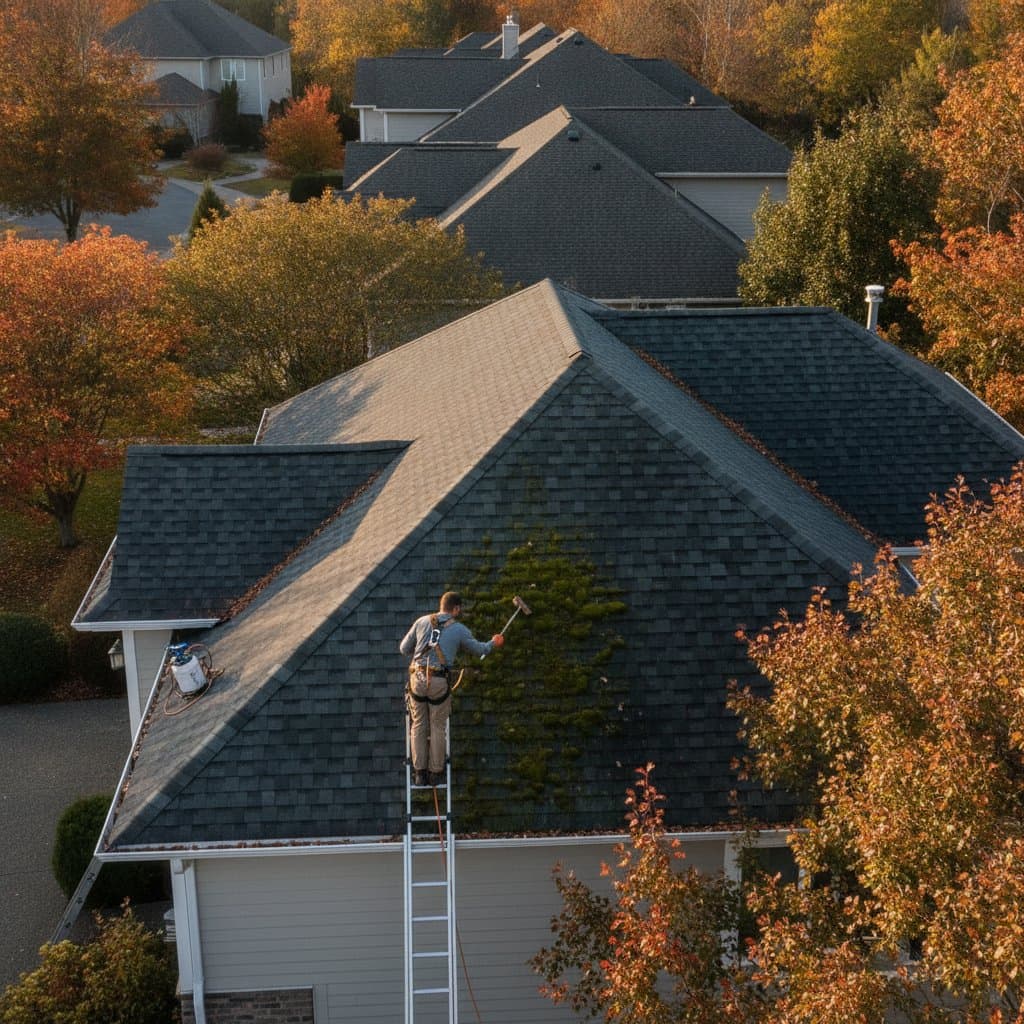
Prepare the area with a safety harness and non-slip shoes. Clear gutters and remove loose branches or leaves. Lightly mist the affected area with water to prevent spores from spreading. Use a soft-bristle brush or plastic scraper to gently lift moss from shingles. Work downward to avoid lifting edges.
Apply a cleaning solution of equal parts water and white vinegar or a commercial moss remover labeled safe for roofs. Spray evenly across the affected area. Allow the solution to soak for 15 to 20 minutes, then rinse gently with a garden hose. Check that no moss remains and that shingles are intact.
Preventing Moss from Returning
Once the roof is clean, focus on prevention. Moss thrives when shade and moisture persist. Trim back tree branches that overhang the roof to allow more sunlight. Increased airflow helps the roof dry faster after rainfall.
Keep gutters clear of debris to maintain proper drainage. Install zinc or copper strips near the roof ridge. These metals release ions that prevent moss and algae growth as rainwater carries them down the shingles.
Apply a commercial moss control treatment once or twice a year on shaded sections. Inspect the roof after major storms for debris or early signs of regrowth.
Professional Roof Treatment Options
Hiring professionals is often the safer choice for homeowners uncomfortable working at heights or dealing with extensive moss coverage. Roof cleaning specialists use low-pressure washing systems and biodegradable treatments that remove moss effectively without damaging shingles.
Professional services often include an initial inspection, soft wash cleaning, preventive treatment with copper or zinc-based solutions, and a follow-up maintenance plan. Costs vary depending on roof size and slope. For a typical single-story home, professional cleaning can range from a few hundred to over a thousand dollars.
Timing Your Maintenance
Fall offers the best conditions for roof maintenance. The weather is mild, and most trees have shed their leaves. This makes inspection easier. Cleaning during fall ensures the roof starts winter in good condition. Address visible moss promptly in early fall rather than waiting until spring.
Safety Considerations
Roof work carries risks. Always prioritize safety. Use a sturdy ladder secured on level ground and never work alone. Wear slip-resistant shoes and consider a roof harness system. Avoid walking on wet or icy roofs.
Contact a licensed roofing contractor if you are unsure about your roof stability or pitch.
Comparing DIY and Professional Moss Removal
A homeowner with a single-story roof and limited moss growth can manage cleaning independently. This approach saves money and allows direct control over cleaning solutions. Professional cleaning is ideal for larger or steeper roofs, heavy moss buildup, or aging shingles.
Contractors have access to commercial-grade treatments that last longer. Professionally treated roofs often remain moss-free longer than those treated with household methods.
Long-term Benefits of Regular Roof Maintenance
Routine fall maintenance extends the lifespan of your roof. It improves energy efficiency and maintains curb appeal. A clean roof reflects sunlight more effectively. This reduces attic heat buildup during warmer months. Preventing moss also protects roof insulation from moisture.
Regular inspections build a habit of preventive care. Homeowners who inspect twice a year tend to identify small issues before they become major repairs. Keeping records of each inspection demonstrates consistent upkeep.
Protecting Your Home Investment
A roof free from moss and debris remains stronger, safer, and more attractive for years. Fall maintenance sets the stage for a worry-free winter. Begin with a careful visual check, clear debris, and treat any moss found. Call a professional if the task feels unsafe or the moss is advanced. Investing time or a small service fee now prevents larger costs later. Roof care preserves the structure that shields your home from every storm.