Clean HVAC Filters Reduce Summer Cooling Costs
A clean HVAC filter supports steady airflow, lowers energy use, and protects equipment during peak cooling months. Homeowners who follow a consistent replacement plan avoid most airflow problems and maintain better indoor air quality.
Benefits of Regular Filter Maintenance
Dirty filters restrict airflow and force the blower motor to work harder. This added strain raises electricity consumption and shortens equipment life. Fresh filters allow the system to reach set temperatures faster while circulating cleaner air throughout living spaces.
Monthly checks during summer prevent most service issues. Households with pets or high dust levels benefit from more frequent inspections.
Selecting an Appropriate Filter
Different filter constructions suit different household conditions. The MERV rating on the package indicates how effectively each model captures particles.
- Fiberglass filters offer basic protection at low cost and require monthly replacement.
- Pleated filters capture more dust and typically last two to three months.
- Electrostatic filters attract fine particles and can be washed for reuse every four months.
- High-efficiency models trap very small contaminants but may need system adjustments for proper airflow.
Most homes achieve good results with MERV ratings between 8 and 13. Always verify compatibility in the equipment manual before purchase.
Replacement Timing Guidelines
Lifespan varies with air quality, occupancy, and pet presence. Thin fiberglass filters need attention every 30 days. Pleated models perform well for 60 to 90 days. Reusable electrostatic filters require cleaning every 120 days.
Hold the removed filter to a light source. Blocked light indicates immediate replacement. Record each change date on a calendar or digital reminder to maintain consistency.
Warning Signs That Demand Action
Several symptoms signal that a filter has reached capacity. Stuffy air, unusual fan noise, weak airflow from vents, and unexplained rises in energy use all point to restricted circulation. Dust that reappears quickly on surfaces also suggests the filter no longer functions properly.
Replace the filter at the first sign of these conditions to avoid frozen coils or motor damage.
Replacement Procedure
- Switch off the HVAC system at the thermostat.
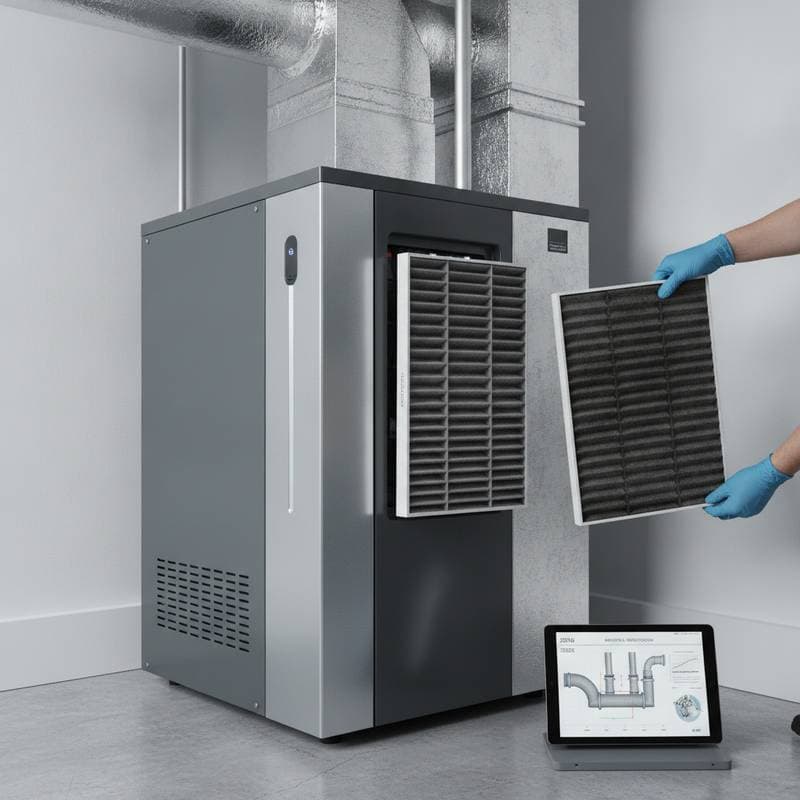
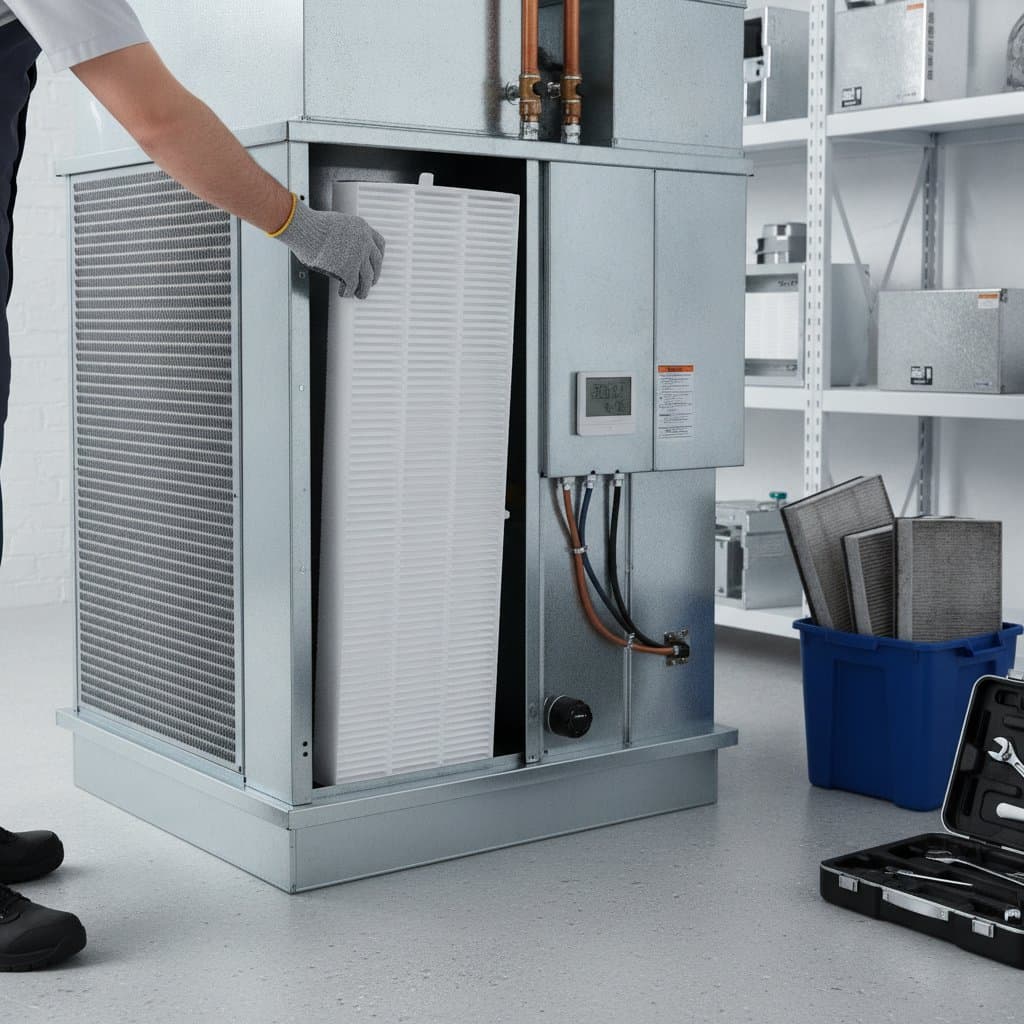
- Open the access panel or return grille to reach the filter slot.
- Note the airflow arrow on the old filter frame.
- Slide the new filter into place with arrows pointing toward the blower.
- Secure the panel and restore power.
Label the filter frame with the installation date for future reference.
Cost Comparison of Filter Options
| Filter Type | Service Interval | Relative Cost | Upkeep Method |
|---|---|---|---|
| Fiberglass | 30 days | Low | Replace |
| Pleated | 60 to 90 days | Moderate | Replace |
| Electrostatic | 120 days | Higher initial | Wash and reuse |
| High-efficiency | 60 to 90 days | Highest | Replace |
Basic models require more frequent purchases, while reusable types recover their cost through reduced replacements.
Seasonal Maintenance Checklist
- Inspect filters at the start of each month.
- Keep two spare filters on hand.
- Vacuum return vents weekly.
- Schedule annual professional service before summer begins.
Consistent attention keeps cooling performance stable and energy costs predictable throughout the season.