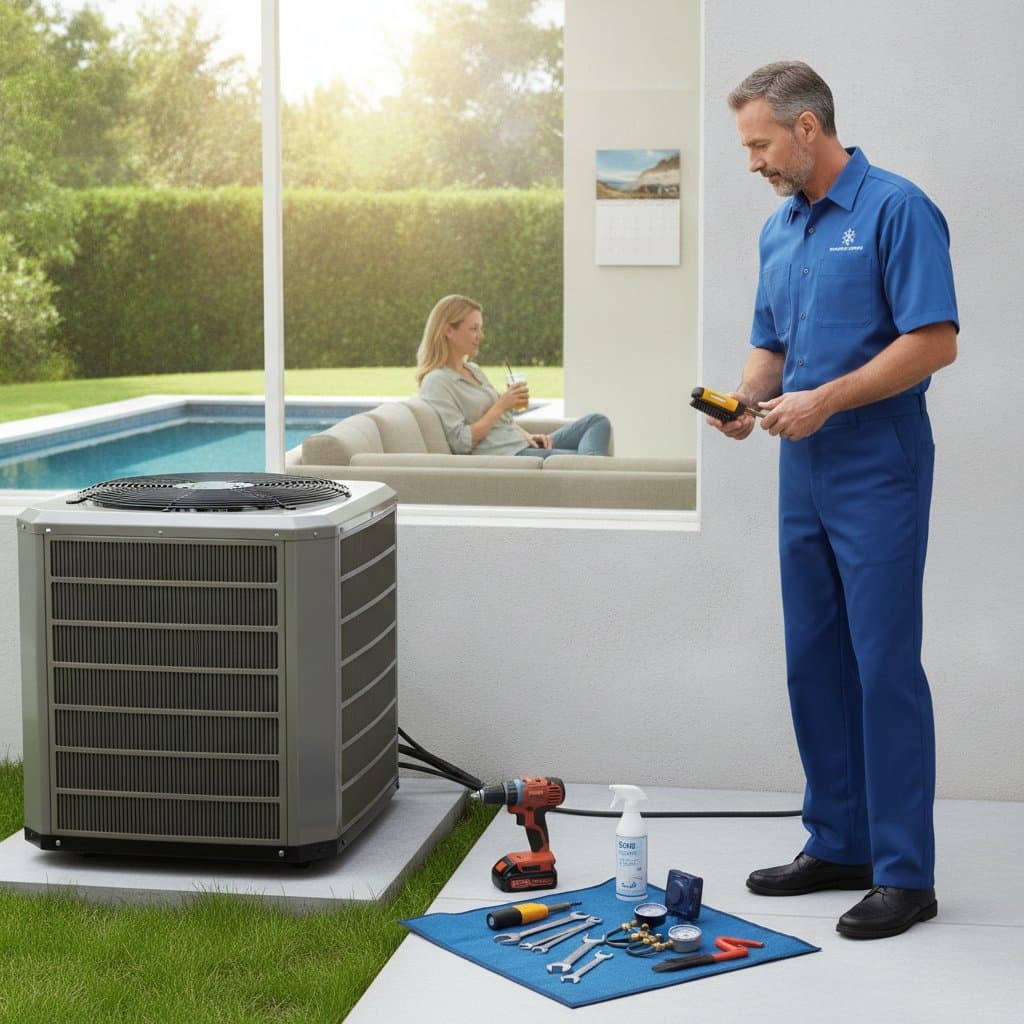
Must-Do AC Maintenance Before Summer Arrives
When outdoor temperatures rise, homeowners need an air conditioner that performs reliably. Preparing the system in advance supports consistent comfort, reduced energy use, and fewer interruptions during peak cooling periods. Preventive steps taken early limit the chance of expensive repairs once demand increases. Homeowners may complete basic tasks themselves or arrange professional service, yet both approaches require clear knowledge of the necessary actions.
Why Early AC Maintenance Matters
An air conditioning system faces its greatest load when outdoor heat peaks. Accumulated dirt, insufficient refrigerant, and worn components increase strain on the unit. These conditions lower efficiency, raise operating expenses, and shorten equipment life. A properly maintained system delivers faster cooling, quieter operation, and improved indoor air quality.
Routine checks also uncover minor problems before they escalate. Reduced airflow or unfamiliar sounds may indicate clogged filters, damaged fan blades, or electrical issues that intensify under sustained use.
Maintenance Cost Overview
Tasks Completed by Homeowners
Several routine steps require only modest expense. These include filter replacement, coil cleaning, and fin straightening. Replacement filters range from ten to forty dollars. Coil cleaning spray costs ten to twenty dollars. A fin comb for the outdoor unit typically sells for around fifteen dollars. Most homeowners finish these tasks in one to two hours.
Professional Service Fees
A full professional tune-up generally costs between one hundred and two hundred dollars. The service covers inspection, refrigerant verification, cleaning, and performance testing. Additional repairs increase the total based on the parts and labor required. Technicians employ specialized instruments to identify issues that visual checks miss and may suggest duct cleaning or thermostat adjustment.
Variables That Influence Pricing
System size, unit location, and regional labor rates affect final costs. Properties in dusty or humid climates often need more frequent attention. Older equipment may require extra diagnostics. Early service reduces the likelihood of major failures that can exceed several hundred dollars.
Choosing Between DIY and Professional Service
Advantages of Homeowner Tasks
Basic cleaning and filter changes improve airflow and lessen system load without outside help. Removing debris from the outdoor condenser supports steady performance when completed regularly.
Advantages of Professional Service
Trained technicians inspect electrical connections, measure refrigerant pressure, and verify calibration. Their equipment and experience provide safety assurances that most homeowners cannot replicate.
Decision Criteria
Homeowners should handle routine cleaning, filter changes, and visual inspections. Professional service is appropriate for refrigerant checks, electrical testing, and comprehensive tune-ups. Units that have not received attention in more than a year, or that show uneven cooling, warrant a service call before summer.
Common Maintenance Questions
Replace or clean air filters every one to three months based on household conditions. Weak airflow, warm discharge air, strange noises, or rising utility costs indicate service needs. Coils can be cleaned after power disconnection using a soft brush or approved cleaner while avoiding fin damage. Technicians measure refrigerant charge with pressure gauges and repair leaks before restoring levels. Duct cleaning improves efficiency when dust accumulates around vents. Always disconnect power before any cleaning. Use breathable covers only during off-season storage. Musty odors usually result from mold on coils or in the drain pan. A standard tune-up includes electrical inspection, refrigerant verification, thermostat calibration, coil cleaning, and performance testing. Most visits last one to two hours. Maintenance agreements provide scheduled reminders and priority response.
Step-by-Step Decision Process
Assess system age and cooling consistency first. Uneven temperatures or difficulty maintaining set points suggest professional evaluation. Next, review personal comfort with basic tools and safety procedures. Electrical or refrigerant work requires a technician. Compare the cost of service against potential repair expenses. Finally, follow all safety protocols and avoid tasks that exceed training or equipment limits.
Site Preparation and Planning
Consult the equipment manual for model-specific guidance and create a task list. Clear vegetation and debris from the outdoor unit to maintain at least two feet of clearance. Allocate budget for both routine items and possible follow-up repairs. Schedule work before temperatures climb to avoid service delays.
Sustaining System Performance
After initial service, replace filters on schedule, keep supply and return vents unobstructed, and note any new sounds or performance changes. These habits preserve efficiency and comfort throughout the cooling season.