2026 Rebates Improve Heat Pump Water Heater Returns
Homeowners seeking lower energy bills monitor upcoming rebate programs with interest. Heat pump water heaters stand out in these initiatives because they reduce electricity consumption while maintaining reliable hot water supply. The next round of rebates lowers purchase and installation costs substantially.
This overview covers the financial advantages of the updated incentives. It also addresses selection criteria and proper setup practices for maximum long-term performance.
Financial Advantages of Updated Incentives
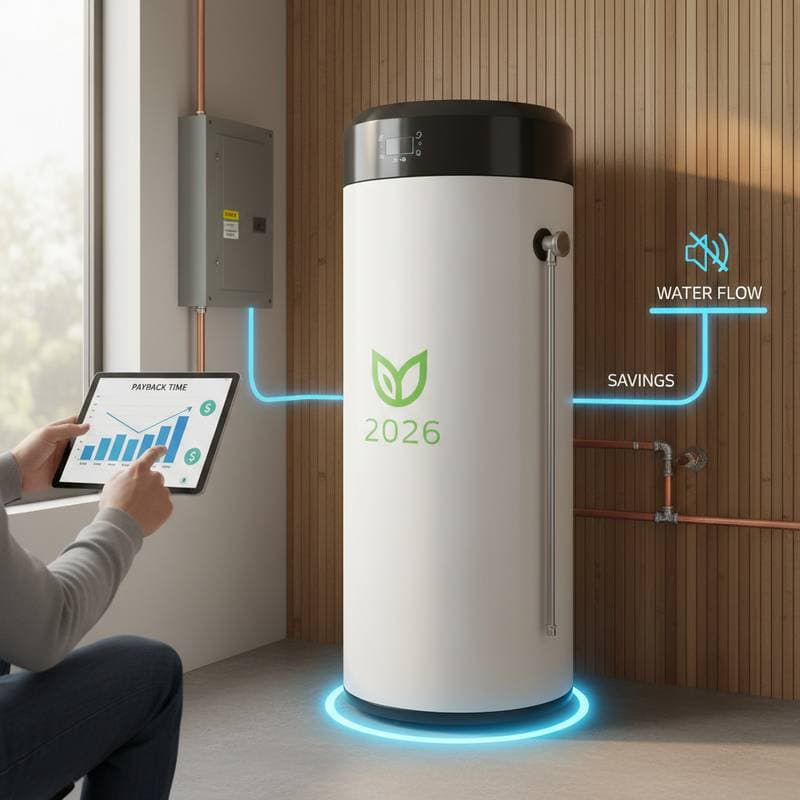
Rebates target the payback timeline for efficient appliances. Homeowners recover their initial outlay more quickly through immediate price reductions and ongoing utility savings.
Upfront Cost Reductions
Programs provide either direct payments or tax credits that apply at purchase. These measures support households that want to replace older units without large immediate expenses. A typical replacement in an average residence can recover several hundred dollars through combined incentives.
Utility providers frequently layer local offers onto national programs. This combination expands access for more income levels and accelerates adoption across regions.
Process for Securing Available Funds
Complete each stage in sequence to avoid missing deadlines or documentation requirements.
- Verify eligibility through the program website for your area.
- Choose an approved model that carries the ENERGY STAR designation.
- Engage a licensed contractor for the installation work.
- Retain all receipts, serial numbers, and compliance forms.
- Submit the application before the stated cutoff date.
- Monitor the claim status through the agency portal.
Addressing Frequent Questions
Several concerns arise during purchase decisions. Modern equipment and proper planning resolve most of them.
Higher initial prices are offset by stacked incentives and monthly energy reductions. Hybrid operating modes maintain performance in cooler locations by switching to resistance heating when ambient temperatures drop. Licensed technicians evaluate space and ventilation needs during site visits. Newer compressors operate at sound levels comparable to household refrigerators.
One user noted the practical outcome. "Our electric bills dropped noticeably after the upgrade, and the system runs quietly in the basement."
Setup Practices for Reliable Operation
Correct placement and routine care protect efficiency gains.
Select a location with adequate airflow such as a basement or garage that remains above freezing. Provide a floor drain or condensate pump to manage moisture produced during operation. Confirm the electrical panel supports a dedicated circuit. Clean filters on a quarterly schedule and arrange annual professional service.
Selection Criteria for Long Service Life
Match tank capacity to household size. A four-person home generally requires a 50- to 80-gallon unit. Prioritize models with high Uniform Energy Factor ratings. Review decibel specifications when the unit will sit near living spaces. Extended warranties on the tank and compressor add protection.
Sustained Performance After Installation
Clear the area around the unit to preserve airflow. Inspect the condensate line and pressure relief valve each year. Use monitoring features on connected models to detect changes early.
Rebates reduce barriers while the equipment itself delivers lower operating costs and reduced emissions. Proper model selection and ongoing care convert the incentive into lasting household savings.