Essential Monthly Checks to Prevent Water Heater Failure
Water heaters operate unobtrusively to deliver hot water for daily needs like bathing, washing dishes, and laundry. Without consistent care, however, these units may experience efficiency declines or premature breakdowns. Simple monthly routines can sustain performance, avert substantial repair costs, and promote longevity.
This resource details core monthly procedures suitable for both tank-style and tankless water heaters. These practices safeguard your equipment, optimize operation, and provide reassurance regarding home water supply reliability.
The Importance of Routine Water Heater Care
Water heaters encounter minerals, sediment accumulation, and thermal fluctuations that lead to scale formation, corrosion, and diminished heating capacity. Monthly evaluations and minor cleanings mitigate these risks, enable early problem identification, and sustain uniform water temperatures.
Such upkeep enhances energy utilization as well. A sediment-free, properly calibrated unit heats water more rapidly with lower consumption, resulting in monthly bill reductions.
Core Monthly Procedures for Water Heater Durability
Incorporate these targeted actions into your regular schedule to foster water heater resilience.
1. Inspect Tank Surroundings for Leaks
Examine the base and vicinity of the water heater for moisture indicators. A minor damp spot or pooling suggests a gradual leak from valves, joints, or the tank structure. Early detection averts structural damage and forestalls extensive malfunctions.
Should dripping occur from the pressure relief valve or pipe connections, secure the fittings with appropriate torque. For substantial leaks or evident corrosion, engage a qualified plumber without delay.
2. Evaluate the Pressure Relief Valve
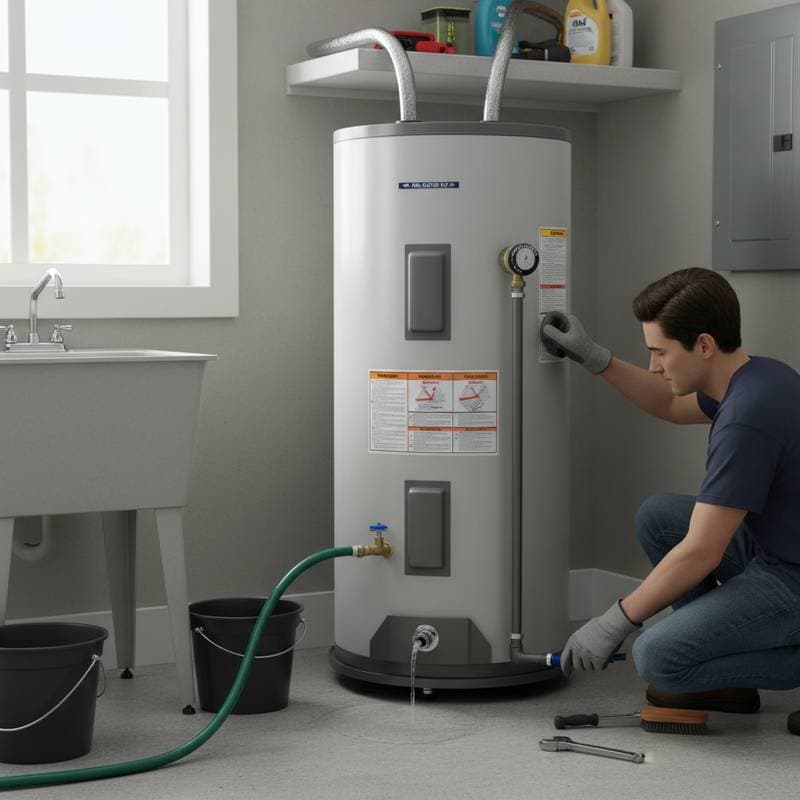
This valve serves as a vital safeguard by discharging surplus pressure during overheating or overpressurization events. To verify functionality, position a bucket beneath the outlet pipe, gently raise the lever to release a modest water volume, then observe the flow cessation upon lever release.
Absence of discharge or incomplete sealing signals the need for valve substitution. This verification thwarts hazardous pressure escalation and upholds safe system dynamics.
3. Verify Thermostat Configuration
The thermostat demands a balanced setting for safety and economy. Excessive temperatures invite scald risks and surplus energy expenditure, while insufficient levels foster bacterial proliferation within the tank.
Access the control interface to ascertain the dial aligns with household requirements. Settings in the moderate warm range typically balance comfort, energy conservation, and hygiene.
4. Monitor for Abnormal Sounds
Operational water heaters produce minimal noise. Popping, crackling, or rumbling indicates sediment layers at the tank base, which insulate heat and compel harder operation, accelerating deterioration and elevating energy demands.
Persistent auditory cues warrant a sediment-clearing flush. Routine auditory assessments pinpoint deviations prior to escalation.
5. Assess the Anode Rod Condition
The anode rod sacrifices itself to corrosive elements, preserving the tank interior. Conduct a visual inspection via the upper access port monthly to detect excessive thinning, pitting, or scale encrustation. Prompt rod renewal prevents tank degradation if deterioration appears advanced.
6. Perform a Partial Water Flush
Annual comprehensive flushes suffice for most units, yet monthly partial drains effectively manage sediment. Connect a hose to the drain outlet, direct it to a container, and expel one to two gallons until the outflow clarifies, thereby dislodging particulates and preserving tank clarity.
7. Scan for Rust Development
Survey the foundation, joints, and components for rust traces. Such oxidation reflects moisture intrusion or material fatigue. Timely intervention through cleaning or component exchange halts progression to vital zones.
8. Clear the Surrounding Area
Maintain unobstructed space around the unit, devoid of dust, obstructions, or combustibles. This facilitates ventilation and inspection access. For gas-fired models, confirm the burner zone remains free of debris accumulation.
9. Evaluate Hot Water Characteristics
Monthly, scrutinize hot water appearance and aroma. Cloudiness, rust hues, or metallic scents denote internal sediment or corrosion, often preceding leaks or performance lapses.
10. Document Observations
Maintain a log of thermostat tweaks, sounds, or visual findings. This chronicle reveals trends and aids professionals during subsequent evaluations.
Financial Advantages of Consistent Upkeep
Monthly procedures demand minimal time investment yet yield substantial returns versus repair or replacement expenses. These checks typically require 15 to 20 minutes and can prolong unit service by years.
Key benefits encompass:
- Lower utility costs through enhanced efficiency
- Diminished repair frequency via proactive issue resolution
- Extended operational duration prior to substitution
Dedicate monthly effort to sidestep disruptions, shield property, and secure steady hot water.
Balancing DIY and Expert Interventions
Many monthly actions suit homeowner execution, though certain aspects necessitate specialist involvement. Consider the distinctions below.
Homeowner-Led Care
Advantages:
- Cost avoidance on basic verifications
- Increased system knowledge
- Swift recognition of minor anomalies
Limitations:
- Restricted internal component reach
- Potential mishandling risks without plumbing expertise
- Possible oversight of concealed corrosion
Specialist Services
Advantages:
- Comprehensive diagnostics and cleanings
- Electrical and gas system validations
- Identification of subtle inefficiencies
Limitations:
- Fees based on service extent
- Appointment coordination and water interruption
Combine self-managed visuals and partial flushes monthly with biannual professional reviews for thorough protection.
Addressing Common Water Heater Inquiries
Frequency of Complete Tank Flushing?
Conduct full flushes one to two times annually, adjusted for local water hardness. Regions with elevated minerals benefit from increased intervals to clear deposits.
Origins of Sediment Accumulation?
Minerals like calcium and magnesium from municipal or well sources precipitate at the tank bottom, impairing heat transfer over time.
Vinegar Application for Cleaning?
Circulate a vinegar-water solution for light scaling, adhering to producer protocols and ensuring post-treatment rinsing.
Optimal Thermostat Temperature?
Select 120 degrees Fahrenheit to harmonize safety, efficiency, scald prevention, and scale inhibition.
Indicators for Anode Rod Renewal?
Renew if the rod exhibits thinning below half-inch diameter, calcium coating, or rust. Lifespan varies with water chemistry.
Consequences of Maintenance Omission?
Ignored care invites leaks, oxidation, erratic heating, and total failure, amplifying expenses and inconveniences.
Tankless Unit Requirements?
Tankless systems demand monthly filter cleanses and periodic descaling to sustain flow and heating efficacy.
Thermostat Adjustment Safety?
Proceed cautiously, eschewing live electrical contact; employ insulated implements per manual directives.
Draining to Floor Outlets?
Direct hoses to accessible floor drains safely; refrain from lawn or fixture discharge.
Wear Indicators?
Noises, discolored water, temperature fluctuations, and rising bills signal sediment or internal fatigue.
Pre-Maintenance Shutdown?
Deactivate power or gas sources beforehand; permit cooling to mitigate burn hazards.
Exterior Cleaning Methods?
Use dry or lightly moist cloths for dust removal; steer clear of abrasives or corrosives.
Mitigating Hard Water Impact?
Water softeners intercept minerals, benefiting heater and pipe longevity.
Expected Lifespan with Care?
Diligent routines extend conventional 8-12 year averages, contingent on usage and water profile.
Establishing an Effective Maintenance Routine
Initial System Evaluation
Identify rust, leaks, or auditory shifts. Address evident concerns with intensified cleaning or expert consultation.
Monthly Scheduling
Assign a fixed calendar date for inspections to cultivate habit and avert oversight.
Tool Preparation
Assemble a kit including adjustable wrench, buckets, hoses, and illumination for seamless execution.