Septic Tank Replacement: What It Really Costs
Homeowners facing septic tank replacement often encounter unexpected expenses tied to excavation, materials, and skilled labor. These costs fluctuate based on multiple variables, yet a clear understanding of the process enables better financial planning and smoother execution. This guide breaks down the essentials, from system fundamentals to pricing influences, empowering you to make informed decisions for a durable upgrade.
Understanding Septic System Basics
A septic system manages household wastewater by collecting it from drains and toilets, then treating it through separation and natural filtration. The core components consist of a buried tank that holds and breaks down solids, a distribution box that directs liquid effluent, and a drain field where soil absorbs the treated water. Over time, tanks may crack from ground shifts, corrode due to age, or overflow from neglect, signaling the need for replacement.
Common indicators of failure include pooling water around the drain field, sluggish drainage in fixtures, or foul smells emanating from the yard. Schedule a professional assessment promptly to evaluate repair feasibility versus full replacement. Early detection preserves soil health and prevents environmental contamination.
Average Septic Tank Replacement Costs
Expect to invest between $3,000 and $10,000 for a standard tank replacement in a typical single-family home, with full system overhauls reaching $10,000 to $25,000 when the drain field requires attention. These figures account for tank size, usually 1,000 to 1,500 gallons for homes with three bedrooms, and adjust for regional differences in labor and materials.
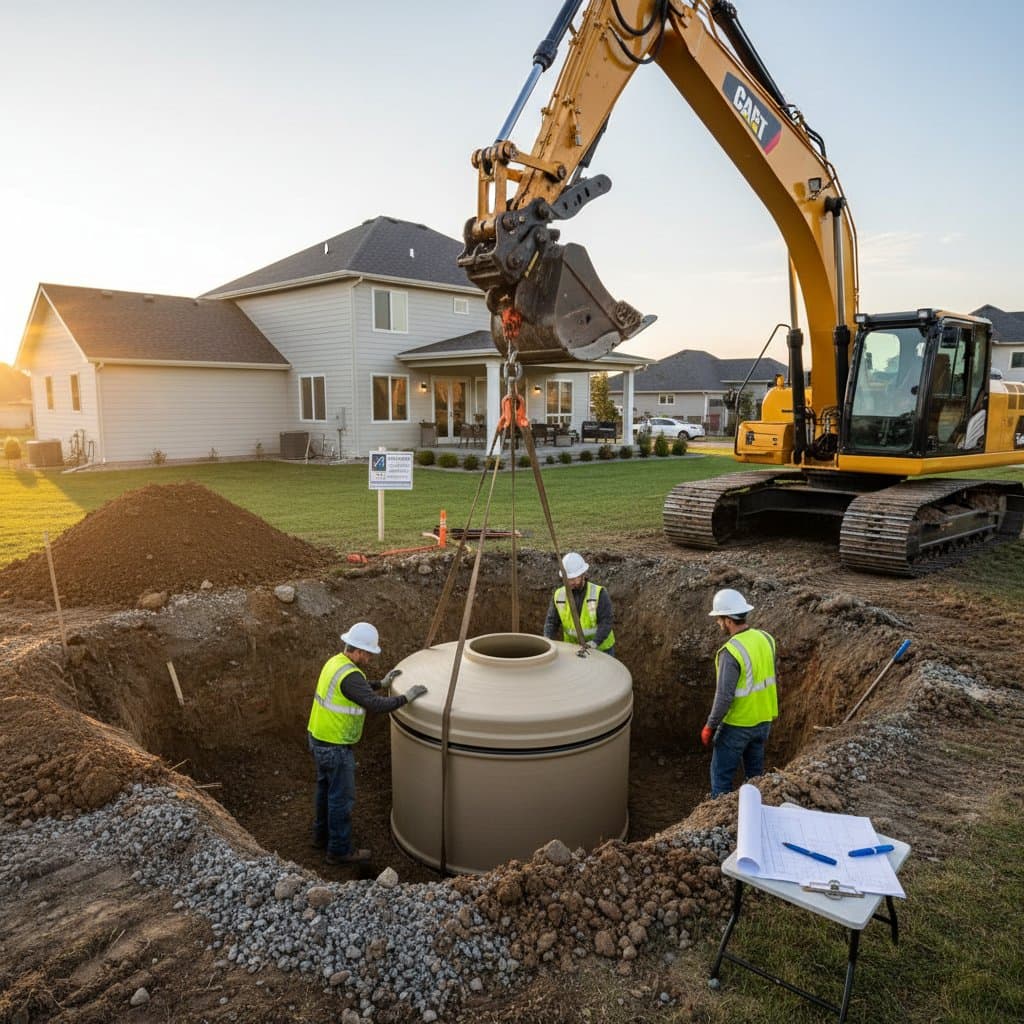
Concrete tanks, priced at $1,200 to $2,000 each, demand heavier machinery for installation but offer 40-plus years of service. Lighter fiberglass or polyethylene options cost $800 to $1,500 and simplify placement, though they may need anchoring in unstable soils to prevent floating. Additional expenses cover site preparation, old tank demolition at $500 to $1,000, and plumbing reconnection fees of $200 to $500.
In scenarios involving drain field renewal, costs escalate due to extensive trenching and soil restoration. Contractors report that comprehensive replacements, while pricier, yield superior reliability and compliance with modern standards.
Factors That Influence Pricing
Several elements determine the final bill for septic tank replacement. Evaluate these early to refine your budget.
1. Soil Type and Drainage
Clay-heavy soils impede water percolation, often necessitating advanced aerobic treatment units that add $2,000 to $5,000. In contrast, loamy or sandy soils support conventional gravity systems with minimal adjustments. Conduct percolation tests, costing $300 to $500, to assess absorption rates and guide system selection.
2. Tank Material
Opt for concrete if longevity tops your priorities; it resists impacts but weighs up to 10,000 pounds, inflating transport fees. Fiberglass provides corrosion resistance in acidic environments, while plastic suits budget-conscious projects yet demands vigilant installation to avoid deformation. Balance initial outlay against projected durability to optimize value.
3. Accessibility and Site Conditions
Obstructions like paved driveways or mature root systems complicate removal, potentially doubling labor charges to $2,000 or more. Remote or sloped lots require specialized equipment, such as mini-excavators, increasing hourly rates from $100 to $150. Open, level terrain streamlines the process and holds costs steady.
4. Local Regulations and Permits
Building departments mandate engineering plans and water quality tests, with permit fees ranging from $100 to $1,000 depending on jurisdiction. Some areas enforce setbacks from wells or property lines, altering design and adding engineering consultations at $500 to $1,500. Verify codes through your local health authority to sidestep rework penalties.
DIY vs Professional Installation
Ambitious homeowners might attempt self-installation to trim $1,000 to $3,000 in labor, but this risks code violations and premature failures from improper sloping or sealing. Experts handle precise baffling, venting, and backfill compaction essential for even effluent flow and bacterial activity.
Engage certified installers who carry liability insurance and adhere to state plumbing standards. Request itemized bids from three providers, noting inclusions like backfill materials and startup inspections. Many offer financing or rebates for eco-friendly systems, easing the upfront burden.
Long-Term Maintenance Costs
Post-installation, budget $250 to $500 for pumping every three to five years to remove accumulated sludge and maintain capacity. Steer clear of grease, wipes, or harsh cleaners that overwhelm the anaerobic bacteria vital for decomposition.
Annual visual checks, often bundled in service plans for $100 to $200 yearly, detect leaks or saturation early. These proactive measures avert $5,000-plus emergencies from clogs or field overloads, ensuring consistent operation.
Securing Lasting System Performance
A new septic tank safeguards health, equity, and sustainability when paired with diligent care. Document all permits, as-builts, and service logs to boost resale appeal and streamline future upkeep. Initiate the process with soil evaluations and contractor consultations well in advance of visible issues.
This investment yields peace of mind through reliable sanitation and averted crises. By selecting robust components and routine oversight, your system endures, supporting a resilient home environment for generations.