2026 Basement Waterproofing Costs: DIY vs. Professional Services
A dry basement safeguards the structural integrity of your home, improves indoor air quality, and preserves property value over time. Water infiltration through cracks or inadequate drainage leads to wall damage, flooring deterioration, and ruined possessions. Basement waterproofing stands as the primary defense against flooding, mold growth, and foundation weakening. Homeowners must decide between tackling the project themselves or engaging experts. Knowledge of costs, methods, and results empowers informed choices tailored to specific needs.
Understanding Basement Waterproofing Costs
Costs for basement waterproofing fluctuate based on the chosen technique, basement dimensions, and extent of water problems. Expenses span from simple DIY supplies to comprehensive professional setups that deliver enduring safeguards.
DIY Waterproofing Costs
DIY efforts serve as temporary fixes for slight leaks or humidity. Common outlays cover:
- Sealants and waterproof coatings: $200 to $500 for premium formulas covering 500 square feet
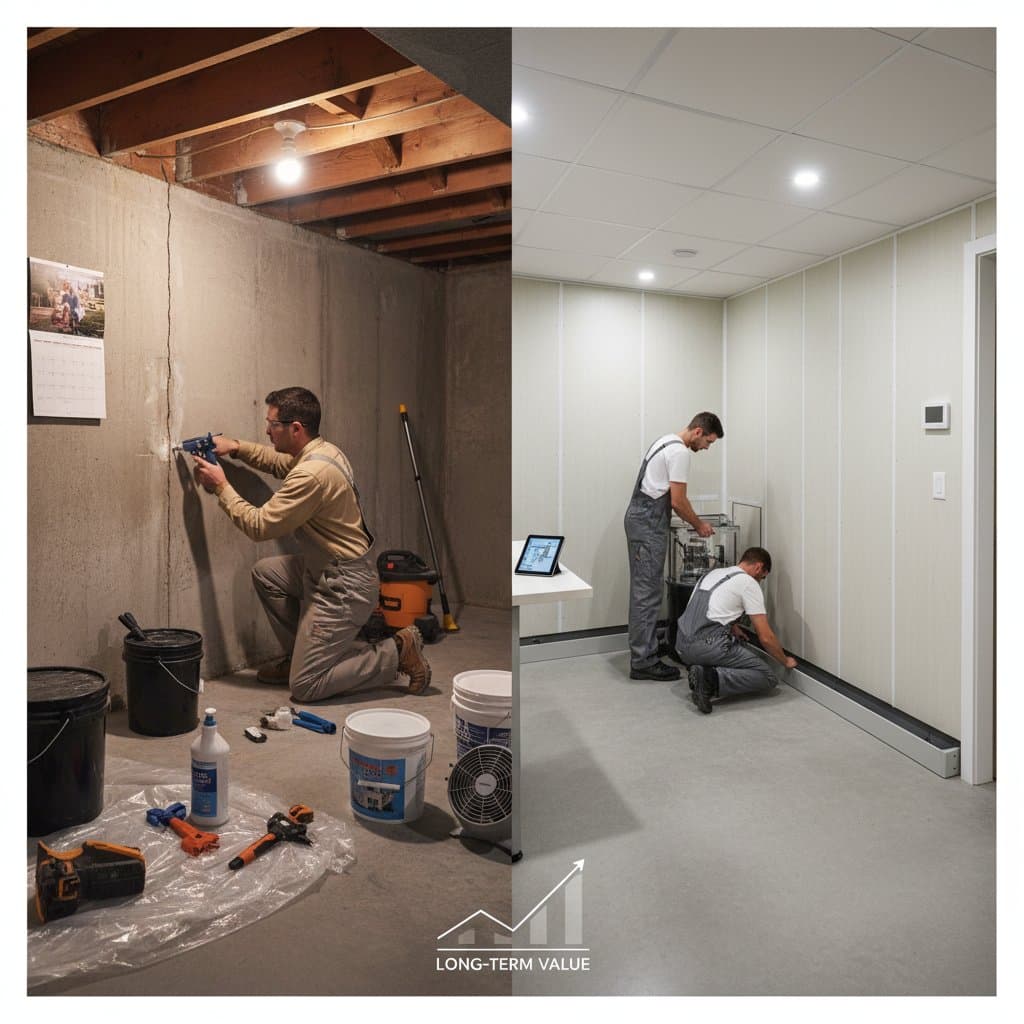
- Crack repair kits: $50 to $150 for epoxy-based interior fixes on walls up to 10 feet high
- Dehumidifiers: $150 to $800, scaled by room size and moisture extraction rate in pints per day
- Drainage extensions and downspout enhancements: $40 to $150 for PVC pipes and fittings extending 10 to 20 feet
These items aid in moisture management, yet they seldom address underlying structural or exterior drainage flaws. DIY projects require substantial time for surface preparation, application, and drying periods, often spanning weekends.
Professional Waterproofing Costs
Experts deliver robust, all-encompassing remedies. Prices start at $2,000 for internal measures and climb to $15,000 or more for thorough external digs and drainage networks. Standard offerings encompass:
- Interior systems: Placement of perimeter drains or sump pumps to collect and expel intruding water
- Exterior applications: Foundation digs, membrane coatings, and tile drains to block water entry
- Crack injections: Epoxy or polyurethane fills for fissures up to 1/4 inch wide in concrete
- French drains and sump setups: Groundwater diversion via gravel-filled trenches and battery-backed pumps
Labor constitutes over half the expense, yet it ensures skilled execution, warranties up to 25 years, and minimized recurrence of water issues.
Factors That Affect Pricing
Multiple variables shape overall expenses:
- Basement size and layout: Spaces over 1,000 square feet demand extra materials and crew hours.
- Foundation type: Block walls require more sealing than solid poured concrete.
- Damage severity: Visible efflorescence, buckling floors, or black mold expands the work scope.
- Accessibility: Buried utilities or sloped yards elevate digging challenges and costs.
- Local soil conditions: Expansive clays or high water tables necessitate reinforced barriers.
Request itemized proposals from contractors, highlighting labor rates, material grades, and coverage durations.
DIY vs. Professional: Making the Right Choice
The decision hinges on financial limits, personal expertise, and moisture origins.
Pros and Cons of DIY Waterproofing
Advantages:
- Reduced initial spending, often under $1,000 total
- Quick response to isolated drips without scheduling delays
- Custom pacing to fit household routines
Drawbacks:
- Short lifespan, typically 2 to 5 years before reapplication
- Absence of guarantees or expert recourse for failures
- Potential to miss subsurface erosion or pipe leaks
Such methods fit superficial humidity from condensation, but they falter against storm surges or rising water tables.
Benefits of Hiring Professionals
Specialists employ diagnostic cameras, hydraulic tools, and industry-grade sealants. Interventions target infiltration sources, not just symptoms. Key gains include:
- Enduring defenses with warranties transferable to new owners
- Optimized grading and backfill to control soil saturation
- Adherence to zoning laws and structural standards
- Lower chances of voided insurance from improper digs
Upfront investments yield savings by averting $10,000 mold cleanups or $20,000 foundation overhauls.
Skills and Safety Considerations
DIY tasks expose participants to caustic sealants, tight crawl spaces, and 50-pound material loads. Trained crews use respirators, shoring, and electrical shutoffs. For basements showing bowed walls, sparking outlets during floods, or shifting slabs, expert intervention proves essential.
Your Basement Waterproofing Questions, Answered
Expert responses to frequent inquiries.
How do I know if my basement needs waterproofing?
Indicators encompass moist surfaces, earthy smells, blistering finishes, or pooled water post-storm. Prompt action halts escalation to rot or health risks.
What does interior waterproofing include?
This approach handles entered water via battery-operated sump pits, plastic sheeting barriers, and baseboard channels directing flow to exits.
When is exterior waterproofing necessary?
Opt for it when walls show staining or grading funnels runoff toward the house. Source-level fixes prevent interior saturation.
How long does professional waterproofing last?
Superior installations endure 20 to 50 years with routine checks. Annual pump tests and debris removal sustain performance.
Are permits required for waterproofing?
Local codes often mandate approvals for ground disturbance over 3 feet deep or electrical pump wiring. Consult building departments early.
Can waterproof paint stop flooding?
Surface coatings mitigate efflorescence but fail against pressurized flows. Integrate them with drainage for efficacy.
What is the difference between a sump pump and a French drain?
Pumps cycle out accumulated water on demand, whereas drains passively channel it via sloped, fabric-wrapped pipes.
How much does foundation crack repair cost?
Surface patches run $200 to $600; deep structural injections hit $1,000 to $5,000 per 20 linear feet.
What maintenance does waterproofing require?
Quarterly pump cycles, gutter flushes, and crack scans keep systems vigilant. Regrade soil annually if settling occurs.
What questions should I ask a waterproofing contractor?
Inquire on disruption duration, disruption to utilities, post-job cleanup, and escalation clauses for surprises like root intrusions.
How to Decide: Your Step-by-Step Guide
Step 1: Assess Your Situation
Examine post-rain conditions for tide marks, soft spots, or fungal patches. Distinguish vapor from intrusion by checking exterior slopes and sump activity.
Step 2: Evaluate Your Skills and Resources
Simple sealants suit handy individuals with power tools; intricate digs demand engineering know-how. Account for 20 to 40 hours on DIY scales.
Step 3: Calculate True Costs
Tally DIY supplies plus tool rentals at $100 daily; factor professional bids averaging $50 to $100 per square foot. Project long-term: DIY reapplications every 3 years versus pro savings of 30% on insurance premiums.
Step 4: Consider Risks
DIY errors like uneven seals invite mold lawsuits; pro oversight ensures code compliance, avoiding $5,000 fines. Weigh health exposures from unvented chemicals.
Step 5: Make the Final Decision
If issues stem from poor grading and budget allows, select pros for 90% effectiveness. For tight funds and minor dampness, start DIY while planning upgrades.
Preparing for Your Basement Waterproofing Project
- Review interior versus exterior merits to match your intrusion type.
- Relocate valuables to upper levels, covering floors with drop cloths.
- Schedule around dry seasons to minimize weather delays.
- Allocate 10% buffer for unforeseen soil tests or membrane upgrades.
- Verify yard pitch at 6 inches drop over 10 feet from walls.
Sustaining Basement Dryness Long-Term
Routine vigilance transforms waterproofing into a lasting asset. Seasonal audits of downspouts and pump batteries detect issues early. This commitment not only averts disasters but unlocks bonus square footage for storage or recreation, elevating home livability.