
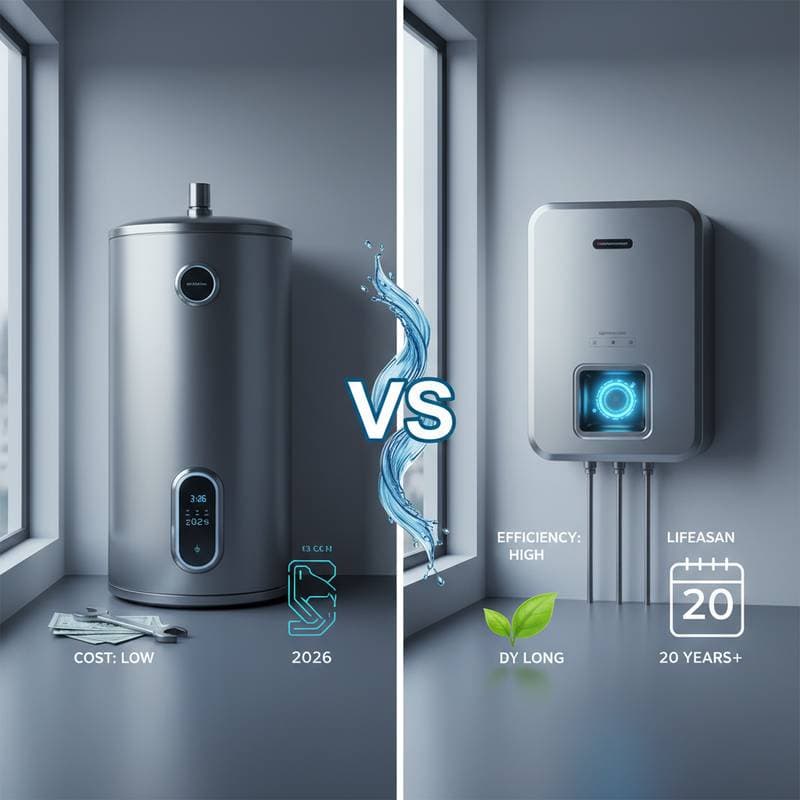
2026 Tank vs Tankless Water Heater Cost Comparison
Choosing the right water heater shapes household comfort and long-term expenses. Homeowners often weigh tank models against tankless units when planning an upgrade. Each system presents distinct tradeoffs in purchase price, operating efficiency, and upkeep requirements.
Purchase Price and Setup Expenses
Tank water heaters carry lower initial costs. A standard residential model with installation typically ranges from 800 to 1500 dollars for units holding 40 to 80 gallons. Plumbers complete most replacements in a few hours because the connections match existing plumbing.
Tankless water heaters require a larger upfront investment. The unit price often doubles that of a tank model, and installation demands gas line upgrades, dedicated venting, and sometimes new electrical circuits. Licensed technicians must perform the work to maintain safety compliance and manufacturer warranties.
Operating Efficiency and Utility Bills
Tankless systems heat water only when a fixture calls for it. This design eliminates the constant reheating that occurs inside a storage tank. Homes using under 40 gallons of hot water per day can reduce energy use by up to 34 percent according to Department of Energy data.
Tank units keep a reservoir at set temperature around the clock. Heat loss through the tank walls increases monthly gas or electric charges, especially in unconditioned spaces. Adding insulation blankets and pipe wraps lowers some waste, yet the fundamental design remains less efficient than on-demand heating.
Service Life and Upkeep Routines
A tank water heater usually operates 8 to 12 years before corrosion perforates the tank. Annual flushing removes sediment that reduces heating performance and accelerates wear. Replacing the anode rod every three to five years further slows rust formation.
Tankless units commonly reach 20 years of service when owners follow manufacturer guidelines. Mineral scale collects on the heat exchanger in hard-water areas, so descaling every 12 to 24 months preserves flow rate and efficiency. Filter cleaning takes only minutes during the same visit.
Space Requirements and Placement Options
Tank models occupy floor space in basements, garages, or utility rooms. They also need clearance for ventilation and a drain pan beneath the unit. Tankless heaters mount on a wall and measure roughly the size of a suitcase, freeing floor area for storage or living space.
Point-of-use installation becomes practical with tankless equipment. Running shorter hot-water lines cuts the delay between tap opening and warm flow. Outdoor mounting is possible in moderate climates when the manufacturer supplies a weatherproof enclosure.
Environmental Considerations
Higher efficiency in tankless models lowers fuel consumption and associated emissions. Many units integrate with home energy monitors that display real-time usage and allow remote temperature adjustments. Hybrid tank systems that pair storage with heat-pump technology cut energy demand nearly in half, though they carry higher purchase prices.
Professional versus Owner Installation
Experienced homeowners can replace a like-for-like tank unit by shutting off utilities, draining the old heater, and matching new connections. Gas or electric supply lines still present safety risks, so many jurisdictions require permits and inspections.
Tankless installation involves combustion analysis, proper vent slope, and gas pipe sizing calculations. Errors here affect performance and void warranties. A qualified installer verifies that the home electrical service and gas meter support the new load before work begins.
Long-Term Ownership Economics
Tankless systems frequently deliver lower total cost of ownership after five to seven years. Reduced energy bills and extended service life offset the higher purchase price for households that remain in place. Annual utility savings of 10 to 20 percent are common once the unit operates at full efficiency.
Tank heaters suit owners who anticipate moving within a few years or who prioritize the lowest possible initial outlay. Their simpler design and widespread parts availability keep replacement costs predictable.
Protecting Your Equipment Investment
Schedule yearly maintenance for either system. Tank owners should drain sediment and test the anode rod. Tankless owners should arrange professional descaling and inspect inlet screens. These steps maintain rated efficiency and protect the warranty throughout the equipment lifespan.
Review your household hot-water demand, planned length of residence, and available utility incentives before selecting a model. The choice that balances upfront budget with projected operating costs will deliver the greatest value over the next decade.




