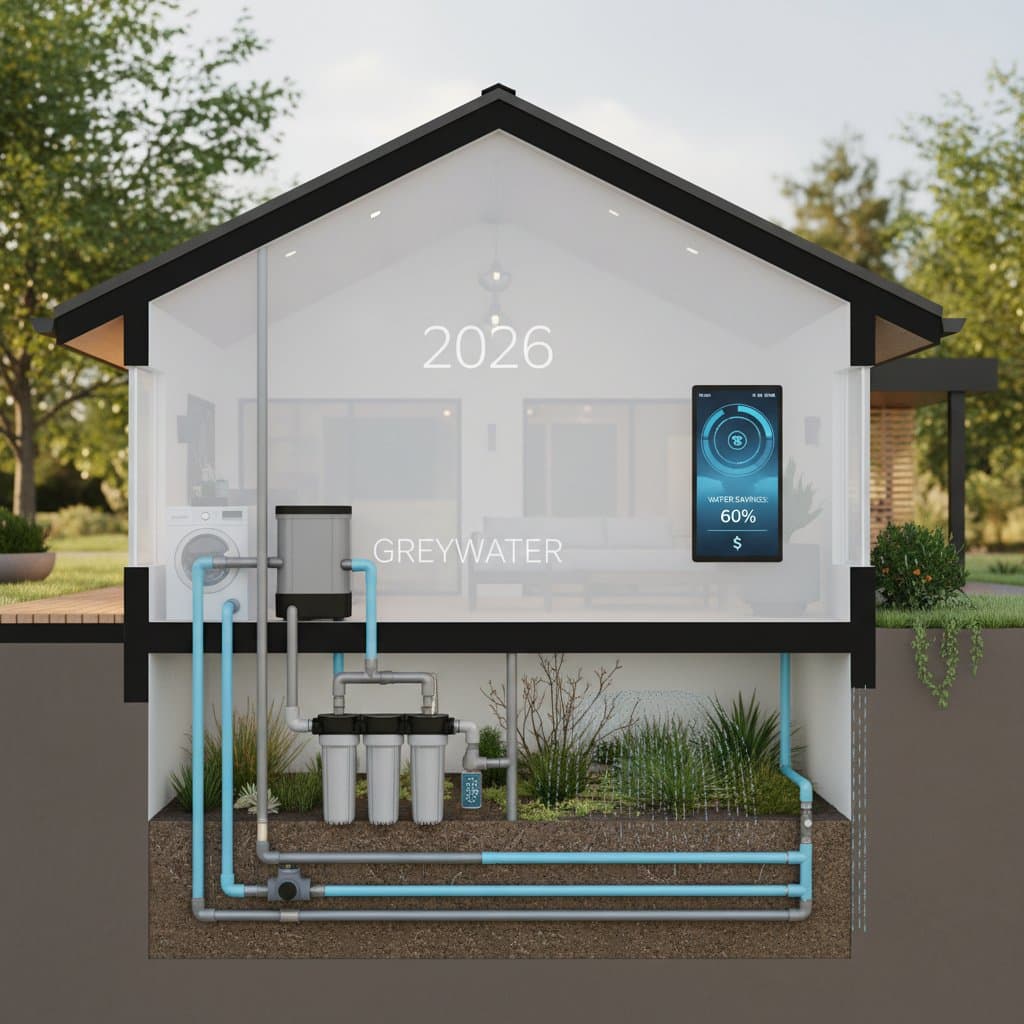
- Optimal applications: Properties aiming for indoor reuse, such as clothes washing cycles or urinal flushing.
Labor often accounts for 40 to 60 percent of the budget, particularly when altering existing plumbing lines. Opt for contractors experienced in water reclamation to guarantee code adherence and system durability.
Navigating Permit Requirements in 2026
Regulatory approvals safeguard public health and environmental integrity, with most jurisdictions mandating permits for greywater installations. The level of scrutiny correlates with system sophistication; simpler diverters face fewer hurdles than treated reuse setups.
Standard Permitting Procedures:
- Prepare and submit detailed engineering drawings to the local health or building department.
- Demonstrate filtration efficacy and distribution methods, including soil percolation tests for subsurface discharge.
- Detail safeguards like double-check backflow preventers and emergency overflow diversions.
- Arrange for post-installation verification by an inspector to confirm operational integrity.
Laundry diverters piping directly to subsurface basins typically require only a notification or simple filing in permissive areas. However, systems involving storage or potable-near applications must comply with stringent plumbing and wastewater codes. Consult your county environmental office early to identify site-specific rules; non-compliance risks penalties up to $1,000 per violation or mandatory dismantling.
Calculating Potential Water Savings
Greywater recycling delivers measurable reductions in water procurement, with average households reclaiming 20,000 to 50,000 liters annually depending on usage patterns. These volumes translate to bill reductions of 30 to 50 percent in high-cost regions.
Influencing Factors for Savings:
- Family composition and daily routines, such as frequent showers or laundry loads.
- Irrigated area extent and plant water needs, favoring drought-resistant species.
- Utility pricing structures, where tiered rates amplify benefits during peak seasons.
For instance, a four-person household with a mid-tier system might offset 40 percent of outdoor watering needs, yielding $200 to $400 in yearly savings at $0.005 per liter rates. Combine with rain barrels or smart controllers to accelerate payback periods to under five years.
Essential Maintenance Practices
Reliable performance hinges on proactive upkeep, extending system lifespan to 15 years or beyond. Monthly routines involve inspecting filters for debris buildup and verifying valve functionality to prevent leaks.
Annual professional servicing covers pump calibration, sensor testing, and pipe integrity checks. Maintain a digital log of inspections, noting any flow irregularities or odor developments. Select plant-based detergents free of antimicrobials to protect microbial balances in soil and avoid corrosion in pipes.
Prioritizing Safety and Avoiding Pitfalls
Proper management ensures greywater poses no health hazards, but design flaws can lead to contamination or inefficiencies. Direct surface application risks pathogen exposure; always employ drip or soaker hoses buried six inches underground.
Steer clear of edible crop irrigation above the root zone, and integrate air gaps in plumbing to block cross-contamination with potable supplies. In jurisdictions with rigorous standards, incorporate tertiary treatment like membrane filtration for added assurance, despite the upfront investment.
Leveraging Visual Aids for Planning
Effective planning benefits from illustrative tools that clarify system layouts and budgeting.
- Cost comparison charts: Bar graphs contrasting initial outlays and five-year savings for each system tier.
- Installation diagrams: Annotated photos depicting pipe routing from laundry outlets to garden beds.
- Process infographics: Step-by-step flowcharts tracing water from source to reuse.
- Resource directories: Regional maps pinpointing permitting offices and vetted installers.
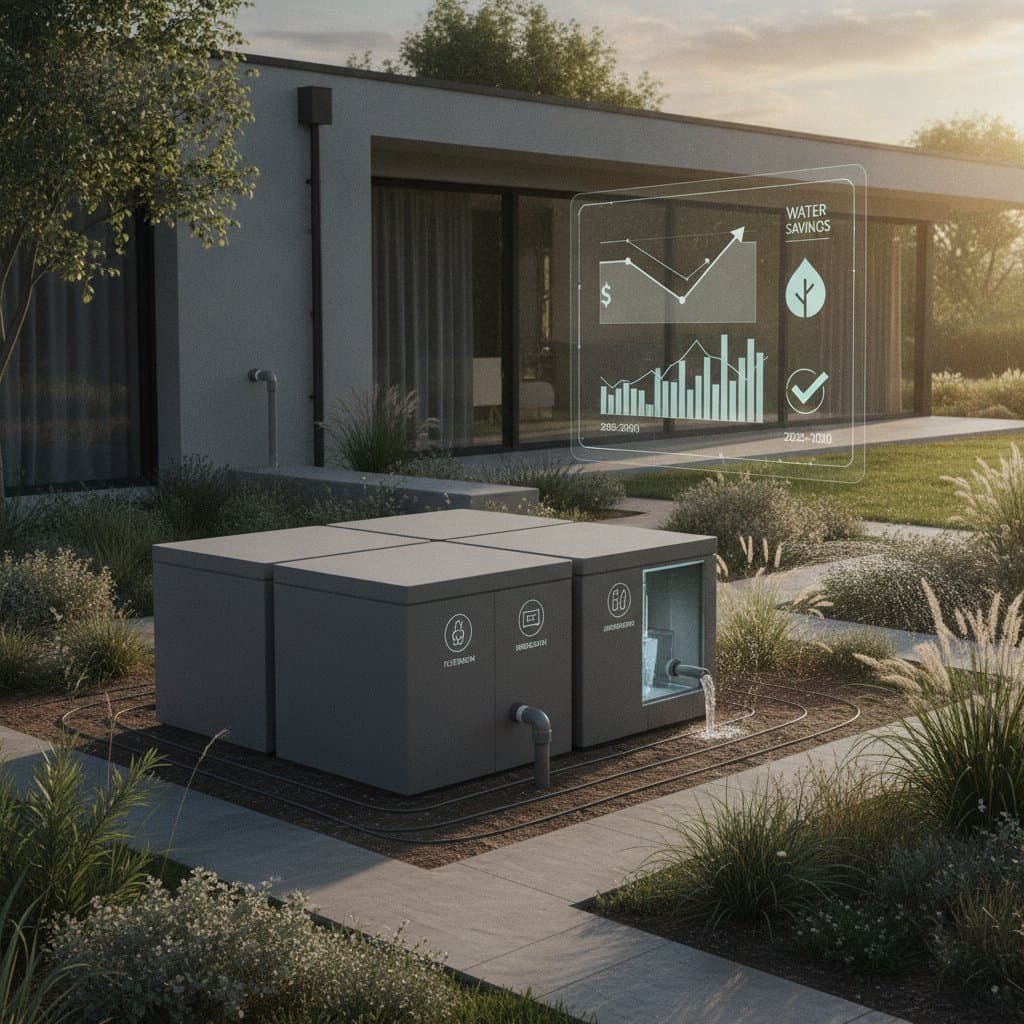
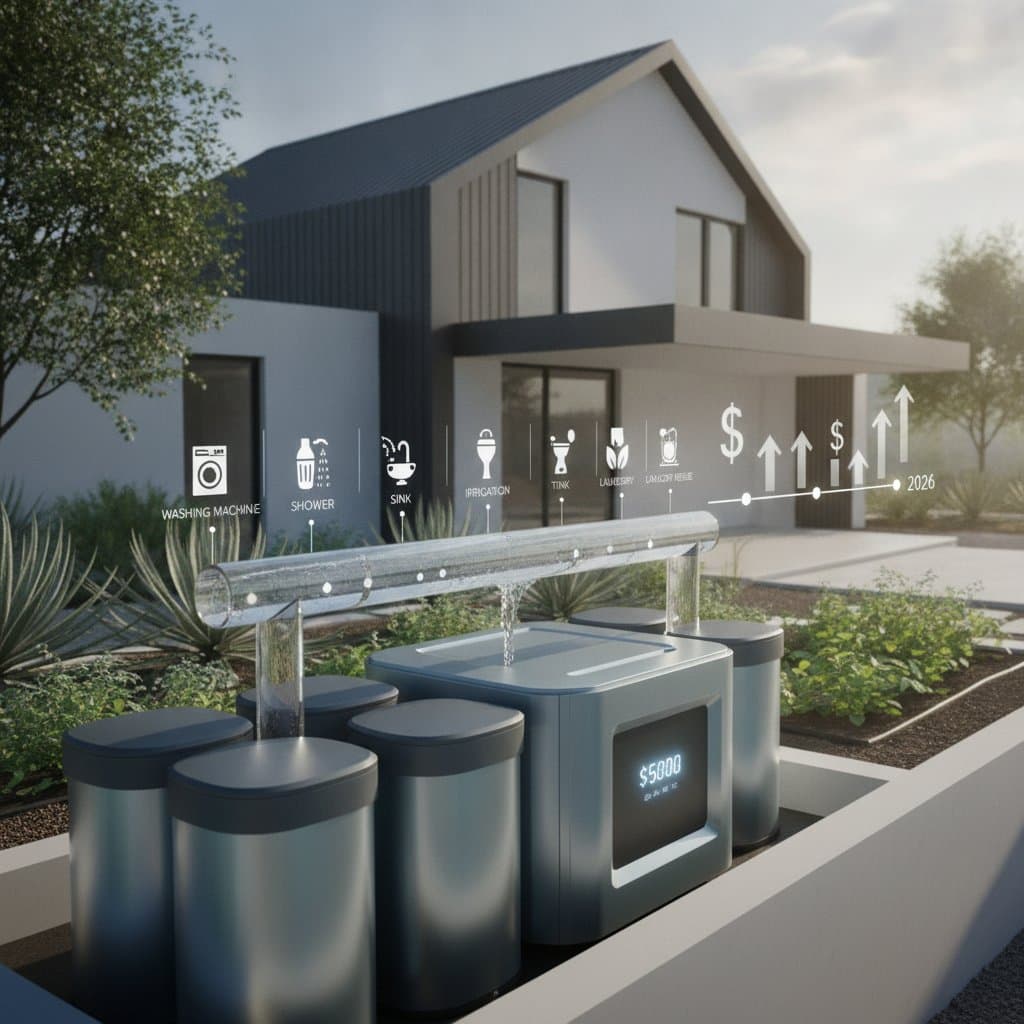
Consider incorporating a labeled image of a compact backyard setup, featuring a 50-gallon collection drum, sediment trap, and branched irrigation lines feeding native shrubs.
Insights from Homeowner Experiences
Community forums reveal high satisfaction among users who adhere to maintenance protocols. One resident in a semi-arid zone noted their xeriscape thrived under water restrictions, halving irrigation costs. Another praised the simplicity of monthly filter swaps, which sustained steady output with minimal intervention.
These accounts underscore the value of starting with pilot installations to build familiarity before scaling up.
Realizing Enduring Advantages
Greywater adoption enhances home equity, with eco-conscious buyers paying premiums for integrated sustainability features. Systems also bolster communal water security by alleviating infrastructure strain during droughts.
Explore 2026 incentive programs through utility providers or state agencies, which may rebate 20 to 50 percent of costs for qualifying setups. Such supports can cover permitting expenses, hastening financial returns.
Steps to Implement Your Greywater Project
Begin with a site assessment to evaluate water sources and drainage suitability. Select a basic diverter for initial trials, monitoring outputs over the first season to refine usage. Document expenditures and meter readings to quantify impacts, informing future enhancements like automated dosing for optimal plant health.