The Essential Fall HVAC Filter Replacement
As temperatures drop, your home's heating system takes center stage in maintaining comfort. A timely filter replacement stands out as a straightforward yet impactful maintenance step. This action enhances system efficiency, reduces energy consumption, and safeguards indoor air quality. Homeowners who address this early avoid the pitfalls of procrastination, ensuring a seamless transition into the heating season.
Optimal Timing for HVAC Filter Replacement in Fall
Fall provides an ideal opportunity for HVAC maintenance. The shift from air conditioning to heating mode offers a brief interlude for system checks. Accumulated summer dust, pollen, and debris frequently obstruct filters, impeding airflow. Delaying replacement forces the furnace or air handler to labor excessively, increasing energy demands and stressing internal parts.
Fresh filters promote balanced indoor air quality during periods when windows remain closed. Neglected filters permit contaminants to recirculate, aggravating allergies and restricting ventilation. Moreover, they preserve the integrity of the heat exchanger and blower fan, minimizing the risk of mid-season breakdowns.
Selecting the Appropriate Filter for Your Residence
HVAC filters vary in construction and performance levels. Selection hinges on your system's specifications, daily activities, and air purity requirements.
- Fiberglass filters: Inexpensive and widely available, these capture coarse debris such as lint and dust. They prove sufficient for residences lacking pets or excessive dust accumulation.
- Pleated filters: Constructed from cotton or polyester, these trap finer contaminants like pollen and mold spores. Their extended lifespan makes them suitable for typical households.
- Electrostatic filters: These utilize static electricity to draw in particles. Reusable models reduce ongoing expenses and environmental impact through repeated cleaning.
- High-efficiency filters: Designated as HEPA or high MERV ratings, these capture microscopic particles. They benefit households with asthma sufferers or multiple pets, provided the system accommodates their airflow resistance.
Review your HVAC manual or seek professional advice prior to selecting an advanced filter. Options that overly restrict airflow can compromise efficiency and elevate utility costs.
Safe Step-by-Step Guide to Filter Replacement
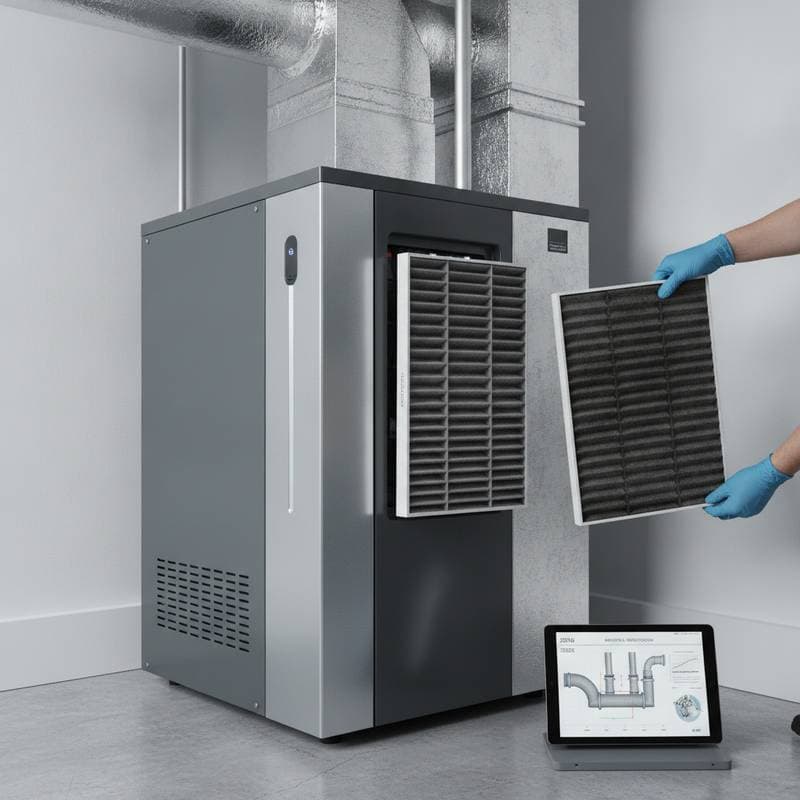
Follow this sequence to execute the replacement effectively and securely. Power down the furnace or air handler at the outset to eliminate hazards.
- Identify the filter slot adjacent to the blower assembly or return air duct.
- Extract the used filter with care to prevent dislodging dust into the ductwork.
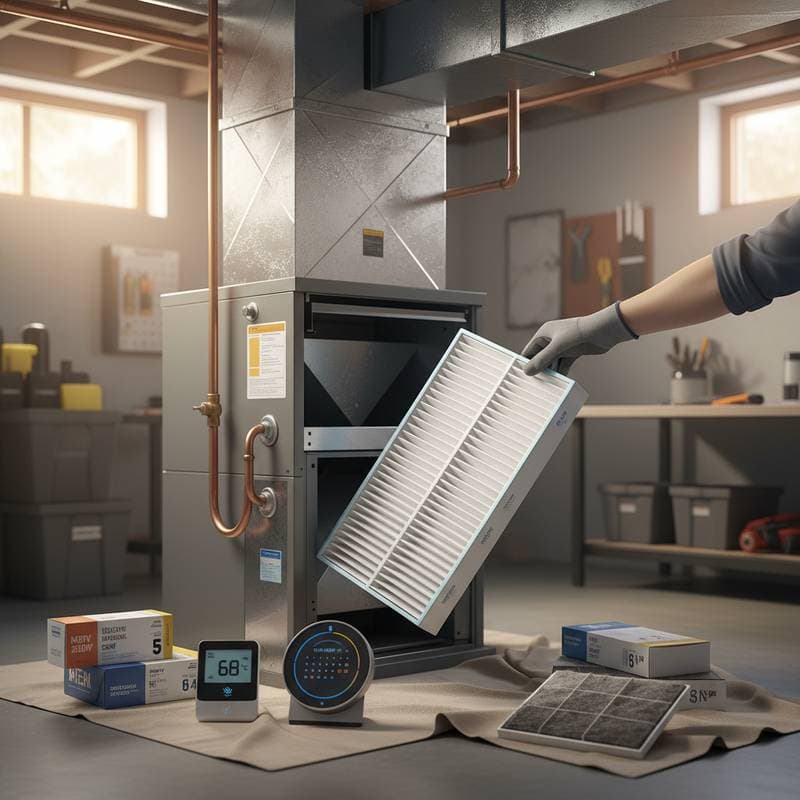
- Inspect the directional arrow on the new filter's edge; orient it toward the blower for correct installation.
- Insert the replacement filter firmly, ensuring no creases or gaps.
- Replace the access panel and restore power to the unit.
Inscribe the installation date on the filter frame. This practice facilitates routine monitoring and adherence to a maintenance rhythm.
Recommended Replacement Frequency
Household conditions dictate the ideal interval, but general guidelines ensure reliability.
- Conduct monthly inspections in homes with pets, allergy-prone individuals, or proximity to construction sites and busy roads.
- Opt for replacements every two to three months in standard settings free from significant dust or smoke.
- Perform monthly changes during intense heating or cooling phases to sustain optimal operation.
Integrate reminders via smartphone notifications or a dedicated planner to maintain consistency without effort.
Consequences of Neglecting Filter Maintenance
Overlooking filter care inflicts subtle yet severe repercussions. Restricted airflow compels the system to operate extended cycles for temperature control. Such strain may induce overheating, coil icing, or motor burnout, culminating in elevated expenses.
Inadequate filtration fosters contaminant buildup within ducts, potentially nurturing mold growth. This scenario disrupts even heating distribution, leaving certain areas underheated. Proactive replacements guarantee uniform comfort and system longevity.
Financial and Efficiency Benefits
A pristine filter can diminish energy consumption by as much as 25 percent, varying by equipment and habits. These savings accumulate substantially over winter. Filter swaps represent a low-cost intervention with high yields, far outweighing the price of professional interventions or component substitutions.
Consider a comparative graph: one line depicts steady energy draw with a clean filter, while the other illustrates a steep climb for a clogged counterpart. Such illustrations underscore the tangible advantages for informed decision-making.
Indicators Prompting Immediate Filter Change
Adhere to your schedule, yet remain vigilant for these warning signs:
- Visible dust layers on surfaces near supply vents.
- Stagnant or musty odors emanating during system activation.
- Persistent strange smells shortly after operation begins.
- Apparent soiling or discoloration on the existing filter.
- Unexpected spikes in utility statements absent lifestyle shifts.
Address these promptly with a new filter. The system responds swiftly, operating more silently and effectively.
Innovative Aids for Maintenance Scheduling
Contemporary devices simplify filter oversight. Intelligent thermostats monitor runtime and issue alerts for replacements. Bluetooth-enabled detectors mount directly on filters, notifying via app when resistance builds.
For a basic method, employ a seasonal calendar marked with thematic symbols: autumn leaves for fall, snow for winter, blooms for spring, and sunshine for summer. This visual cue reinforces timely action.
Suggested image: A customized calendar displaying HVAC filter reminders by season, with alt text: “Seasonal HVAC filter replacement calendar.”
Insights from Professionals and Residents
HVAC specialists and online communities emphasize filter diligence as a frequently neglected essential. Numerous accounts highlight prolonged equipment life attributed to regular upkeep.
Research indicates that pristine filters enhance indoor air purity by up to 50 percent in airtight environments. This improvement yields healthier breathing spaces and reduced irritation for occupants.
Practical Recommendations for Optimal Results
- Keep spare filters in a moisture-free storage area to preserve usability.
- Record filter dimensions in a digital note for convenient procurement.
- Clean vent surroundings with a vacuum prior to new filter placement.
- For reusable types, clean gently under water and air-dry completely before reuse.
Safeguarding System Performance Year-Round
Annual fall filter replacement delivers enduring advantages. It fortifies air quality, curbs expenditures, and bolsters the heating infrastructure. Dedicate these moments to routine care, averting costly issues and promoting a healthier home environment throughout the colder periods.