Understanding Attic Mold Risks in Summer
Homeowners frequently neglect attics until persistent odors or visible stains emerge on structural elements or insulation. Mold flourishes in environments with elevated warmth and humidity, conditions that intensify during summer months. Early intervention prevents minor issues from escalating into widespread damage that compromises structural integrity and indoor air quality. This resource outlines identification, prevention, and remediation strategies with clear, implementable guidance.
Conditions That Foster Attic Mold
Mold requires moisture, organic substrates, and moderate temperatures to proliferate. Attics supply these elements when ventilation fails or insulation retains excess humidity. Typical triggers encompass roof leaks, obstructed soffit vents, exhaust fans from bathrooms releasing vapor directly into the space, and condensation arising from thermal gradients between interior and exterior environments. Moisture accumulation on wooden components enables spore germination in as little as 48 hours.
The Environmental Protection Agency emphasizes moisture management as the primary strategy against mold development. Persistent dampness or frost buildup during winter signals potential summer vulnerabilities that demand prompt resolution.
Key Indicators of Attic Mold Presence
Mold in attics conceals itself amid insulation or in obscured areas, yet distinct cues reveal its onset before extensive proliferation occurs.
- Persistent musty smells emanating from ceiling fixtures or upper-level rooms.
- Discolorations on timber or insulation materials, appearing as black, green, or white growths.
- Deteriorating paint or buckling plywood, signaling sustained moisture exposure.
- Beads of condensation on fasteners or beams following humid weather.
- Exacerbated respiratory issues or allergic responses noticeable indoors.
Detection of these signs warrants measured action rather than alarm. Source identification followed by swift response facilitates effective management.
Conducting a Safe Attic Inspection
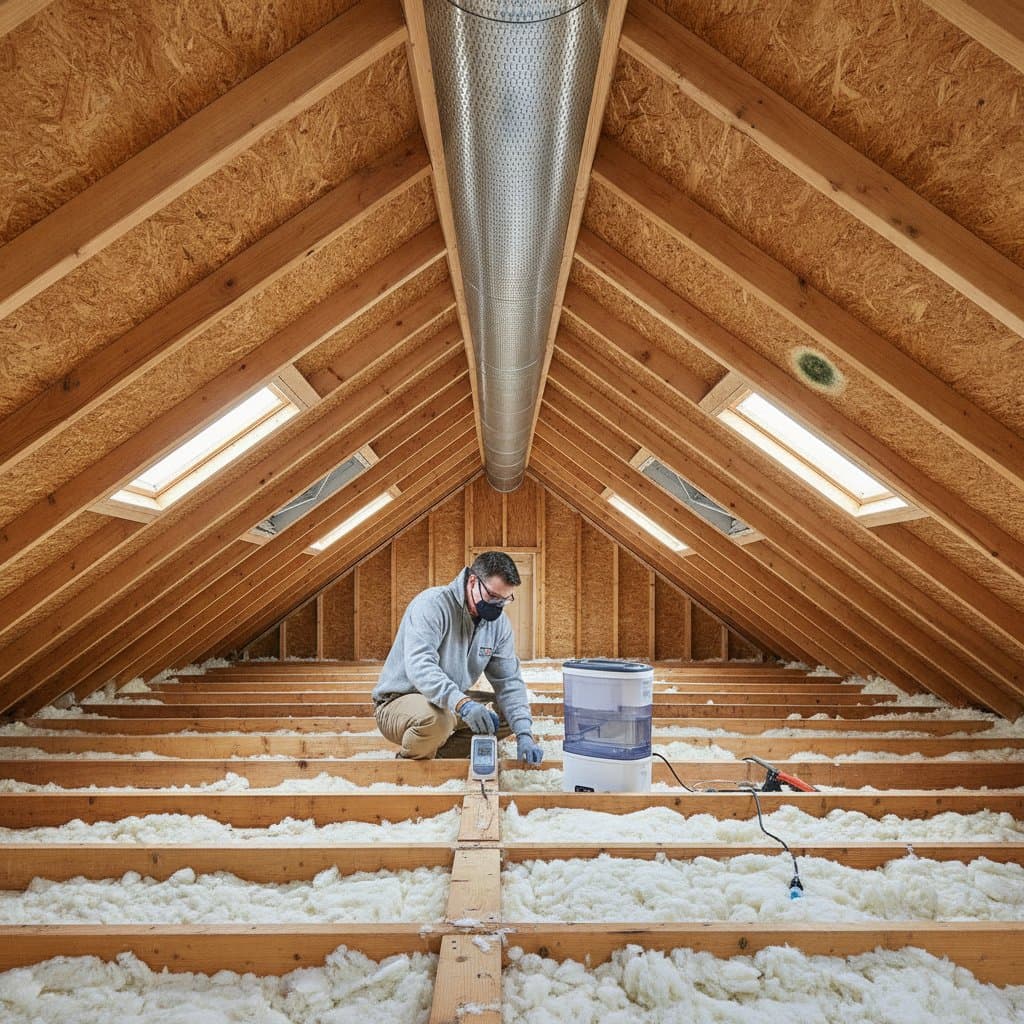
Prepare with essential protective equipment: durable gloves, safety goggles, and an N95 respirator. Equip yourself with a high-lumen flashlight to examine roof decking, rafters, insulation layers, and zones near vents or plumbing penetrations. Shift insulation cautiously to expose underlying wood surfaces. Focus particular attention on eave regions where airflow diminishes.
Acquire a moisture meter from hardware retailers or online sources for $20 to $50. This tool quantifies wood dampness levels; readings exceeding 20 percent necessitate immediate corrective measures prior to any remediation efforts. Capture photographic evidence of observations to support professional consultations or monitor subsequent improvements.
Approaches to DIY Mold Remediation
Areas under 10 square feet permit homeowner-led cleanup in most cases. Larger or deeply embedded growths require engagement of licensed remediation experts.
Essential Materials:
- Mild detergent or dedicated mold remover
- Non-abrasive brush for scrubbing
- Spray bottle containing a 1:1 vinegar-water solution or 3 percent hydrogen peroxide
- Single-use cloths
- Heavy-duty plastic sheets for isolating the workspace
Procedure:
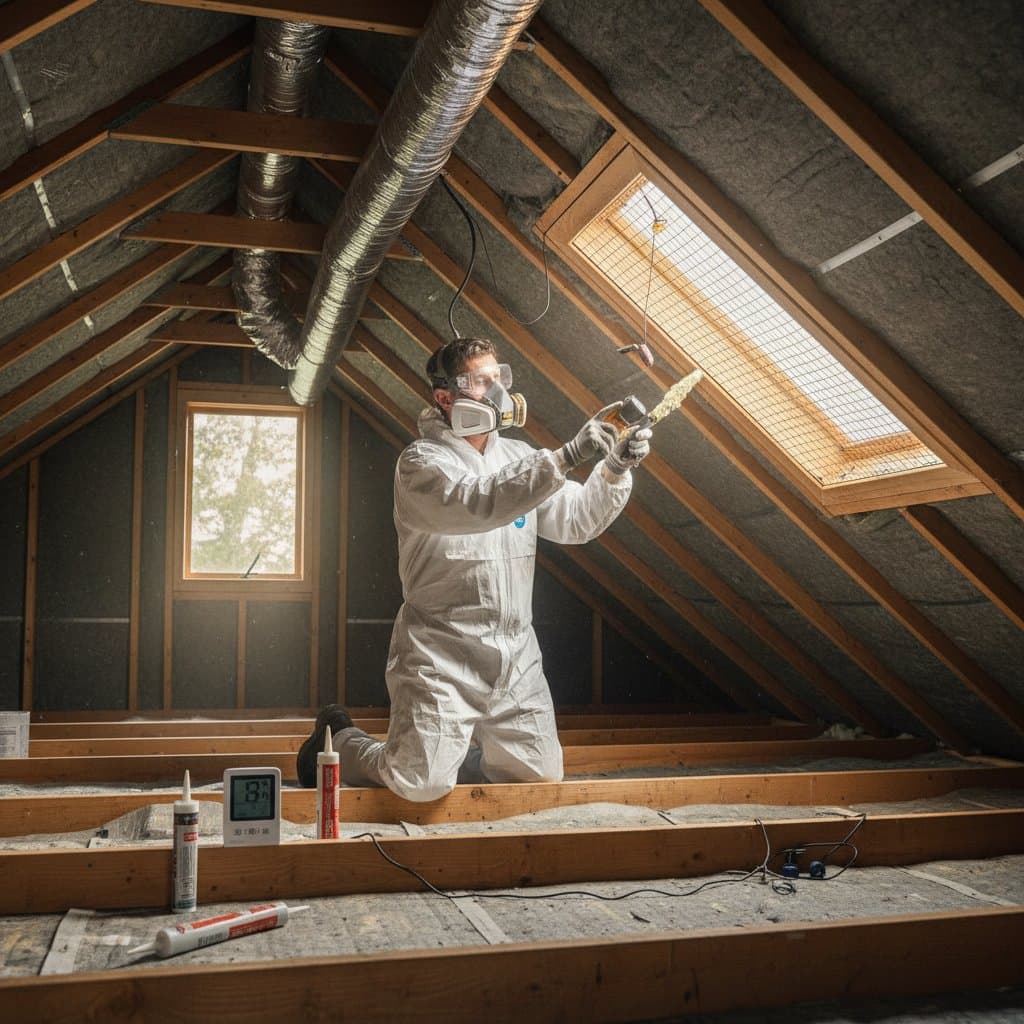
- Secure the attic access point with plastic sheeting to contain airborne particles.
- Prepare a solution of detergent in warm water or deploy a commercial mold treatment.
- Apply the mixture and scrub impacted surfaces with controlled pressure to minimize wood saturation.
- Perform a light rinse and ensure thorough drying, ideally with fans or dehumidifiers.
- Disinfect with vinegar or peroxide application to inhibit recurrence.
Bleach proves ineffective on absorbent materials such as wood, as it addresses only superficial layers while roots persist.
Estimating Costs and Timelines
Homeowner remediation for small zones incurs material expenses below $100. Expert services span $500 to $3,000, influenced by affected area size, requirements for structural dehumidification, or insulation renewal.
Self-directed tasks conclude in one day for modest scopes. Professional interventions typically span two to three days, encompassing drying phases and protective applications.
Enhancing Ventilation for Lasting Prevention
Optimal airflow serves as the cornerstone of sustained mold resistance. Systems should intake cooler air via soffit intakes and expel warmer air through ridge or gable outlets. Imbalances lead to moisture stagnation.
Verify soffit vents remain unobstructed by insulation; reposition batts to establish unobstructed pathways. Clear ridge vents of accumulated debris or overlapping roofing. For persistently warm attics, install solar attic fans costing $200 to $600; these promote steady circulation without elevating utility costs.
Optimizing Insulation and Vapor Controls
Misplaced insulation contributes significantly to mold risks. Contact between insulation and roof decking invites condensation buildup. Install baffles or rafter channels to preserve a 1- to 2-inch airspace.
Suitable options include fiberglass or cellulose batts, while spray foam offers enhanced sealing when applied by qualified installers. A vapor retarder on the attic floor mitigates upward moisture migration from occupied areas below. This installation averages $1 per square foot in supplies and suits weekend completion by capable homeowners.
Resolving Leaks and Ventilation Sources
Superior airflow cannot offset ongoing water intrusion. Examine flashing surrounding chimneys, skylights, and vent stacks for deterioration or separations. Promptly replace absent or compromised shingles; minor fixes rarely exceed $200 and avert extensive future expenditures.
Direct bathroom or kitchen exhausts away from the attic interior. Route ducts externally with insulated, flexible piping to redirect steam outdoors. This modification curtails humidity influx and stabilizes home-wide moisture levels.
Criteria for Professional Intervention
Engage certified specialists when mold exceeds manageable sizes, reemerges post-treatment, or emits potent odors. Experts deploy HEPA filtration, air containment units, and biocidal coatings to eradicate and seal against resurgence. Air sampling confirms spore elimination and verifies remediation efficacy.
Such services provide assurance through guarantees and thorough documentation. Confirm licensing and liability coverage prior to selection.
Routine Maintenance Practices
Post-remediation, integrate regular evaluations to sustain attic conditions.
- Conduct vent and insulation reviews each summer for obstructions.
- Post-storm assessments target potential ingress points or saturation.
- Monitor with a handheld hygrometer to maintain levels under 50 percent relative humidity.
- Renew damp or odorous insulation promptly.
- Service exhaust systems annually to validate operational efficiency.
These practices preserve attic vitality while easing HVAC demands, potentially trimming cooling expenses by 15 percent.
Sustaining Attic Health Long-Term
Effective mold deterrence integrates vigilant monitoring, humidity regulation, and upkeep. Knowledge of growth prerequisites empowers preemptive measures. Prioritize ventilation upgrades, leak repairs, and dry insulation maintenance. Residents in high-humidity zones benefit from upper-level dehumidification to curb attic vapor ascent.
Adherence to these protocols yields homes with improved freshness and comfort. A well-maintained attic safeguards roofing elements, elevates air purity, and minimizes unforeseen costs across seasons.