
Quarterly HVAC Filter Schedule: Enhance Air Quality and Efficiency
A home's HVAC system influences daily comfort and well-being. The filter serves as a critical component, capturing dust, pollen, and other particles circulating through the ducts. Neglected filters restrict airflow, increase energy consumption, and allow contaminants to reenter living spaces. A quarterly replacement schedule maintains optimal performance, supports cleaner air, and reduces operational costs.
This guide outlines a year-round filter maintenance plan, explains its importance, and provides seasonal considerations. It details filter options, replacement procedures, and professional recommendations to prolong equipment life and improve indoor environments.
Key HVAC Filter Categories
Filters vary in construction and performance levels. Selection depends on household needs, such as pet presence, allergy concerns, or local air conditions.
Standard options available at retail outlets include:
- Fiberglass filters: Inexpensive and straightforward, these capture larger debris but overlook smaller allergens.
- Pleated filters: Constructed from layered synthetic materials, they effectively trap finer particles over a larger surface area.
- Electrostatic filters: These employ an electric charge to draw in dust, smoke, and microscopic contaminants.
- HEPA filters: Designed for superior particle retention, they remove nearly 100 percent of airborne irritants.
- Reusable filters: Durable and washable, these require regular cleaning to sustain effectiveness.
Filters feature a MERV rating that indicates filtration capability. Ratings from 8 to 12 suit most residences, particularly those with sensitive individuals. Higher ratings demand compatible systems to avoid airflow restrictions.
Detailed Guide to Filter Replacement
Replacement involves a straightforward sequence that requires minimal time. Shut off power to the HVAC unit prior to beginning.
- Power down the system via the thermostat or electrical breaker.
- Identify the filter compartment adjacent to the air handler or intake grille.
- Remove the existing filter and record its dimensions from the frame edge.
- Align the new filter according to the directional arrows, ensuring proper orientation toward airflow.
- Close the access panel securely and restore power.
Important precaution: Avoid inserting an ill-fitting filter, as improper seals permit contaminants to enter the system core. Measure the slot precisely if dimensions vary from standard sizes.
Track future replacements with a label on the unit or digital calendar alerts. Advanced thermostats often include built-in reminders for maintenance intervals.
Visual Aids for Maintenance
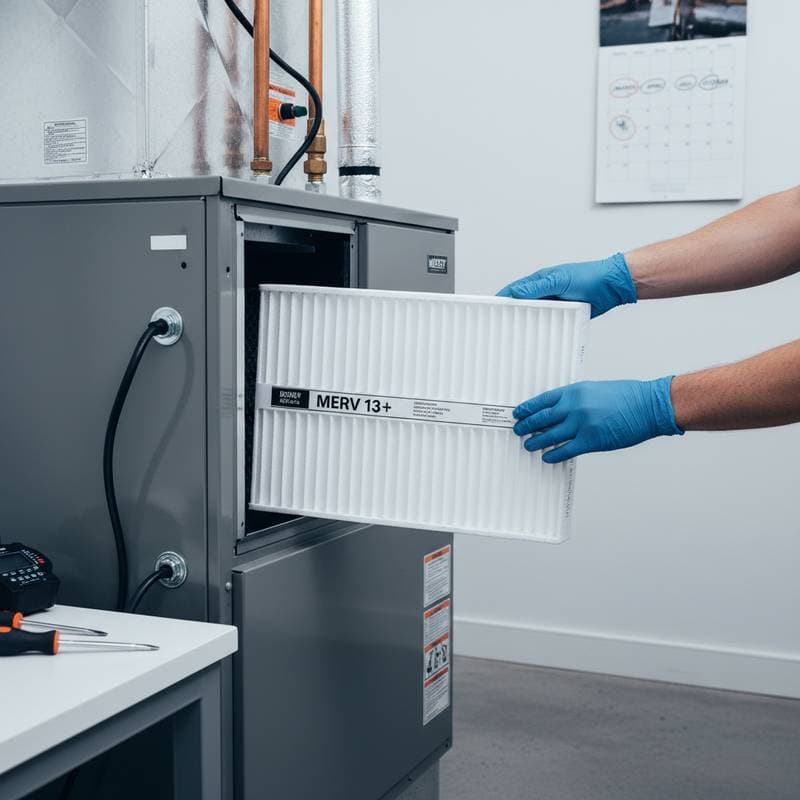
- Image 1: Individual installing a fresh pleated filter into the HVAC intake. Alt text: homeowner inserting new air filter into residential HVAC unit during routine check.
- Image 2: Side-by-side view of a soiled filter versus a pristine one. Alt text: comparison of clogged HVAC filter and newly installed clean filter.
- Image 3: Visual timeline marking filter changes across spring, summer, fall, and winter. Alt text: seasonal calendar for HVAC filter replacements in home care routine.
Such illustrations clarify the process and highlight signs of filter degradation, aiding visual learners in maintenance tasks.
Insights from Professionals and Homeowners
Technicians report that clogged filters account for a significant portion of service requests. Online forums reveal user experiences, including one account of a 20 percent energy savings after adopting quarterly changes. Another individual observed reduced allergy episodes following the upgrade to MERV 11 filters.
Experts emphasize verifying filter alignment and seal integrity during installation. Misplaced arrows can reverse effectiveness, while gaps allow debris to accumulate on internal components. Professionals suggest annual professional inspections to complement DIY efforts.
Benefits of Superior Indoor Air
Indoor air quality impacts health beyond mere comfort. Research from environmental health groups associates filtered air with improved rest and decreased respiratory issues. Households with young children or seniors gain the most from regular filtration.
Effective filters also preserve household items by minimizing dust settlement on surfaces and devices. This practice fosters a protective barrier against unseen pollutants, promoting sustained wellness without extensive renovations.
Integrating Filter Care into Seasonal Routines
Align filter replacements with established home maintenance activities for consistency. Consider combining with:
- Testing smoke and carbon monoxide detectors.
- Clearing lint from dryer exhaust paths.
- Examining seals around windows and doors.
- Draining sediment from water heaters.
This approach establishes a systematic pattern that simplifies ongoing care. Regular attention prevents imbalances that lead to unexpected breakdowns and higher repair expenses.
Advanced Strategies for Optimal Performance
- Purchase filters in advance to ensure timely availability.
- Mark installation dates directly on the filter frame.
- Clean surrounding grilles with a vacuum during each swap.
- Inspect insulation near the air handler for wear.
- Schedule coil cleaning by a professional every 12 to 24 months.
Implementing these measures sustains system reliability and efficiency over time. Quarterly diligence translates to long-term savings and a healthier living space.
Closing Focus: Sustained System Health
Consistent filter management safeguards air purity, curbs expenses, and extends HVAC longevity. These routine actions deliver tangible improvements in comfort and vitality year-round.




