Safeguard Your Home with Fall Chimney Preparation
A fireplace provides warmth and ambiance to any home, yet it requires diligent maintenance that homeowners often neglect until issues arise. Preparing the chimney before autumn arrives stands as one of the most reliable methods to shield the property from expensive repairs and safety threats. A clean and well-maintained chimney maintains heating efficiency and blocks smoke or hazardous gases from entering living spaces. Through targeted steps, homeowners can ready the chimney for a season of secure fires.
The Importance of Seasonal Chimney Maintenance
The chimney functions tirelessly to expel smoke, gases, and debris from the residence. Over time, soot and creosote build up within the flue. Creosote, a tar-like and highly flammable material, ignites easily during intense fires. Even minimal accumulation poses a risk of chimney fires. The Chimney Safety Institute of America identifies creosote buildup as a leading cause of home chimney fires. One thorough cleaning prior to fall eliminates this danger and reinstates optimal airflow.
Moisture presents another significant threat. Chimney bricks and mortar readily absorb water, which expands in freezing conditions and leads to cracks. A compromised liner or deteriorating mortar joints permits heat to escape into walls or attics. Such damage heightens fire hazards and allows carbon monoxide infiltration. Routine inspections detect these problems at an early stage.
Professional Inspection and What to Expect
Engaging a certified chimney sweep offers the most secure approach to verifying system integrity. A comprehensive inspection typically ranges from 100 to 300 dollars, varying by location and chimney dimensions. Technicians examine four primary components during the visit:
- Exterior Structure: Identification of cracks, dislodged bricks, or absent mortar that might permit water entry.
- Flue Interior: Assessment for creosote deposits, obstructions, or liner damage.
- Smoke Chamber and Damper: Verification that these elements operate smoothly without corrosion or distortion.
- Firebox: Evaluation of the fireplace surround for unstable bricks, voids, or degradation.
A Level 1 inspection suffices for routine maintenance on frequently used, well-kept chimneys. For concerns like poor drafts, unusual smells, or evident damage, a Level 2 inspection incorporates video scanning of the flue to uncover internal fractures or debris such as nests. This advanced examination identifies concealed issues before they escalate into major fixes.
Cleaning and Debris Removal
Autumn foliage, branches, and animal nests frequently obstruct chimney tops. A blocked flue hinders smoke escape, redirecting it into occupied rooms. Wildlife like birds and rodents often nest in chimneys seeking shelter as temperatures decline, so installing a durable cap crafted from stainless steel or copper proves essential. This addition, priced at 50 to 200 dollars, deters pests and water entry alike.
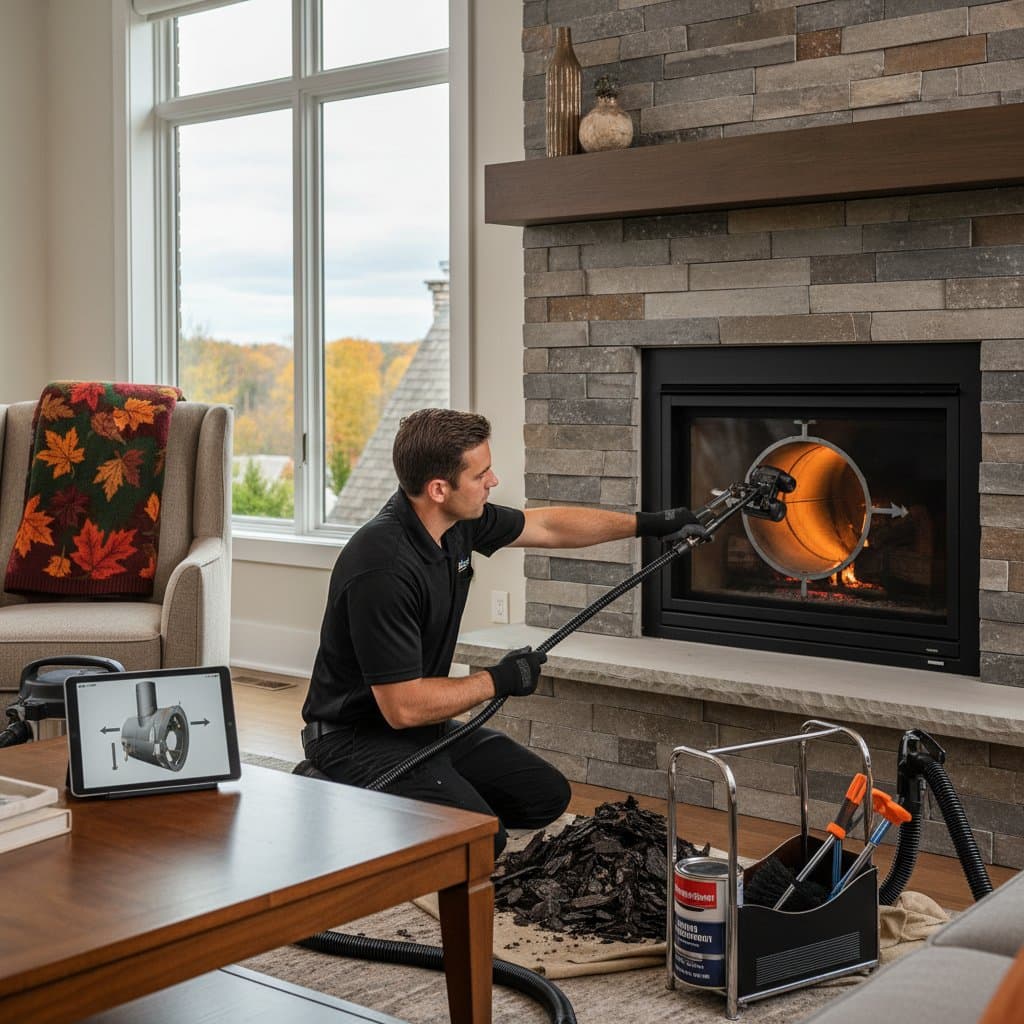
Professional cleaning employs specialized brushes and vacuums to scrub soot and creosote from flue surfaces. For those opting for self-cleaning, secure a tall, steady ladder, a brush matched to the flue diameter, and safety equipment such as gloves, goggles, and a respirator. Seal the fireplace with plastic sheeting prior to beginning to contain soot within the work area.
Checking for Proper Draft and Airflow
Effective draft propels smoke upward and outward, away from the home. Post-cleaning, assess the draft by igniting a small paper scrap in the firebox and monitoring smoke behavior. The smoke must ascend swiftly. Lingering or lateral movement signals potential blockages or excessive home airtightness. Cracking a window can adjust air pressure to aid balance.
Persistent draft issues warrant a professional review of flue dimensions relative to the firebox. Mismatched sizes frequently result in smoke backup. Occasionally, installing a top-sealing damper enhances circulation and conserves energy. These dampers seal firmly when idle, barring heat loss, precipitation, or debris.
Waterproofing and Exterior Protection
With the chimney cleaned and inspected, apply a breathable masonry water repellent to the outer surface. This product permits internal moisture evaporation while repelling rainwater absorption. Steer clear of ordinary sealants or paints, as they retain water and accelerate deterioration. A premium repellent endures multiple years and costs 40 to 60 dollars per gallon, covering 100 to 150 square feet per application.
Inspect the flashing, the metal barrier sealing the chimney-roof junction. Corroded or displaced flashing invites leaks into attics or ceilings. Flashing replacement generally runs 200 to 500 dollars, influenced by roof configuration. This investment averts interior water damage or mold growth.
Preparing the Fireplace Interior
Within the residence, scrub the firebox meticulously. Clear ashes and scrutinize refractory panels for fractures. Minor hairline cracks occur naturally, but those exceeding one-eighth inch demand patching with fire-rated mortar. Examine the grate too. Replace any bent or corroded versions with robust cast iron units suited to the firebox size. Such grates facilitate log airflow and promote thorough combustion.
For regular wood burning, select dry, seasoned hardwoods like oak, maple, or birch. These varieties generate less creosote compared to softwoods and combust more intensely and cleanly. Elevate firewood storage off the ground, cover only the top, and ensure side ventilation to maintain dryness.
Safety Devices and Indoor Air Quality
Homes equipped with fireplaces require functional smoke and carbon monoxide detectors in proximity. Test these units monthly and swap batteries biannually at minimum. Position detectors on every floor, particularly adjacent to sleeping areas. Chimney malfunctions may silently compromise air quality, rendering these alerts critical safeguards.
Pro Tips for Success
- Schedule ahead. Book inspections and cleanings before initial cold snaps, as experts fill calendars rapidly in high season.
- Record maintenance. Maintain files of all services, including inspections, cleanings, and fixes, to support insurance processes or property transactions.
- Monitor indicators. Ceiling stains near the chimney, efflorescence on bricks, or lingering smoke scents suggest underlying moisture or structural concerns.
- Select appropriate equipment. Bypass chemical cleaners or additive logs purporting to break down creosote; they dislodge but fail to substitute for mechanical scrubbing.
- Shield the area. Deploy drop cloths prior to cleaning or the season's inaugural fire to capture ash or particles.
Sustain Chimney Health Year-Round
Diligent chimney upkeep preserves the home, finances, and living comfort. Annual fall efforts spanning mere hours forestall thousands in losses from flames, soot, or water intrusion. An immaculate, optimized chimney consumes fuel more effectively, lowering expenses and minimizing pollutants indoors.