Fall Chimney Inspection: Costs and Essential Preparation Steps
A chimney inspection stands as a critical yet frequently neglected aspect of home maintenance. This process directly contributes to family safety and fireplace efficiency. As temperatures drop, homeowners often anticipate the warmth of fires, but an unchecked chimney introduces risks such as smoke infiltration, inadequate airflow, or potential fires. Elements like accumulated creosote, fractured flue liners, and deteriorated caps exacerbate these dangers. By arranging a fall inspection, individuals gain the opportunity to resolve issues prior to the initial use of the season.
This comprehensive guide details the components of a chimney inspection, associated expenses, and preparation methods for the professional visit. It further distinguishes scenarios where self-maintenance suffices from those requiring expert intervention. Understanding these elements empowers homeowners to protect their residences effectively.
Factors Influencing Chimney Inspection Costs
Expenses for chimney inspections vary based on the inspection's scope, the chimney's accessibility, and its overall state. Homeowners typically encounter the following ranges:
-
Level 1 Inspection: This involves a straightforward visual examination of the chimney's interior and exterior surfaces. Pricing generally falls between $75 and $150. Professionals recommend this option for systems that remain unchanged and receive regular use, as it confirms basic functionality without invasive measures.
-
Level 2 Inspection: Technicians employ video scanning to assess the flue thoroughly, alongside checks in connected areas like attics or crawl spaces. Costs range from $150 to $400. Homebuyers, sellers, or those who have modified their structures or experienced a fire event necessitate this deeper evaluation to uncover hidden defects.
-
Level 3 Inspection: For suspected extensive damage, this requires dismantling portions of the chimney structure for detailed analysis. Prices span $500 to $3,000, influenced by the project's intricacy and any immediate repairs. Such inspections prove vital in cases of severe deterioration or post-disaster assessments.
Separate charges apply to repairs and cleaning. A complete chimney sweep, which removes soot and creosote, averages $150 to $300, factoring in the accumulation level, chimney height, and entry challenges. Homes with multiple fireplaces incur additional fees per flue, often 20 to 50 percent more. Inquire about bundled packages, as many services offer combined inspection and cleaning during peak fall periods to simplify budgeting.
Regional differences also affect pricing; urban areas with higher labor rates may increase costs by 15 to 25 percent compared to rural locations. Insurance providers sometimes reimburse a portion of inspection fees, particularly for older homes, so reviewing policy details proves beneficial.
Steps to Prepare Your Home for the Inspection
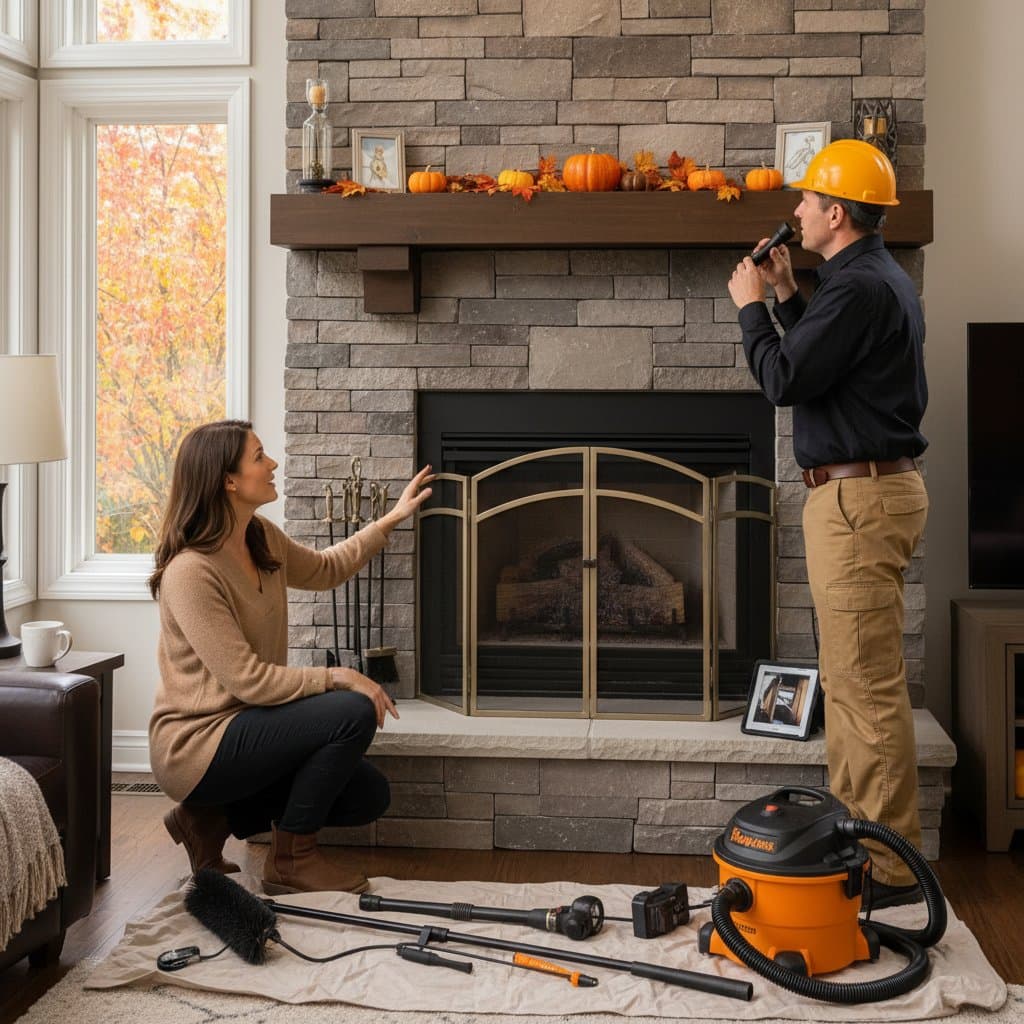
Effective preparation streamlines the technician's work, reduces visit duration, and enhances accuracy. Follow these structured steps to facilitate a smooth process.
-
Cease Fireplace Use: Refrain from operating the fireplace for at least 24 hours beforehand. This allows the system to cool fully, preventing burns and ensuring clear visibility of components.
-
Declutter the Hearth Area: Relocate furniture, area rugs, and ornamental items to a distance of at least six feet from the fireplace. Such clearance provides unobstructed access and minimizes dust disturbance during the examination.
-
Clear Ash and Debris: Safely extract accumulated ash from the firebox using appropriate tools, if comfortable doing so. This action exposes the masonry, damper, and surrounding areas for precise inspection.
-
Facilitate Roof Access: Prepare pathways, such as unlocking gates or positioning stable ladders, for external evaluations. Confirm that the roof surface remains dry and free of obstacles to support safe navigation.
-
Communicate Specific Issues: Inform the technician of observations like persistent smoke smells, weak drafts, or apparent cracks upon arrival. Directing attention to these points accelerates problem identification and resolution.
For households with pets, confine them to a separate room to avoid interruptions and uphold safety protocols. Document any recent chimney usage or modifications in advance, as this context aids the professional's assessment.
Typical Issues Identified in Fall Chimney Evaluations
Fall inspections frequently uncover problems stemming from summer humidity, heavy rains, or wildlife activity. Recognizing these early allows for timely corrections. Key discoveries include:
-
Creosote Accumulation: Incomplete fuel burning deposits this flammable residue inside the flue. Over time, it hardens and heightens fire risk; regular sweeps mitigate this by removing layers before they ignite.
-
Flue Liner Fractures: These cracks permit smoke and heat to seep into building materials, fostering mold or structural weakening. Inspectors use cameras to detect hairline fissures that might otherwise go unnoticed.
-
Damaged or Absent Chimney Caps: Without proper coverage, water, animals, and debris enter the system. Replacement caps, often stainless steel for durability, prevent moisture damage and pest infestations.
-
Compromised Flashing: The sealant between chimney and roof degrades, inviting leaks that erode roofing integrity. Sealing or replacing this component during inspection averts extensive water intrusion.
-
Obstructed Vents: Nests, fallen leaves, or sediment block airflow, reducing efficiency and increasing carbon monoxide hazards. Clearing these blockages restores proper ventilation and safety.
Prompt remediation of these concerns not only averts expensive overhauls but also enhances air quality within the home. Experts note that addressing minor flaws post-inspection can prolong chimney usability by 10 years or longer, safeguarding both property value and occupant well-being.
Strategies for Ongoing Chimney Maintenance
Sustaining chimney health extends beyond annual inspections; it demands consistent, proactive habits. Homeowners benefit from establishing routines that complement professional services. Begin by monitoring usage patterns: limit wood-burning to seasoned, dry logs to minimize creosote formation. Annually, inspect accessible exterior elements like caps and flashing for wear, tightening or patching as needed.
For DIY efforts, focus on safe tasks such as removing superficial ash or screening vents against birds. Avoid aggressive cleaning tools that could damage liners. Schedule professional sweeps after every 50 to 100 hours of use, adjusting based on fuel type; gas fireplaces require less frequent attention but still warrant visual checks.
Investing in preventive measures, like installing carbon monoxide detectors near the fireplace and ensuring damper functionality, fortifies overall safety. These practices reduce emergency calls, lower energy bills through improved draft, and preserve the chimney as a reliable heating asset. By integrating these steps, homeowners secure enduring comfort and peace of mind through the winter months.