Essential Fall Septic Pumping: Safeguard Against Winter Backups
Septic systems operate unobtrusively until issues arise. Fall presents an ideal period to address potential problems before frozen ground or intense precipitation complicates access. Understanding the timing for pumping and inspection ensures household safety, averts substantial damage, and promotes seamless operation during winter.
Benefits of Fall Maintenance Timing
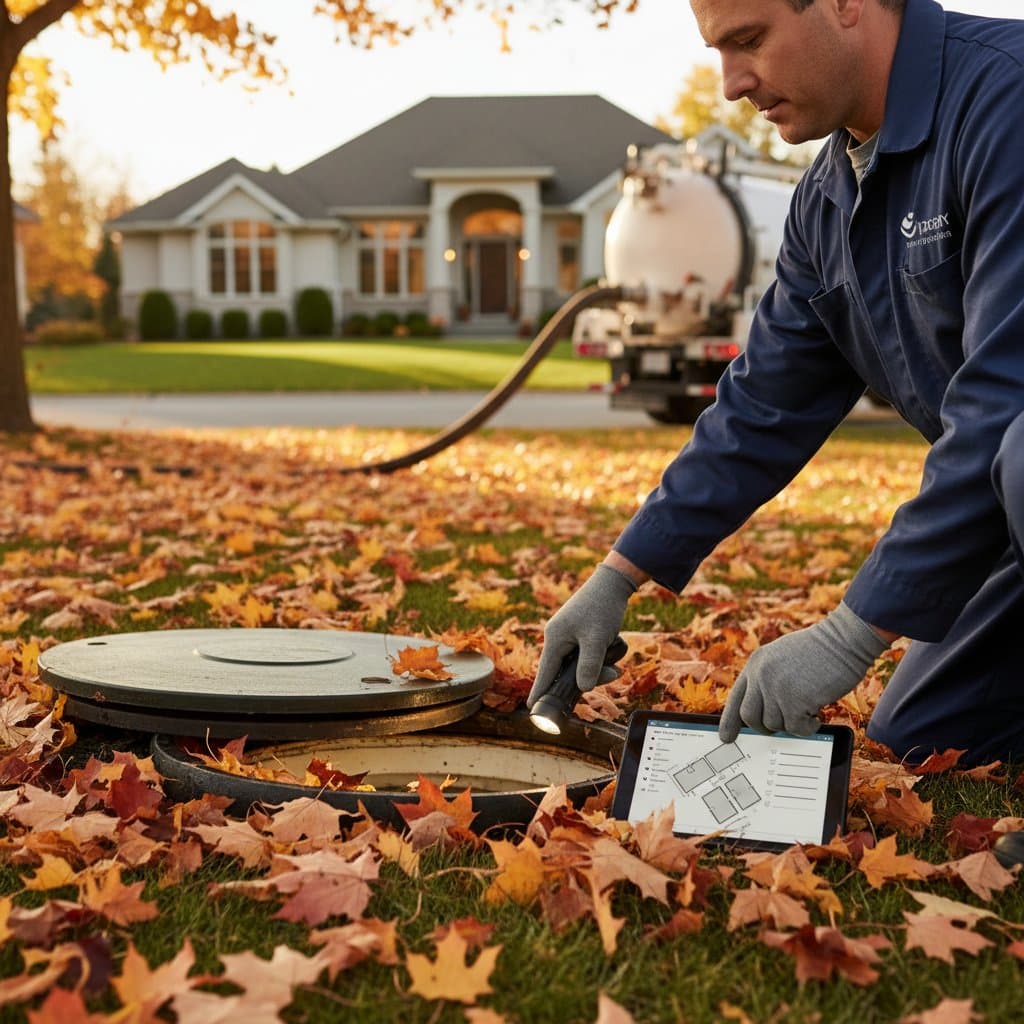
Milder temperatures simplify septic tasks for homeowners and service providers alike. Softer soil facilitates tank location and entry compared to frozen winter conditions. Preemptive pumping minimizes backup risks from iced drainfields or diminished bacterial processes within the tank. In areas with elevated water tables, this timing counters overflow problems following autumn downpours.
The National Onsite Wastewater Recycling Association advocates consistent inspections and pumping within a sustained care strategy. Fall aligns perfectly to identify minor concerns, such as obstructed baffles or fractured covers, prior to escalation into major expenditures.
Determining Pumping Frequency
Homeowners often wonder about the appropriate interval for septic tank pumping. Frequency varies based on tank capacity, family size, and configuration.
| Household Size | Tank Size (gallons) | Recommended Pumping Interval |
|---|---|---|
| 1-2 people | 750 | Every 4 to 5 years |
| 3-4 people | 1000 | Every 3 to 4 years |
| 5-6 people | 1250 | Every 2 to 3 years |
| 7+ people | 1500 | Every 1 to 2 years |
Plan pumping when sludge accumulates to one-third of the tank's depth. For a 48-inch tank, this threshold is approximately 16 inches. Service professionals employ a sludge judge, a specialized rod, to gauge levels accurately.
Neglecting scheduled pumping yields temporary savings but permits solids to infiltrate the drainfield, obstruct conduits, and impair soil percolation. Such damage may necessitate complete system overhaul, with costs ranging from $8,000 to $25,000 influenced by terrain and regional codes.
Components of a Comprehensive Fall Inspection
Inspections extend beyond tank visualization to encompass vital elements affecting performance.
Tank Integrity and Access
Examine for fissures, corrosion, or absent fasteners on the lid. A secure fit prevents ingress of rainwater or refuse. Address compromised gaskets without delay.
Baffle Functionality
Baffles regulate wastewater flow into and out of the tank. Damage or absence permits solids migration to the drainfield. Technicians verify integrity and positioning during checks.
Layer Measurements
Assess sludge at the base and scum on the surface to evaluate pumping requirements. Balanced layers support bacterial decomposition.
Drainfield Evaluation
Detect saturated areas, foul smells, or vibrant turf over the field, signaling poor effluent dispersal. Conduct percolation tests to measure soil uptake.
Pump and Electrical Systems
For pumped setups, verify wiring and switch operations. Faulty elements risk household flooding.
Routine fall assessments uncover precursors to crises early.
Pitfalls to Avoid in Septic Care
Well-meaning owners inadvertently compromise systems through minor lapses. Steer clear of these common errors:
- Delaying adherence to pumping timelines, which invites backups and sanitation hazards.
- Employing aggressive cleaners that eradicate waste-decomposing microbes.
- Situating vegetation adjacent to the drainfield, where roots penetrate lines.
- Positioning vehicles over the field, compacting earth and fracturing pipes.
- Disposing non-degradable items like wipes, accelerating clogs.
Such oversights accelerate wear and demand interventions.
Professional Service Versus Home Efforts
Certain upkeep tasks suit homeowner management, yet pumping and detailed inspections require certified experts. Individuals may undertake these measures:
- Delineate tank and field boundaries for straightforward entry.
- Survey for pooling or scents in the landscape.
- Track consumption to prevent system strain.
- Log service history for interval planning.
Experts arrive with tools for precise sludge assessment, line scrutiny, and extraction. Services typically range from $300 to $700, scaled by tank dimensions and site factors. For deeply buried units, risers enhance accessibility at $200 to $400.
Winter Protection Strategies Post-Maintenance
Following pumping and review, implement safeguards against seasonal rigors.
- Preserve natural cover by avoiding mowing over the drainfield; 4 to 6 inches of grass insulates effectively.
- Redirect surface flows from roofs and pavements using extensions.
- Moderate usage in cold spells with efficient routines.
- Mark ports with durable indicators for snow-covered detection.
During absences, enlist aid to cycle minimal water, thwarting freezes.
Ensuring System Accessibility and Security
Maintain unobstructed paths to components for routine or urgent needs. Clear a 3-foot perimeter around lids, free of obstacles. Lids must resist displacement while permitting manual removal. For accessibility-challenged households, ground-level risers with secure covers prove beneficial.
Prohibit personal tank entry due to hazardous vapors that induce rapid unconsciousness. Delegate internal tasks to qualified personnel.
Indicators Requiring Prompt Attention
- Noises resembling gurgling from fixtures.
- Delayed drainage across plumbing.
- Odors emanating from interiors or exteriors.
- Abnormal turf vitality near components.
- Visible pooling adjacent to the tank.
Sustaining Long-Term System Vitality
Distribute usage evenly to ease daily loads. Install efficient fixtures to lessen output. Divert organics from disposals via composting. Routinely scan for drips that amplify volume.
Schedule Your Fall Service Today
Act now to secure professional pumping and inspection. This proactive step fortifies your septic infrastructure, averts disruptions, and upholds home integrity through winter and beyond.