Understanding Ventilation as a Mold Prevention Strategy
Attic mold represents a concealed threat that undermines both structural integrity and occupant health. Homeowners often overlook the rapid proliferation of mold when moisture, heat, and stagnant air converge within the roof area. Fortunately, an optimized ventilation system halts mold development at its inception. This guide delineates the causes of attic mold, the role of ventilation in mitigation, and practical measures for sustained home protection.
Ventilation Mechanics and Mold Prevention
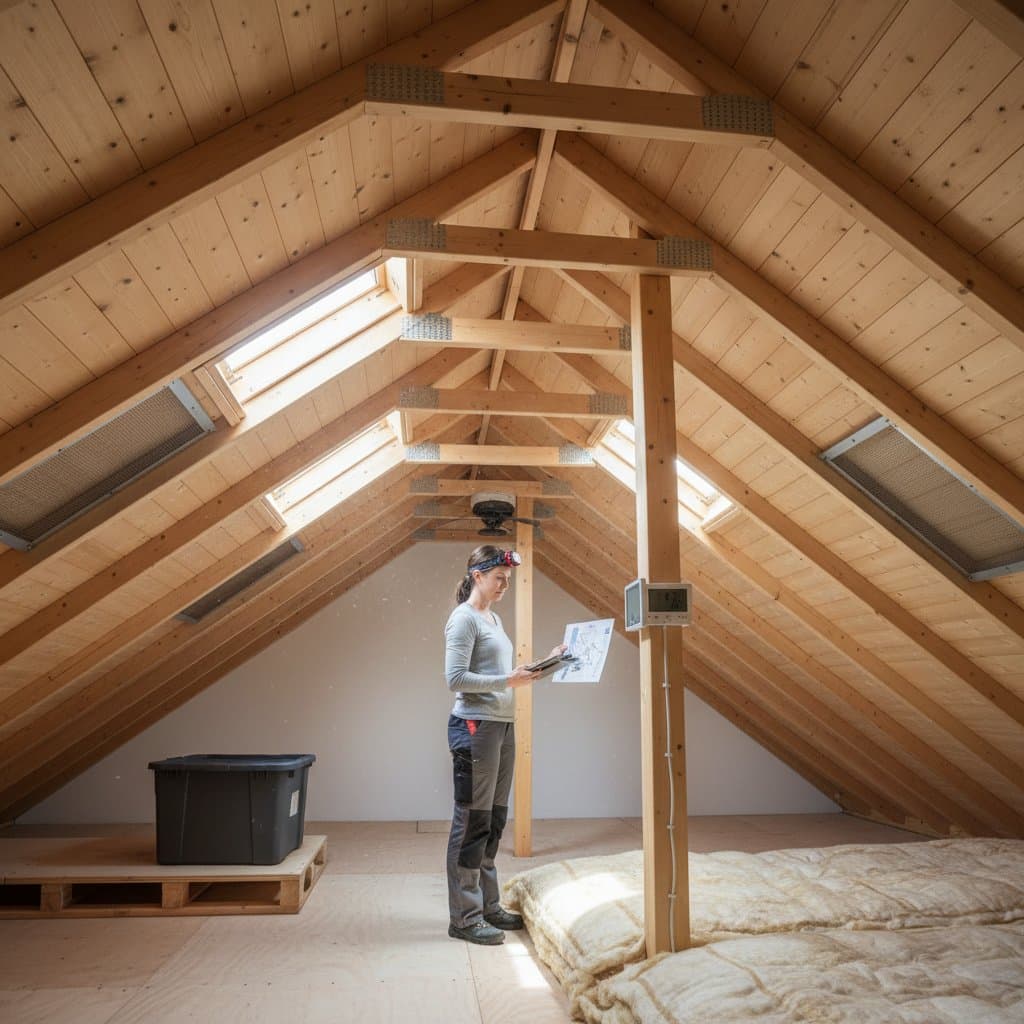
Effective ventilation maintains equilibrium between air inflow and outflow. Cooler, drier air enters via soffit vents located at the eaves, whereas warmer, humid air escapes through ridge or roof vents positioned at the roof's apex. This steady circulation moderates temperature and humidity levels, thereby inhibiting condensation on wooden elements.
A well-engineered system functions through natural convection, facilitating air exchange without reliance on powered assistance. Such a configuration achieves several benefits:
- Minimizes moisture accumulation that sustains mold colonies
- Preserves the dryness and stability of roof decking
- Prolongs shingle durability by mitigating thermal stress
- Decreases summer cooling demands and winter heating loads
While ventilation cannot remediate existing water intrusion, it effectively precludes moisture recurrence following repairs. Roofing specialists frequently report that attics with adequate ventilation exhibit up to a 90 percent reduction in mold susceptibility relative to unvented enclosures.
Steps to Enhance Ventilation and Eliminate Mold Risk
Remediating attic mold commences with airflow optimization. The following sequence provides a structured approach suitable for homeowners or professionals.
1. Evaluate Existing Ventilation Capacity
Quantify intake and exhaust vents present. Industry standards recommend one square foot of net free ventilation area per 300 square feet of attic floor space, divided equally between intake and exhaust components. Insufficient or imbalanced venting leads to airflow stagnation.
2. Cleanse and Restore Current Vents
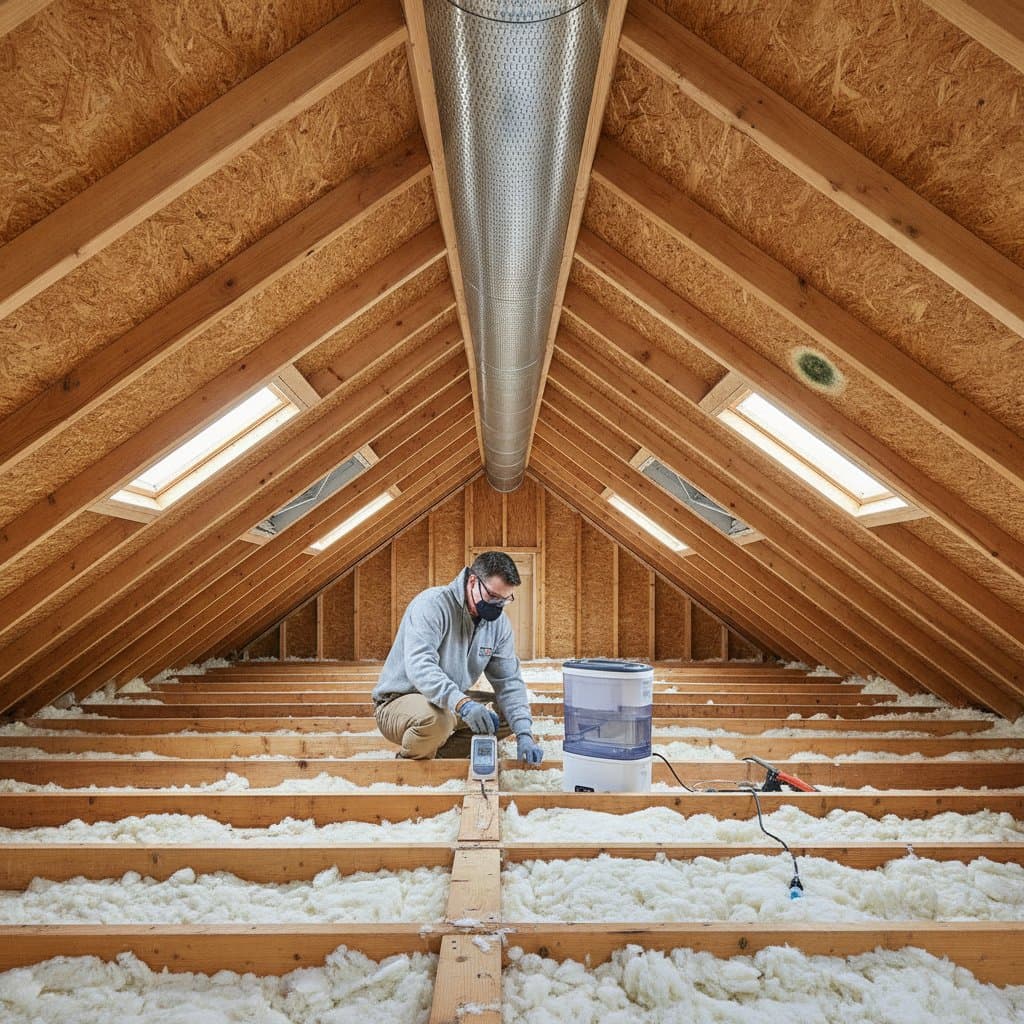
Examine soffit and ridge vents for obstructions such as debris, insulation encroachment, or structural impairments. Employ a shop vacuum or compressed air to remove blockages. Substitute damaged vent screens and verify that exhaust ducts from bathrooms or clothes dryers terminate externally, avoiding discharge into the attic.
3. Incorporate Additional Vents as Required
Address disparities in intake versus exhaust by installing supplementary vents. Prioritize soffit vents for incoming air and ridge vents or louvered roof mounts for outgoing flow. Gable-end vents may augment circulation but cannot substitute for a comprehensive soffit-ridge arrangement. Distribute new vents uniformly along the roof perimeter to foster uniform air distribution.
4. Eliminate Air Infiltrations from Occupied Areas
Humid air frequently infiltrates attics via minor breaches around recessed lighting, plumbing vents, and access panels. Apply polyurethane foam or adhesive weatherstripping to close these pathways. This intervention prevents the migration of conditioned indoor air laden with vapor into the attic space.
5. Inspect and Refine Insulation Placement
Appropriate insulation stabilizes attic temperatures and curbs condensation risks. Confirm that insulation materials do not impede soffit vent pathways. Install rigid plastic baffles to secure air channels alongside insulation depth. Both fiberglass batts and blown-in cellulose perform reliably, though closed-cell spray foam offers superior vapor barriers when applied by qualified installers.
6. Integrate Powered Ventilation for Enhanced Performance
In regions prone to high humidity or proximity to water bodies, an electric attic fan provides supplemental airflow. Contemporary units incorporate automatic controls responsive to temperature thresholds and relative humidity. Although passive systems suffice in many cases, powered options prove invaluable when ambient conditions overwhelm natural draft.
Guidelines for DIY Efforts Versus Professional Intervention
Individuals proficient with hand tools may undertake vent cleaning, leak sealing, and insulation adjustments independently. These activities pose minimal hazards when executed with personal protective equipment and secure access methods. Don a NIOSH-approved respirator during interactions with potential mold or fibrous insulation.
Engage specialists under these circumstances:
- Extensive mold infestation involving load-bearing timber
- Confined attic entry or challenging roof pitches
- Requirement for venting modifications penetrating roofing assemblies
- Evidence of rafter or sheathing deterioration from prolonged exposure
Licensed mold abatement teams address contaminated zones with containment and antimicrobial treatments. Roofing experts engineer compliant ventilation layouts, ensuring comprehensive resolution and recurrence prevention.
Selecting Durable Materials and Essential Tools
Ventilation enhancements demand resilient components and precise application techniques. Opt for these proven options:
- Aluminum or PVC soffit vents resistant to environmental corrosion
- Seamless ridge vent systems featuring integrated drip edges for weather resistance
- Polystyrene insulation baffles to preserve vent clearance
- High-temperature silicone sealants and low-expansion foams suited to attic extremes
- Digital hygrometers for precise humidity assessment
Key implements encompass a battery-powered drill, reciprocating saw for vent cutouts, caulking applicator, and digital moisture probe. An infrared thermographic device aids in identifying thermal bridges susceptible to dew point formation. Acquiring these resources equips homeowners to preemptively manage ventilation challenges.
Advanced Strategies for Optimal Results
Monitor attic conditions using a calibrated hygrometer, targeting relative humidity under 50 percent. Apply mildewcide primers to bare lumber post-drying to impart lasting resistance. During solar array installations, confirm vent patency remains uncompromised. Record all ventilation modifications in maintenance logs, bolstering property documentation for insurance claims or market transactions. Schedule routine attic evaluations alongside annual roofing assessments conducted by certified technicians.
These practices amplify system efficacy, establishing robust defenses against insidious moisture ingress.
Sustaining Attic Health for Long-Term Benefits
A ventilated attic extends beyond roof preservation to uphold insulation efficiency, air purity, and framework resilience. With balanced airflow in place, the space serves as a proactive shield against fungal degradation. Homeowners commonly report diminished respiratory irritants and optimized utility expenditures following upgrades.
Vigilant humidity oversight, periodic airflow verification, and prompt response to anomalies ensure enduring protection. Mold thrives only where vigilance lapses; proactive measures render attics inhospitable to such threats.