
15 Essential Checks to Keep Your AC Running Efficiently All Summer
Summer temperatures challenge air conditioning systems, making them essential for home comfort. Neglected units lose efficiency quickly, leading to higher energy use and unexpected failures. Conducting these checks before the hottest months prepares the system for reliable performance, reduces operating costs, and maintains steady indoor temperatures. Homeowners can handle many tasks independently, while others benefit from professional expertise.
1. Inspect and Replace the Air Filter
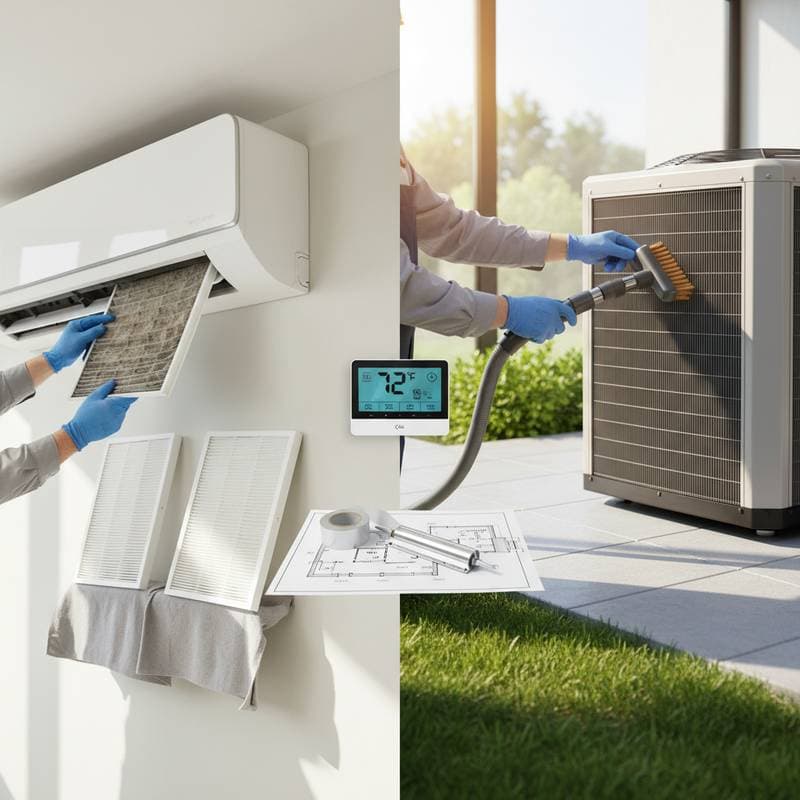
Air filters trap dust and particles, but clogs reduce airflow and strain the system. Restricted flow increases energy consumption and circulates allergens. Examine the filter monthly during cooling season by holding it against light; replace it if visibility through the material diminishes. Opt for high-MERV rated filters in homes with pets or allergy sufferers to capture smaller particles and enhance air quality.
2. Clean the Condenser Coils
Outdoor condenser coils expel absorbed heat, but accumulated dirt, leaves, and pollen hinder this process. Inefficient heat release forces the compressor to labor excessively, raising bills and risking damage. Shut off power to the unit, then gently brush fins and rinse with a garden hose on low pressure. This maintenance restores efficiency and eases system workload.
3. Check the Evaporator Coil
The indoor evaporator coil draws heat from air, yet dust and condensation form insulating layers that impair function. Such buildup leads to reduced cooling and potential ice formation on the coil. Access the coil via the air handler panel and inspect for grime; wipe light deposits with a soft cloth, but schedule professional service for heavy accumulation. Clean coils ensure consistent temperature control.
4. Clear the Condensate Drain Line
Cooling air generates moisture that exits through the drain line, which algae and debris often obstruct. Blockages result in water backups, leaks, and unpleasant odors from mold. Locate the drain access point and flush the line with a solution of one part vinegar to ten parts water using a wet-dry vacuum. This practice averts overflows and promotes healthier indoor environments.
5. Inspect the Thermostat
Thermostats regulate cooling cycles, but inaccuracies cause overworking or insufficient cooling. Verify settings by placing a separate thermometer nearby; discrepancies exceeding two degrees signal the need for recalibration. Install programmable or smart models to automate adjustments based on occupancy patterns. Accurate control optimizes energy use and comfort levels.
6. Tighten Electrical Connections
Vibrations from operation loosen wires, potentially causing intermittent power issues or component failure. Corrosion or fraying further compromises safety. Turn off power at the breaker, then visually scan connections in the condenser and air handler for tightness. Professionals handle this task to avoid electrical hazards and safeguard system integrity.
7. Lubricate Moving Parts
Fans and motors endure prolonged operation, where inadequate lubrication accelerates wear and noise. Friction also elevates energy demands. Consult the equipment manual to identify ports, then apply manufacturer-specified oil drop by drop. Proper lubrication supports quiet, durable performance.
8. Inspect the Fan Blades
Imbalanced or soiled fan blades disrupt airflow, straining motors and generating vibrations. Indoor and outdoor fans require attention for bends or residue. Wipe blades clean and realign any distortions using gentle pressure. Well-maintained blades promote even air distribution and minimize operational stress.
9. Test System Controls
Controls dictate startup, runtime, and shutdown sequences; malfunctions lead to erratic behavior like frequent cycling. Engage the system and observe for smooth transitions without unusual pauses. Adjustments to the control board or thermostat resolve minor glitches detected early. Proactive testing identifies problems before they escalate.
10. Examine the Refrigerant Lines
These lines transport refrigerant for heat exchange, with damaged insulation allowing energy escape through condensation or heat gain. Cracks expose the system to leaks. Inspect lines for wear and wrap exposed areas with insulated foam tubing secured by tape. Certified technicians address refrigerant concerns to comply with regulations.
11. Check the Ductwork
Ducts distribute cooled air, but leaks waste up to 30 percent of output into unconditioned spaces. Uneven room temperatures indicate issues. Apply mastic sealant or aluminum foil tape to accessible joints, avoiding cloth duct tape. Professional assessments use smoke tests to seal concealed leaks effectively.
12. Calibrate Airflow
Balanced airflow prevents hot spots and coil icing by maintaining system pressure. Fully closing vents disrupts balance, so adjust them to 75 percent open in unused areas. Technicians measure static pressure with manometers and fine-tune blower speeds. Optimized airflow controls humidity and enhances overall efficiency.
13. Review Home Insulation
Poor insulation allows cooled air to escape, burdening the AC with constant compensation. Attics, walls, and windows represent common loss points. Add R-38 batts to attics and caulk gaps around frames; Energy Star guidelines suggest this reduces cooling needs by 20 to 25 percent. Enhanced barriers stabilize temperatures year-round.
14. Test for Unusual Noises or Odors
Operational sounds reveal issues like loose components or debris interference, while scents point to mold or electrical problems. Run the system at various speeds and note anomalies during initial cycles. Investigate sources promptly to halt progression. Early intervention preserves air purity and equipment longevity.
15. Schedule a Professional Tune-Up
Annual expert inspections verify electrical loads, refrigerant charges, and efficiency ratings beyond DIY reach. Technicians employ diagnostic tools for comprehensive evaluations. Maintenance agreements provide scheduled visits and repair perks. Such services uphold warranties and ensure peak operation.
Unlocking Energy Savings
These checks yield tangible financial benefits alongside reliability. A fresh filter improves efficiency by 5 to 15 percent, while sealed ducts recapture lost air. Reduced compressor runtime follows from clean coils and balanced systems. As one homeowner shared in an online forum, 'Keeping up with those small details kept my twenty-year-old unit running like new.'
Recognizing Limits of DIY Efforts
Basic tasks empower homeowners, yet complex symptoms demand expert intervention. Ice buildup, persistent short cycling, or elevated humidity signal deeper concerns like refrigerant shortages. Professionals deploy precise instruments to diagnose without risking further harm or warranty invalidation. Consult reliable services for guidance on repair versus replacement decisions.
Timing Your Maintenance Routine
Initiate checks in late spring to align with rising temperatures and avoid peak-season delays. Early action secures appointments and confirms readiness for intense use. Document findings and services to track system health over time.
Fostering Lasting System Reliability
Consistent application of these checks transforms AC ownership into a manageable routine. Track patterns in performance to anticipate needs proactively. This approach minimizes disruptions, enhances indoor air, and maximizes the value of your cooling investment through enduring efficiency.




