
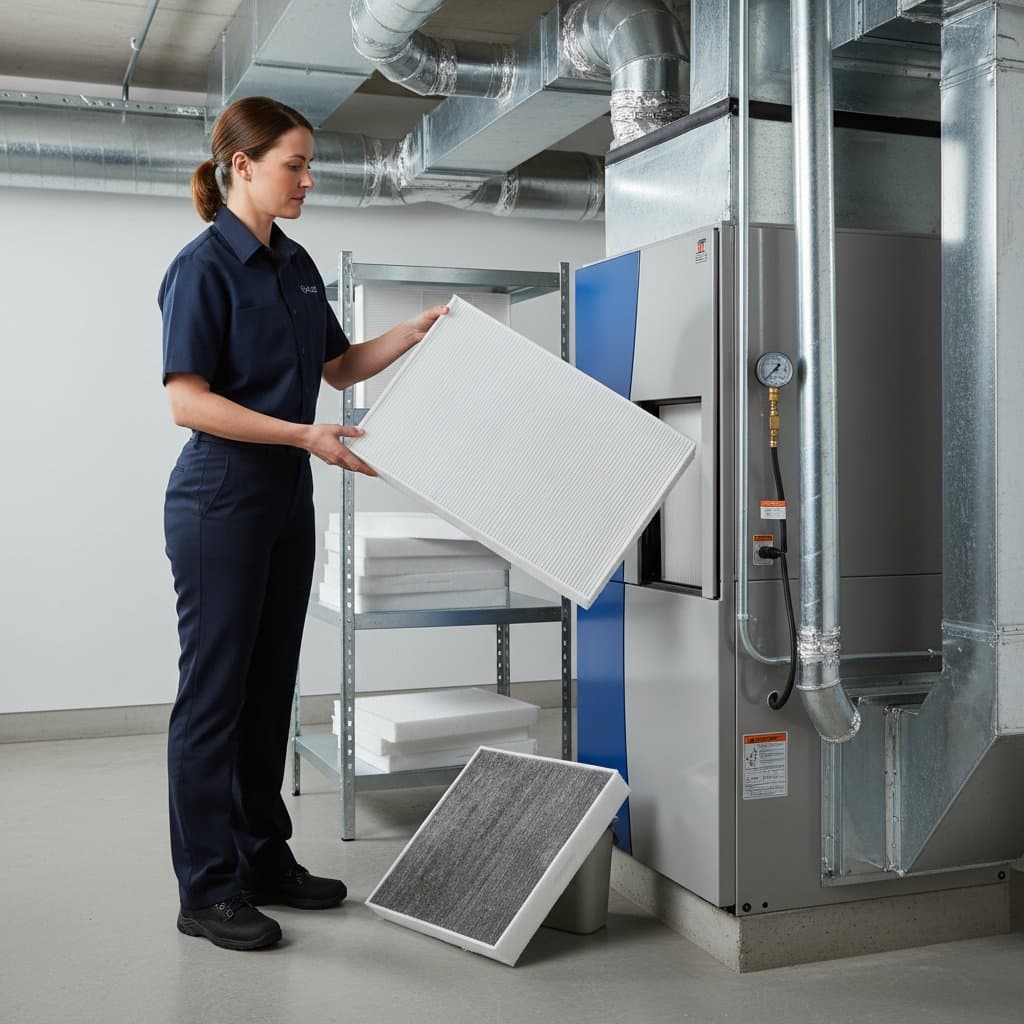
Breathe Easier: The Impact of Regular HVAC Filter Maintenance
Clean air begins at home, and your HVAC filter serves as the primary barrier against dust, allergens, and airborne particles that flow through your vents. Homeowners often underestimate the profound effects of a routine filter replacement on indoor air quality and overall system performance. Regardless of whether you reside in a bustling urban apartment or a serene suburban house, maintaining a regular schedule for HVAC filter changes can significantly enhance your daily comfort and well-being.
This guide explores the ways in which consistent filter maintenance promotes cleaner air, reduces energy expenses, and ensures a dependable HVAC system. Readers will gain insights into establishing an effective replacement schedule, selecting appropriate filter types, and determining the right moments to seek professional assistance.
Understanding the Role of HVAC Filters
HVAC systems depend on unobstructed airflow to operate at peak efficiency. As air circulates through the ducts, it encounters a filter designed to capture dust, pet dander, pollen, and various contaminants. Over time, these accumulations clog the filter, compelling the system to exert additional effort to maintain circulation.
A well-maintained filter facilitates optimal airflow, eases the load on the fan motor, and sustains even heating and cooling distribution. Failure to address this essential maintenance can result in elevated energy use, fluctuating room temperatures, and accelerated wear on system components.
Key Benefits of Routine Filter Replacements
Establishing a regular replacement routine yields multiple advantages:
- Enhanced indoor air quality that alleviates allergies and supports respiratory health
- Greater HVAC efficiency leading to reduced utility bills
- Prolonged equipment durability through minimized mechanical strain
- Uniform comfort levels across all areas of the residence
Implementing filter changes represents a straightforward, economical approach to preserving healthy air and seamless system operation.
Establishing an Effective HVAC Filter Replacement Schedule
A straightforward calendar alert suffices to maintain consistency in filter care. Optimal replacement intervals vary based on household conditions, filter materials, and system demands. The following guidelines provide a framework for planning.
Recommended Replacement Intervals
- Standard fiberglass filters: Replace every 30 to 60 days to prevent rapid clogging from basic debris
- Pleated filters: Change every 60 to 90 days, as their folded design captures more particles before saturation
- High-efficiency particulate air (HEPA) filters: Swap every 4 to 6 months for sustained fine-particle removal
- Permanent or washable filters: Clean monthly with mild soap and water, then replace annually to avoid bacterial growth
Households with pets, allergy sufferers, or proximity to construction sites and high-pollen regions should shorten these intervals by 15 to 30 days to manage increased contaminant loads.
Seasonal Maintenance Plan
Develop a structured seasonal checklist to streamline upkeep:
- Spring: Install a new filter prior to the onset of cooling season to block incoming pollen and outdoor dust.
- Summer: Perform a mid-season inspection and replacement if the air conditioner operates continuously, checking for accelerated dirt buildup.
- Autumn: Fit a fresh filter before activating heating to filter out falling leaves and seasonal debris.
- Winter: Conduct monthly visual checks, as reduced ventilation from closed windows concentrates indoor pollutants.
Maintaining a maintenance journal or utilizing app-based reminders helps avoid oversights and supports continuous system efficiency.
Selecting the Appropriate Filter for Your Residence
Filters differ in construction and performance ratings, which dictate their ability to capture microscopic particles. The primary metric is the MERV rating, or Minimum Efficiency Reporting Value, where higher values indicate superior filtration.
- MERV 1-4: Provides essential capture of large dust and lint; appropriate for standard, low-allergen environments
- MERV 5-8: Effectively traps mold, pet dander, and household fibers; recommended for typical family homes
- MERV 9-12: Targets smoke, viruses, and bacteria; beneficial for residences with allergy-prone individuals
- MERV 13-16: Delivers hospital-level purification; suitable for severe sensitivities, though it demands compatible HVAC capacity
When selecting a filter, weigh air purification requirements against system specifications. High-MERV options may impede airflow in older units, potentially causing inefficiency. Review your HVAC manual or engage a technician to confirm compatibility before installation.
DIY Filter Replacement Versus Professional Service
Most filter replacements qualify as simple do-it-yourself projects, typically involving removal from a accessible slot near the return air grille or within the furnace assembly. However, professional evaluation proves essential for addressing ongoing air quality concerns, irregular airflow, or escalating energy costs.
Scenarios for Self-Maintenance
Opt for DIY when:
- The filter compartment is readily accessible and includes size markings
- You have identified the precise dimensions and MERV rating required
- The HVAC system exhibits normal operation without unusual noises or odors
Indicators for Professional Intervention
Seek expert help if:
- Evidence suggests ductwork contamination or mold proliferation
- Airflow remains subdued despite recent filter installation
- You desire comprehensive servicing, including duct cleaning or advanced system enhancements
Technicians employ diagnostic tools to measure airflow rates, examine internal components, and suggest integrations like UV purifiers or IoT-enabled filters that alert users to replacement needs via smartphone notifications.
Addressing Common HVAC Filter Inquiries
Expert responses to frequent homeowner questions.
How Can I Identify a Dirty Filter?
Examine the filter against a light source. If light fails to penetrate the material, replacement is necessary to restore function.
What Are the Consequences of Delayed Replacement?
A blocked filter hampers circulation, risking coil freezing, motor overheating, and eventual system breakdown.
Is Vacuuming Disposable Filters Advisable?
No. This practice compromises the filter's structure, diminishing its particle-trapping capability. Dispose of and replace as recommended.
Does a Higher MERV Rating Guarantee Better Air Quality?
Not always. Incompatible high-resistance filters can strain the system, reducing overall performance and airflow.
How Do Pets Influence Replacement Timing?
Shed fur and dander accelerate clogging. In multi-pet homes, aim for changes every 30 to 45 days.
Can Smart Thermostats Assist with Maintenance Reminders?
Certainly. Devices like Nest or Ecobee track runtime and air metrics to prompt timely filter swaps.
Are Washable Filters a Cost-Effective Choice?
They offer long-term savings if cleaned diligently, but improper care invites mold development and unpleasant smells.
Does Filter Neglect Contribute to Elevated Energy Costs?
Yes. Compromised airflow demands greater fan effort, spiking electricity consumption by up to 15 percent.
In Multi-Zone Systems, Should Filters Change Simultaneously?
Indeed. Synchronized updates ensure equitable air distribution and prevent imbalances.
What Is the Proper Disposal Method for Used Filters?
Enclose in a sealed plastic bag to trap residues, then discard in regular trash to minimize allergen spread.
Step-by-Step Guide to Optimizing Your Filter Strategy
Step 1: Evaluate Household Air Quality Demands
For allergy management, prioritize pleated or HEPA filters that target specific irritants like dust mites or volatile compounds.
Step 2: Analyze Environmental Factors
Assess dust levels, occupancy, and outdoor influences; high-traffic or pet-heavy homes warrant accelerated schedules.
Step 3: Compute Long-Term Expenses
Consider filter acquisition costs alongside energy reductions and repair avoidance; premium filters often yield net savings within one year.
Step 4: Integrate Homeowner and Expert Care
Handle routine swaps personally while scheduling yearly professional audits to detect underlying issues.
Sustaining Optimal Indoor Air Throughout the Seasons
Consistent filter maintenance forms the cornerstone of a healthy home environment. By adhering to a tailored schedule and selecting compatible filters, homeowners achieve fresher air, lower operational costs, and a resilient HVAC investment. Commit to these practices for enduring comfort and efficiency.




