The Essential HVAC Filter Replacement Schedule
A home's air quality suffers when the HVAC filter exceeds its effective lifespan. Dust accumulates, airflow diminishes, and the system operates under increased strain. Establishing a consistent filter replacement schedule maintains fresh air, reduces energy expenses, and prolongs equipment durability. Many homeowners either delay replacements or perform them unnecessarily, leading to unnecessary costs or potential damage. Understanding the precise timing for changes and selecting appropriate filter types distinguishes effective maintenance from inefficient practices.
This guide details an optimal HVAC filter schedule tailored to various home configurations. Readers gain insights into aligning replacements with specific needs, key measurements to monitor, and strategies for developing a straightforward maintenance routine that sustains system performance throughout the year.
Importance of Maintaining a Regular HVAC Filter Schedule
HVAC air filters capture dust, pet dander, pollen, and other airborne particles before they spread throughout the living space. As these contaminants accumulate, they obstruct the filter, compelling the blower motor to exert greater effort to draw air through it. This obstruction lowers operational efficiency and increases energy consumption by as much as 15 percent, based on data from the National Air Filtration Association.
A blocked filter accelerates wear on furnaces, air conditioners, or heat pumps. Blower motors function optimally with a pressure drop not exceeding 0.5 inches of water column across the filter. Excessive resistance from a saturated filter can double this value, causing overheating and early component failure. Adhering to a structured schedule mitigates such pressures effectively.
Standard Intervals for Filter Replacement
The following timeline outlines replacement frequencies based on filter type and household activity levels:
| Filter Type | Minimum Change Interval | Ideal Interval for Most Homes | Best For |
|---|---|---|---|
| Fiberglass panel (1 inch) | Every 30 days | Every 20 to 30 days | Budget-conscious, short-term use |
| Pleated polyester (1 inch) | Every 60 days | Every 45 to 60 days | Typical residential systems |
| High-efficiency pleated (2 to 4 inches) | Every 90 days | Every 60 to 90 days | Homes with pets or allergies |
| Media filters (5 inches or more) | Every 6 months | Every 4 to 6 months | Large systems or comprehensive filtration |
| HEPA filters (hospital-grade) | Every 12 months | Every 9 to 12 months | High-allergen or high-traffic environments |
These intervals presume regular system operation. In environments with continuous HVAC use or high dust levels, reduce the timeframe by 25 percent. Conversely, in low-dust settings with seasonal HVAC reliance, a modest extension proves feasible.
Methods for Measuring and Monitoring Filter Replacements
Each HVAC filter displays its dimensions on the frame, such as 16x25x1 inches. Verify that these match the return air grille or filter compartment precisely. If the label fades, measure the interior of the slot to the nearest eighth of an inch for accuracy. A proper fit ensures no air escapes around the edges.
Maintain a log using a notepad or digital app to record essential details:
- Filter size and MERV rating, where MERV denotes Minimum Efficiency Reporting Value, typically ranging from 6 to 13 for home use.
- Date of the most recent replacement.
- Anticipated date for the next change.
- Condition observed upon removal, such as light dusting, heavy gray residue, or prominent debris.
Documenting this information over several months allows refinement of the schedule. Factors like pet presence, flooring materials, or frequent window opening often result in filters requiring replacement sooner than manufacturer estimates.
Tailoring the Schedule to Specific Home Configurations
Apartments and Condos
Compact living areas with limited occupancy generate less particulate matter, easing air circulation requirements. A one-inch pleated filter with an MERV 8 rating generally endures 60 days. In scenarios of infrequent system operation or low activity, extend this to 75 days, while scheduling monthly visual inspections for accumulation.
Homes with Families, Pets, or Children
Increased occupancy and pets introduce higher volumes of hair, lint, and dander, accelerating filter saturation. Opt for a two-inch pleated filter rated MERV 11 or 12, replacing it every 45 to 60 days. For households with several pets, shorten the interval to 30 to 45 days to sustain performance.
Older Residences with Dusty Ducts
Aging duct systems often release accumulated dust into the airflow. Install a 4- to 5-inch media filter with a MERV 11 or higher rating, replacing it every four months initially. After professional duct cleaning, transition to six-month intervals as airflow improves.
Homes with Allergy or Asthma Concerns
Individuals sensitive to allergens benefit from high-efficiency pleated filters rated MERV 13, replaced every 60 days for consistent capture rates. Complement this with routine HEPA vacuuming and efforts to seal gaps around return air vents.
Financial Implications and Energy Efficiency Gains
Standard one-inch pleated filters range from 8 to 15 dollars each. Four-inch media filters cost 40 to 60 dollars yet provide four times the longevity. Annual filter expenses typically total 60 to 100 dollars, offset by savings from averting system degradation.
The U.S. Department of Energy reports that timely filter changes cut energy use by 5 to 10 percent. For households with 2000-dollar yearly energy bills, this translates to 100 to 200 dollars in savings through maintained filter cleanliness.
Essential Tools for Independent Filter Changes
Filter replacement requires minimal effort when equipped appropriately for secure handling:
- Flashlight or smartphone illumination to inspect the return air compartment.
- Screwdriver or nut driver to access fastened panels.
- Vacuum equipped with a brush attachment to clear the grille.
- Permanent marker to note installation dates directly on the filter frame.
- Step stool for accessing elevated return vents.
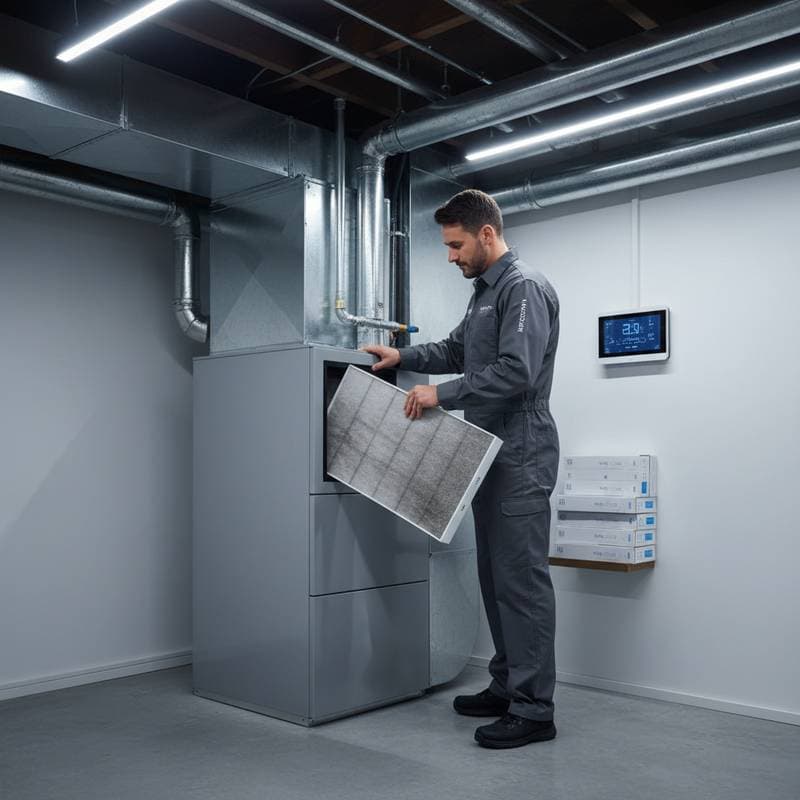
Deactivate the HVAC system via the thermostat prior to filter removal. Position the new filter so the airflow arrow directs toward the blower motor, confirming even seating along all edges.
Pitfalls to Sidestep in Filter Management
Homeowners frequently encounter issues that undermine filter efficacy. Key errors include:
-
Selecting an incorrect size, where even a half-inch discrepancy permits unfiltered air to circumvent the filter.
-
Disregarding airflow orientation, which backward installation hampers circulation and damages the filter material.
-
Relying excessively on washable filters, as repeated cleaning diminishes their capacity; replace every three to six months.
-
Selecting an excessively high MERV rating, since values above 13 may overburden older blowers—consult system specifications.
-
Neglecting periodic checks, as quarterly plans benefit from monthly reviews to detect rapid clogging.
Steering clear of these issues maximizes the advantages of a disciplined replacement routine.
Indicators for Professional Assistance
Signs such as diminished airflow, inconsistent room temperatures, or rapid filter dust buildup suggest underlying problems like duct leaks or suboptimal return air design. Engage a certified HVAC technician for a static pressure assessment and duct evaluation. Diagnostic services generally cost 100 to 200 dollars and uncover inefficiencies proactively.
Annual professional tune-ups encompass:
- Verification of filter installation and status.
- Assessment of airflow and pressure differentials.
- Examination of the blower wheel and evaporator coil for residue.
- Adjustment of thermostat settings for accuracy.
These visits align the filter schedule with overall system health.
Developing a Customized Filter Maintenance Calendar
Household dust patterns and airflow dynamics vary, necessitating a tailored calendar for reliability. Implement these steps:
-
Begin with guidelines from the replacement table as starting points.
-
Conduct initial replacements every 30 days for three consecutive cycles to evaluate clogging rates.
-
Refine intervals according to findings; extend to 45 or 60 days if residue remains minimal after 30 days.
-
Establish reminders through mobile notifications or integrated smart home features a few days in advance.
-
Monitor variations in energy costs or airflow to gauge schedule effectiveness.
This approach yields precise knowledge of filter longevity under unique conditions.
Accommodations for Accessibility Needs
Individuals facing mobility challenges or dealing with high-mounted returns require adaptive solutions. An extended-reach filter tool, priced around 20 dollars, facilitates safe removal and insertion. Smart thermostats capable of tracking runtime can issue alerts for impending changes, minimizing manual inspections. For persistent access difficulties, arrange semiannual technician visits that incorporate filter services.
Enduring Advantages of Consistent Filter Maintenance
Beyond equipment preservation, a reliable HVAC filter schedule enhances indoor air purity, minimizes surface dust, and promotes better respiratory wellness. Clean filters contribute to steady temperature control, avoiding operational fluctuations and ensuring uniform comfort.