
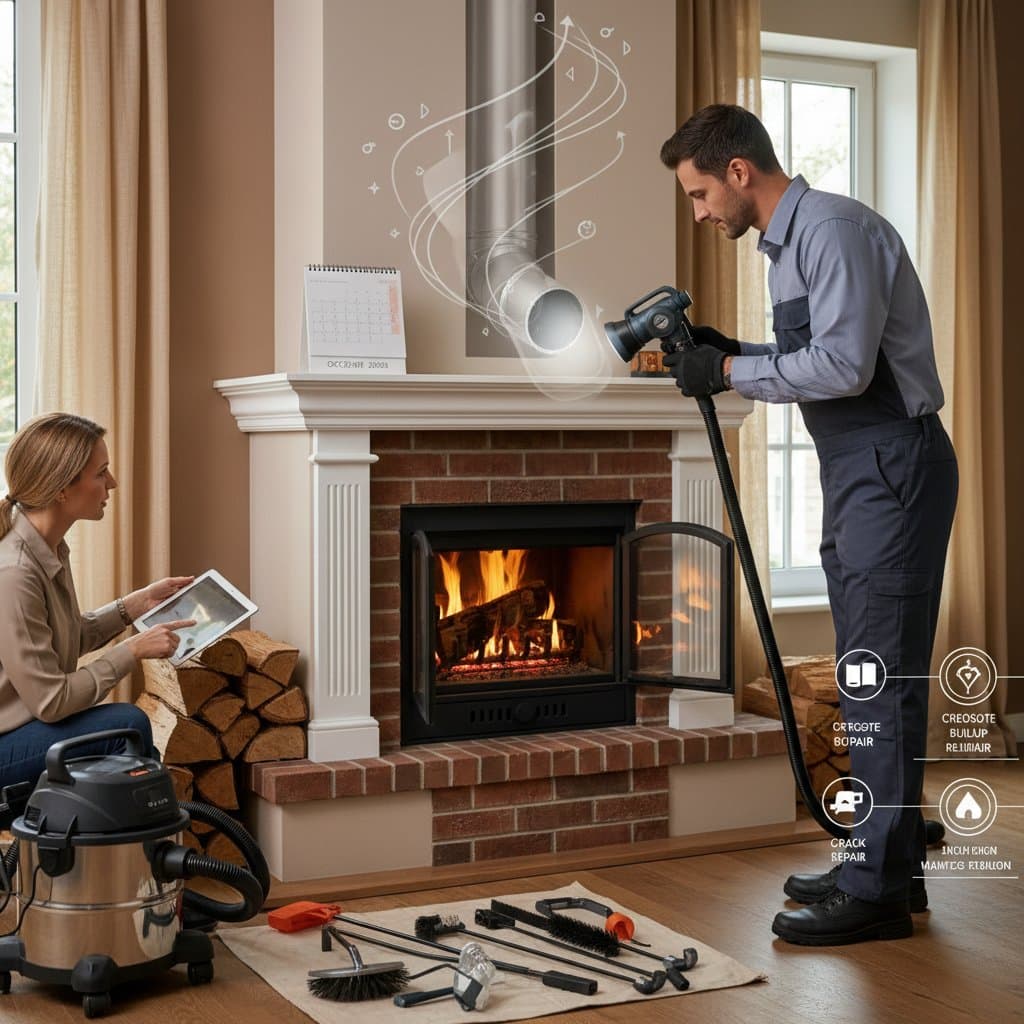
Essential Fall Upkeep for Chimney Safety
A cozy fire on a cool autumn evening sounds perfect until you remember the chimney that you have not checked in months. Creosote buildup, hidden blockages, and unnoticed cracks can quickly turn that comfort into a serious hazard. Chimney maintenance might not be the most exciting fall task, but it is one of the most important for keeping your home warm, safe, and efficient through the colder season.
Why Chimney Safety Matters Every Fall
A chimney that looks fine from the outside can hide problems inside. Even a thin layer of creosote, the tar-like residue left by burning wood, can catch fire when temperatures rise. Birds and squirrels often build nests that block ventilation, and moisture can seep through small cracks, weakening mortar joints or rusting metal liners. These issues directly affect air quality, fireplace efficiency, and the structural integrity of your home.
The National Fire Protection Association recommends an annual inspection. Fall is the best time to complete it, before you start using your fireplace regularly. You will prevent fire hazards, avoid smoke backup, and catch minor issues before they turn into expensive repairs.
Schedule an Inspection and Cleaning First
If you do one thing this season, schedule a level one chimney inspection with a certified chimney sweep. This process covers all visible parts of the chimney, flue, and fireplace. If your system has experienced damage or a change in use, such as a new insert or liner, you may need a more detailed level two inspection that includes interior camera checks.
Professional cleaning usually costs $150 to $350, depending on your region and chimney height. This service includes removing soot, ash, and creosote buildup inside the flue. If you use your fireplace often, cleaning once a year is the minimum, and twice a year is ideal for heavy use.
Inspect the Chimney Exterior
Start your fall maintenance with a quick visual inspection from the ground. Look for cracks, leaning, or missing mortar between bricks. If your chimney is metal, check for rust spots, loose flashing, or bent sections.
Key Exterior Checks
- Cap and Crown: Ensure the chimney cap is securely in place and the crown is free from chips or gaps. A missing or damaged cap allows rain, debris, and animals to enter.
- Flashing: This thin metal barrier where the chimney meets the roof requires attention to loose edges or corrosion, which can lead to roof leaks.
- Brick and Mortar: Press gently with a screwdriver handle. If mortar crumbles easily, it is time for repointing. Gaps larger than 1/8 inch can let water in.
If you are comfortable using binoculars, inspect the top portion from the ground safely. For anything that looks questionable, call a professional for a closer look. Avoid climbing the roof unless you have proper safety gear.
Examine the Interior: Firebox and Damper
The inside of your fireplace reveals how it has been burning. A layer of soot thicker than 1/8 inch indicates poor draft or damp wood use.
Step-by-Step Interior Check
- Firebox: Look for cracks in the firebrick and gaps in the mortar joints. Even small cracks can let heat reach the surrounding framing.
- Damper: Operate the damper handle. It should open and close smoothly. If it sticks, clean the hinge area with a wire brush and check for rust.
- Flue Light Test: Shine a flashlight up the chimney. If you see heavy black deposits, it is time for professional cleaning.
- Smoke Stains: Dark marks around the fireplace opening suggest smoke spillage, which may signal a blockage or improper draft.
Keep in mind that a standard flue should have a minimum diameter of 8 inches or match the fireplace opening size for proper airflow. If you recently installed a wood stove insert, verify that the flue liner matches the stove outlet size.
Tools and Materials for DIY Maintenance
If you prefer handling light maintenance yourself, gather these items before the professional visit. You will need a stiff chimney brush with extension rods, chosen to match your flue diameter, usually 6 to 8 inches. Add a drop cloth or tarp to protect flooring, a shop vacuum with a high-efficiency filter, a flashlight or inspection mirror, a wire brush for firebox and damper cleaning, and protective gloves, goggles, and dust mask.
Vacuum loose ash and soot from the firebox and hearth. Brush off visible buildup at the base of the flue, but avoid climbing into the chimney or brushing upward unless you have the correct rods and containment setup. The fine dust can easily spread throughout your home.
Avoid Common Maintenance Mistakes
Even well-intentioned efforts can go wrong when small details are overlooked. Skipping annual inspections allows creosote buildup to reach dangerous levels in a single season. Using chemical chimney cleaners instead of brushing rarely removes enough residue to make a difference.
Ignoring the cap leads to animal nests and water damage. Burning unseasoned wood, with more than 20 percent moisture, creates more smoke and creosote. Blocking air vents reduces airflow, making smoke linger and cool faster, which encourages residue buildup.
If you spot rust flakes, cracked tiles, or white staining on the masonry, known as efflorescence, these are signs of moisture inside the chimney that require professional attention.
Prioritize Accessibility and Safety
Homeowners with mobility limits or multi-story homes should never attempt to climb onto the roof. A local chimney sweep service has the proper ladders, harnesses, and inspection cameras to reach difficult areas safely. For houses with wood-burning inserts or pellet stoves, request technicians certified by the Chimney Safety Institute of America to ensure compliance with current safety standards.
If you have young children or elderly residents, consider installing a glass fireplace door or spark guard screen that extends at least 10 inches beyond the opening. This setup reduces the chance of burns while still allowing radiant heat into the room.
Understand Costs and Seek Professional Guidance
A full inspection and cleaning package typically ranges from $200 to $400. Chimney cap replacement costs about $100 to $250, while minor mortar repairs might run $300 to $600 depending on the damage. If your flue liner is cracked or deteriorated, expect a relining cost between $2,000 and $4,000, depending on the height and material.
Professionals will also test draft performance, measure carbon monoxide levels, and verify that all venting meets local building codes. This is especially valuable if you recently switched from wood to gas logs or installed a high-efficiency stove insert.
Sustain Chimney Performance Through Winter
Burn only seasoned hardwoods like oak, maple, or ash. Keep the damper closed when the fireplace is not in use to prevent heat loss. Empty ashes regularly, leaving about one inch at the base to insulate the next fire.
Install a carbon monoxide detector in the same room as your fireplace. Recheck the exterior after heavy storms to ensure flashing and caps remain secure. These habits ensure reliable warmth without unexpected risks.




