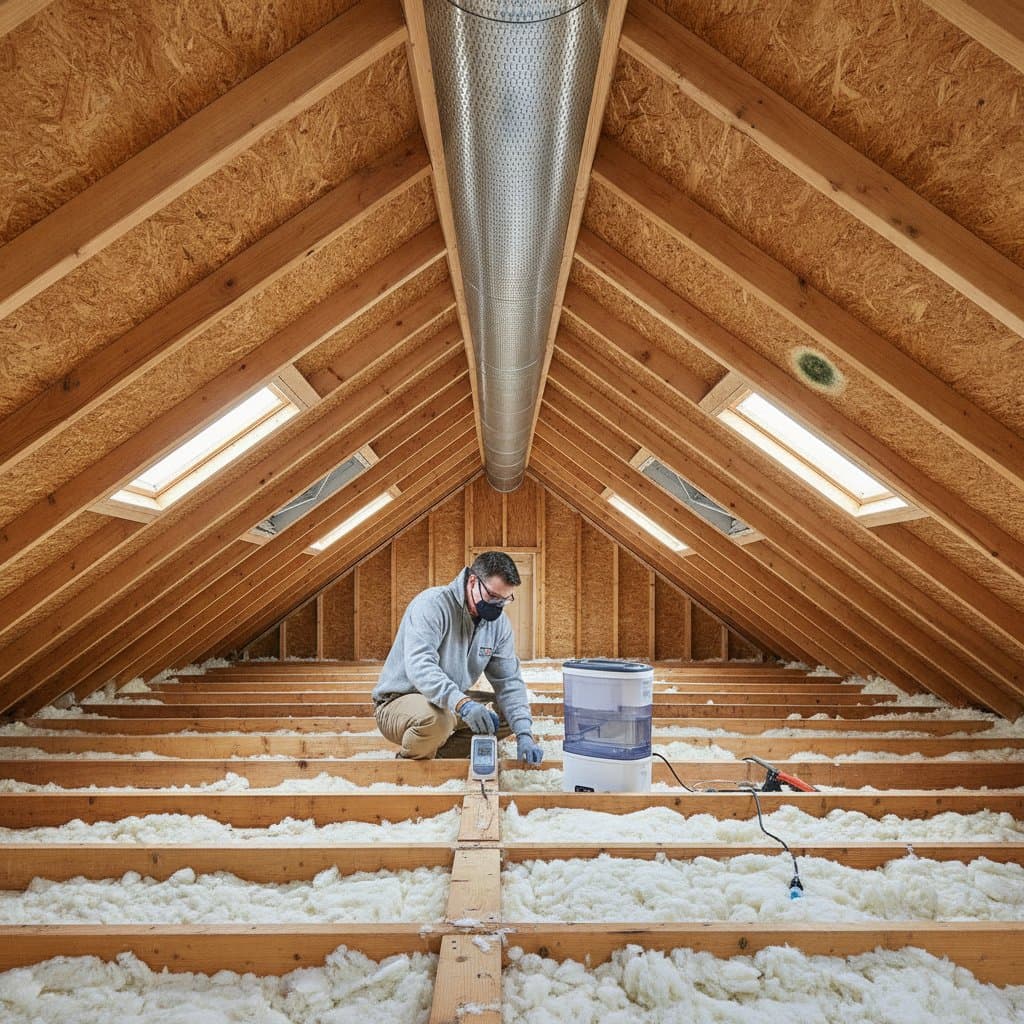
Keep Your Attic Mold-Free: Essential Homeowner Checklist
A clean, dry attic safeguards your home's structure and maintains high indoor air quality. Mold thrives in damp environments and can rapidly damage insulation, wooden framing, and even ceilings in living spaces below. Professional remediation becomes necessary once mold establishes itself, leading to substantial expenses. Prevention through consistent maintenance and effective moisture management offers a reliable solution. This checklist outlines practical steps for homeowners to maintain a mold-free attic throughout the year.
1. Inspect Ventilation and Airflow
Proper ventilation serves as the primary barrier against attic mold. Airflow should move freely from soffit vents at the eaves to ridge or gable vents at the peak. Restricted airflow confines humid air, resulting in condensation on rafters and roof sheathing.
Examine all vents to confirm they remain unobstructed by insulation, debris, or pests. Install vent baffles if necessary to preserve clear air channels, particularly after adding insulation. Signs of inadequate ventilation include musty odors or noticeable dampness during inspections. Perform a smoke test by holding an incense stick near intake vents; observe if smoke draws steadily toward exhaust vents to verify circulation.
Consult a roofing or insulation professional for a thorough airflow assessment if issues persist. Balanced ventilation proves especially effective in humid regions, minimizing condensation risks.
2. Control Moisture and Humidity
Effective moisture control prevents the conditions that foster mold development. Water vapor ascends from occupied areas below and accumulates in the attic space. Common sources include exhaust fans that vent indoors, leaking ducts, or unsealed penetrations in the ceiling.
Direct all bathroom and kitchen exhaust fans to vent directly outdoors through dedicated ducts. Seal openings around light fixtures, chimneys, and plumbing vents using durable caulk or expanding foam. Place a vapor barrier over insulation to block moisture migration if absent.
Install a digital humidity monitor to track levels regularly; target readings below 50 percent. Dehumidifiers provide an additional layer of control in persistently humid attics. Homeowners who actively manage humidity report significantly lower mold incidence.
3. Insulate Effectively
Well-placed insulation regulates temperature differences that lead to condensation. Inadequate or uneven insulation permits warm indoor air to contact the cooler roof deck, forming water droplets. Accumulated moisture over time creates an ideal environment for mold spores to proliferate.
During inspections, identify gaps, compressed areas, or moist sections in existing insulation. Choose materials like fiberglass batts, blown-in cellulose, or closed-cell spray foam based on your attic's layout, ensuring complete coverage without impeding vent paths. Professional installation guarantees optimal performance and avoids common pitfalls such as over-compression.
Upgrading insulation not only curbs mold but also enhances energy efficiency by stabilizing attic temperatures. This approach extends the lifespan of roofing materials and reduces heating and cooling costs.
4. Identify and Repair Roof Leaks
Roof leaks, even minor ones, supply the water needed for mold to flourish. Indicators include water stains on ceiling panels, darkened areas on wooden rafters, or intensified musty scents following rainfall. Conduct inspections from both interior and exterior perspectives to pinpoint issues.
Scan for cracked or missing shingles, deteriorated flashing around penetrations, and compromised seals on vents or skylights. Temporary patches with roofing cement suit small repairs, but engage a licensed roofer for extensive damage to ensure lasting fixes. Prompt action halts moisture intrusion and preserves structural integrity.
Regular leak repairs prevent escalation to widespread mold problems, avoiding the need for invasive remediation. Document findings with photographs to track patterns and inform future maintenance.
5. Keep the Attic Clean and Clutter-Free
Clutter in the attic promotes moisture retention and obstructs airflow, accelerating mold growth. Items such as cardboard boxes and fabric materials readily absorb humidity, turning into prime mold habitats. Organic dust and debris provide additional nutrients for spores.
Restrict storage to airtight plastic bins elevated on pallets or wire shelving to allow air circulation beneath. Schedule vacuuming sessions quarterly, using a HEPA-filtered model to capture fine particles without redistributing them. Wipe down beams and joists with a mild detergent solution to eliminate surface contaminants.
A tidy attic facilitates quicker inspections and early detection of problems. This practice supports overall ventilation efficiency and reduces hidden moisture pockets.
6. Schedule Routine Inspections
Regular checks remain crucial even with proactive measures in place. Perform comprehensive reviews at least biannually, with additional visits after severe weather events like heavy storms. Focus on visible mold patches, softened insulation, or discoloration from water exposure.
Use a bright flashlight to illuminate dark corners and a moisture meter to quantify dampness in suspicious areas. Mildew odors often precede visible signs, signaling the need for deeper investigation. Thermal imaging tools, available through professionals, reveal concealed moisture without disassembly.
Maintain an inspection log noting dates, observations, and actions taken. This record helps identify recurring issues and demonstrates diligence to insurers if claims arise.
7. Address Condensation from HVAC Systems
Attics containing HVAC units or ductwork face elevated mold risks from equipment-related condensation. Cold surfaces on ducts attract moisture from surrounding air, which drips onto nearby materials. Faulty seals or poor insulation exacerbate this problem.
Wrap exposed ducts with foil-faced insulation to minimize temperature swings. Inspect joints for tightness and repair any disconnections promptly. Verify that condensate drains from air handlers remain clear and slope correctly to exterior points.
For whole-house fans, apply weatherproof seals and insulation covers during off-seasons. These steps prevent unintended humid air entry and maintain dry conditions around mechanical components.
8. Consider Professional Mold Prevention Treatments
In attics prone to recurring humidity or prior infestations, specialized treatments offer enhanced protection. Antimicrobial coatings applied to wooden surfaces inhibit mold adhesion and growth. Select EPA-registered products designed for attics to ensure safety and efficacy.
Professionals handle application for uniform coverage, often extending protection for five years or more. Combine treatments with ventilation upgrades and insulation improvements for comprehensive defense. This integrated strategy substantially lowers the likelihood of future outbreaks.
Evaluate your attic's history before investing; persistent issues warrant expert consultation to tailor solutions.
Sustaining a Mold-Resistant Attic
A well-maintained attic preserves your home's integrity and promotes healthy living environments. Dedicate time to ventilation upkeep, humidity monitoring, and timely repairs to sustain dryness. Track progress with a dedicated log of maintenance activities.
These routines yield substantial benefits, including reduced energy bills and avoidance of expensive repairs. Implement this checklist to secure a durable, efficient attic that withstands seasonal challenges.