Upcoming HVAC Filter Standards Effective Fall 2026: Prepare Today
Significant updates approach for residential HVAC systems. New standards for air filters will enforce elevated efficiency levels and enhanced labeling requirements. These regulations extend beyond professional installers to influence every household with forced-air heating or cooling. Proactive steps now yield savings, elevated air quality, and seamless adaptation when the standards activate.
Importance of the Approaching Filter Standards
Air filters serve critical functions beyond basic dust capture. They safeguard furnace and air conditioner components, sustain proper airflow, and intercept particles that influence indoor environments. The forthcoming standards elevate minimum efficiency for residential filters, limiting availability of lower-rated options. Consequently, certain HVAC setups might require modifications to accommodate advanced filtration media.
This evolution targets widespread improvements in indoor air purity, particularly in regions prone to dust, pollen, or contaminants. Enhanced filtration seizes finer particles, yet denser media can impede airflow in incompatible systems. Preparation addresses these dynamics effectively.
Immediate Actions for Homeowners
Begin with an evaluation of your existing filter dimensions and performance rating. Identify the MERV rating, or Minimum Efficiency Reporting Value, typically marked as a numeral from 1 to 16 on the filter edge. Elevated numbers indicate superior capture of microscopic particles.
Recommended ratings for typical residences include:
- MERV 8 to 10 for routine dust and pollen management.
- MERV 11 to 13 for enhanced allergen mitigation.
- MERV 14 and higher for near-medical filtration, though this risks airflow reduction in legacy equipment.
Systems operating on MERV 4 or 5 benefit from incremental upgrades. Each increment adds minor resistance, so monitor airflow and temperature differentials post-installation to determine your blower's tolerance.
Details on the Efficiency Requirements
Anticipated regulations establish MERV 8 as the baseline for household applications. Filters falling below this level will cease residential distribution. Homeowners must grasp the implications of increased efficiency on static pressure, the force opposing air passage through the filter.
Excessive restriction leads to several issues:
- Diminished airflow resulting in inconsistent temperatures.
- Elevated energy consumption from overworked blowers.
- Risks of motor strain or frozen coils.
The National Air Filtration Association recommends reviewing your equipment manual or engaging a technician prior to adopting MERV 13 or superior. Contemporary systems often accommodate such ratings, whereas aging units may necessitate return grille alterations or duct adjustments for balanced performance.
Accurate Measurement and Replacement Procedures
Many residents inadvertently select incorrect filter sizes. Measure the precise dimensions of the return air grille or slot opening. Common nominal sizes, such as 16 x 25 x 1 inches, feature actual measurements approximately 0.5 inches narrower per dimension.
Follow these steps for precision:
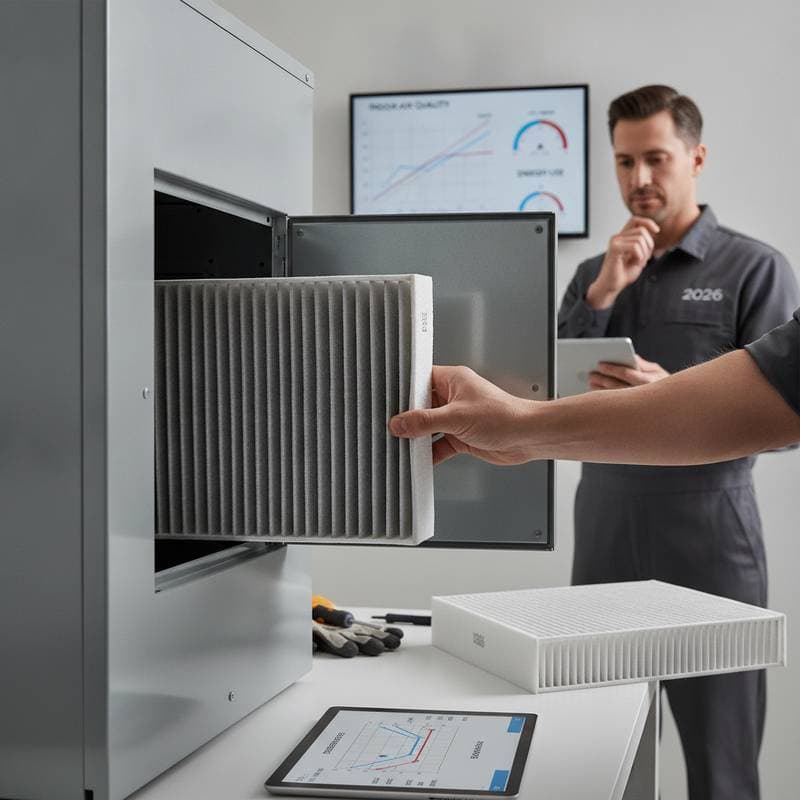
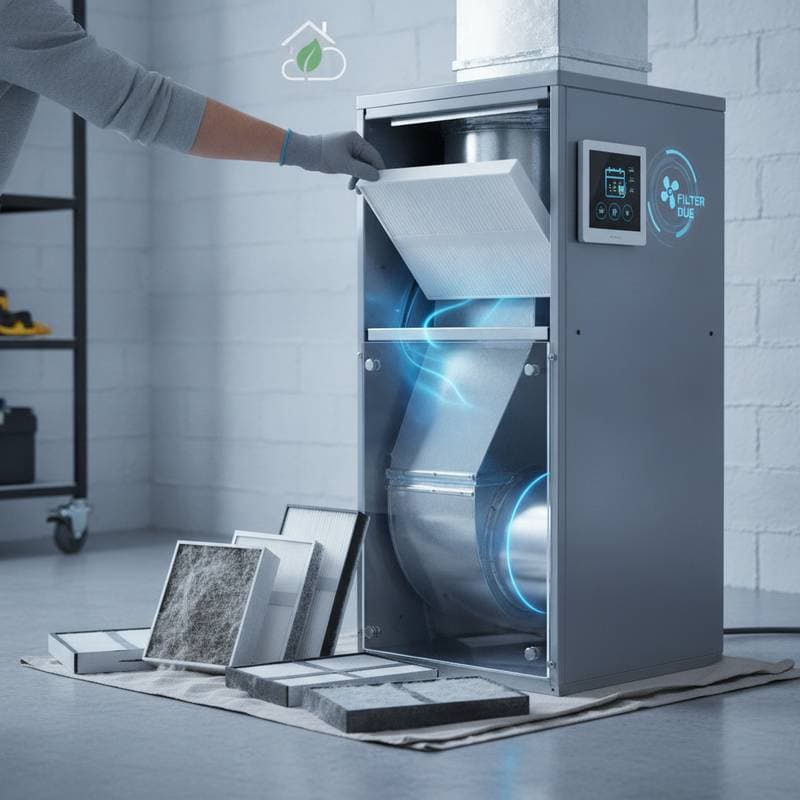
- Extract the current filter and record its labeled size.
- Gauge the length, width, and depth of the slot.
- Select a filter aligned with the slot measurements, overriding any label discrepancies.
- Position the filter so the airflow arrow on the frame directs toward the furnace from the return.
Deeper media filters, at 4 or 5 inches, endure 6 to 12 months. Standard 1-inch variants require renewal every 1 to 3 months, influenced by environmental dust, pets, and household activity.
Pitfalls in Filter Maintenance
Frequent errors undermine HVAC filter effectiveness:
- Selecting excessively high MERV ratings absent airflow verification.
- Delaying changes despite apparent cleanliness.
- Orienting filters incorrectly, which hampers performance.
- Layering filters to prolong use, thereby choking airflow.
- Opting for low-cost options that disintegrate or deform.
Counter these by scheduling monthly inspections. Illuminate the filter; opacity signals replacement time.
Health and Accessibility Enhancements
Superior filtration extends beyond convenience to health benefits. Households managing asthma, allergies, or breathing difficulties gain from MERV 11 and above, which ensnare smoke, microbes, and ultrafine dust. Such advancements justify the modest expense for vulnerable residents.
Ease of access improves routine care. Opt for return grilles with hinged access panels to facilitate tool-free swaps, accommodating those with physical constraints.
Projections for Costs and Supply
Post-implementation, compliant filters may experience modest price increases, notably for premium MERV levels. Current pricing positions MERV 8 units at 8 to 15 dollars each, with MERV 13 ranging from 20 to 35 dollars. Purchasing in bulk, such as six- or twelve-packs, reduces per-unit costs.
Supply chains could face short-term constraints during manufacturer transitions. Secure a year's inventory suited to your setup. Preserve spares in flat, arid storage within original wrappings.
Engaging Professional Support
Older systems exhibiting sluggish airflow or temperature inconsistencies warrant expert review. Technicians provide:
- Static pressure assessments pre- and post-filter swaps.
- Guidance on optimal MERV thresholds for your motor.
- Evaluations of duct dimensions and interior conditions.
- Filter housing replacements or enhancements as required.
Steps to Achieve Compliance and Efficiency
Initiate preparation by cataloging your filter specifications, verifying measurements, and trialing a modest MERV elevation. Maintain a record of replacements alongside system observations.
Your residence will align with standards, operate efficiently, and foster healthier conditions upon the regulations' arrival. Focus remains on regulatory adherence alongside tangible enhancements in air purity and comfort.