Timing and Essentials of Fall Chimney Inspections
Cooler temperatures signal the start of fireplace season for many homeowners. Before lighting the first fire, schedule a thorough chimney inspection to maintain safety and performance. This preparation prevents hazards and ensures reliable operation during cold months.
Fall provides optimal conditions for inspections, with milder weather allowing easier access to roofs and exteriors. Professionals recommend annual checks, especially before heavy use. Addressing issues now avoids the spring rush and reduces the need for urgent winter repairs.
Scope of Professional Chimney Inspections
Certified technicians conduct inspections at three distinct levels, tailored to your chimney's condition and usage history. Each level builds on the previous to provide comprehensive evaluation.
Level 1: Basic Visual Assessment
Opt for this routine inspection if your chimney appears undamaged and receives regular care. The professional inspects visible components such as the firebox, damper, flue interior from the bottom, and chimney cap. They identify creosote accumulation, obstructions, minor cracks, and signs of water entry. This process typically requires one hour and ranges from 100 to 250 dollars, varying by region and chimney complexity.
Level 2: Detailed Internal Examination
Choose this option for homes with new heating appliances, fuel switches, or during real estate transactions. Inspectors employ video scanning tools to view the flue's interior walls for concealed defects like fractures, deterioration, or misalignments. The service costs 250 to 500 dollars and includes a recorded inspection with a detailed report outlining findings and repair suggestions.
Level 3: Comprehensive Structural Analysis
Reserve this invasive inspection for chimneys showing significant damage or safety risks. Technicians may dismantle parts of the chimney structure, such as the crown or walls, to inspect hidden areas thoroughly. Costs often surpass 1000 dollars, yet this level proves vital for resolving severe concerns and preventing catastrophic failures.
Frequent Problems Uncovered in Fall Inspections
Routine wear and environmental factors lead to various chimney issues over time. Early detection during autumn checks allows for targeted fixes before winter demands peak performance.
- Creosote Accumulation: This flammable residue forms from incomplete combustion and lines the flue. Professional sweeping eliminates it, minimizing fire risks.
- Wildlife Intrusions: Debris from bird nests or squirrel activity obstructs the chimney, disrupting ventilation and forcing smoke indoors.
- Water Infiltration Damage: Evidence includes discolored stains, salt-like deposits on bricks, or crumbling masonry. Unresolved leaks erode materials and promote further decay.
- Inefficient Drafting: Causes range from blockages and home pressurization to flawed flue design, resulting in smoke spillage rather than proper exhaust.
- Liner Deterioration: Thermal expansion cracks clay liners, while corrosion affects metal ones exposed to moisture.
Prompt repairs in fall translate to fewer disruptions and lower expenses compared to mid-winter interventions.
Preliminary Homeowner Assessments
Before engaging a professional, conduct these straightforward visual inspections to spot obvious concerns. These actions inform discussions with your technician and streamline the service.
- Direct a flashlight into the firebox to detect fractured firebricks or eroded mortar joints.
- Operate the damper fully to verify smooth movement without sticking.
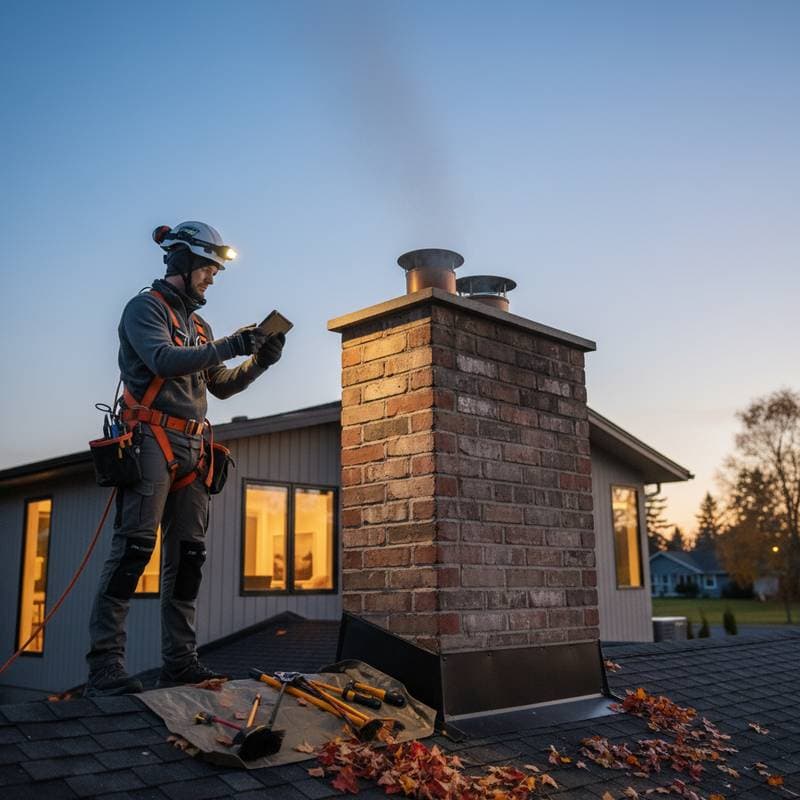
- Inspect the chimney cap from the roof for secure attachment, corrosion, or accumulated debris.
- Scan the chimney exterior for tilts, displaced bricks, or deteriorated roof flashing seals.
- Identify efflorescence as white, powdery residues signaling internal moisture presence.
These observations complement but do not substitute for expert analysis, which utilizes advanced equipment for thorough internal diagnostics.
Advantages for Safety and Performance
Regular chimney maintenance extends beyond fire prevention to enhance overall home efficiency. A clear flue promotes complete combustion, maximizing heat output and minimizing fuel waste. Effective venting also curbs indoor pollutants by directing byproducts outside.
Data from the Chimney Safety Institute of America highlights that consistent inspections slash the incidence of chimney fires, a leading preventable residential threat. Sealed components retain indoor warmth, cutting energy bills. Moreover, documented maintenance records satisfy insurer requirements, facilitating smoother claims processing after incidents.
Selecting a Certified Chimney Specialist
Reliable service demands professionals with proven credentials. Seek certifications from the Chimney Safety Institute of America or affiliation with the National Chimney Sweep Guild, indicating expertise in safety protocols and building codes.
Request evidence of liability insurance and client testimonials prior to commitment. Established providers deliver comprehensive reports featuring images and prioritized action plans. Evaluate multiple bids, prioritizing qualifications and track record over minimal costs for optimal results.
Sustaining Chimney Longevity Through Seasonal Care
Invest in your chimney as a key home feature by integrating fall inspections into your annual routine. Track service history to monitor trends and justify timely interventions. This approach delivers enduring protection, operational reliability, and financial prudence for generations of cozy firesides.