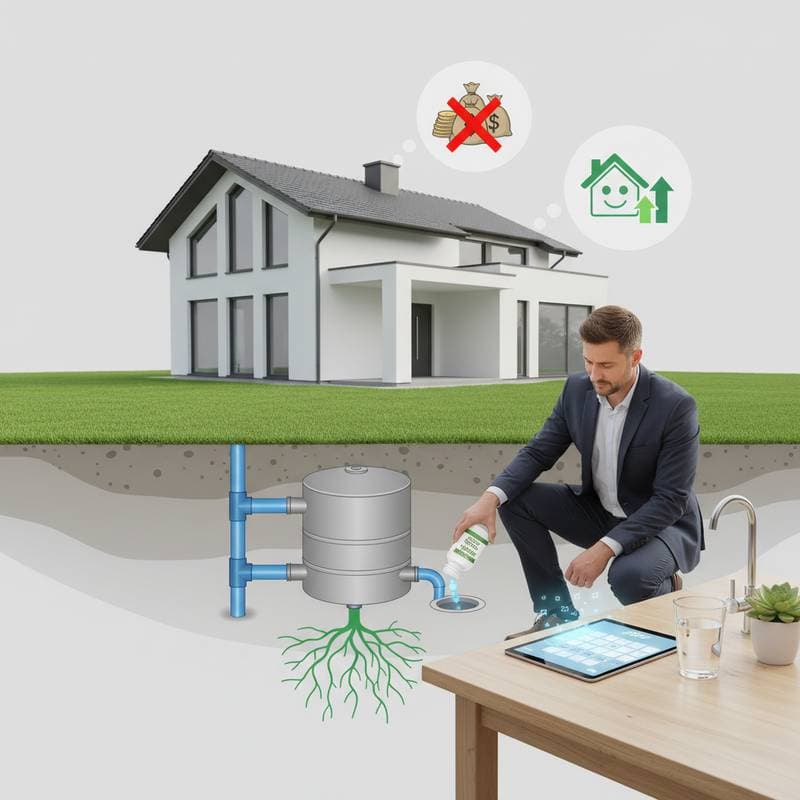
Septic systems manage wastewater from households with quiet efficiency, processing every flush, shower, and laundry cycle. Homeowners often overlook these systems until failures occur, leading to repair expenses that reach thousands of dollars. Regular monthly maintenance extends the lifespan of the system, averts backups, and avoids substantial financial burdens. Simple routines and low-cost practices ensure smooth operation throughout the year.
The Importance of Routine Septic Maintenance
Septic system issues develop gradually from overlooked signs such as sluggish drains, unpleasant odors, or moist areas in the yard. Without intervention, these indicators escalate into severe damage. Replacement costs range from $8,000 to $20,000, influenced by system capacity and local soil types. In contrast, monthly upkeep requires minimal investment, often under $25 for materials and treatments.
Regular attention prevents rapid accumulation of solid waste and sustains the bacterial processes that decompose organic matter within the tank. Homeowners who monitor their systems detect minor problems early, avoiding emergency situations. This proactive approach safeguards property integrity and reduces long-term expenses.
Essential Steps in a Monthly Maintenance Routine
Effective septic care involves straightforward actions that demand little time. Implement this basic routine each month to support system health:
- Introduce a bacterial treatment formulated for septic tanks to promote waste breakdown.
- Activate infrequently used drains with a 30-second flow of water to maintain trap seals and block sewer gases.
- Examine the drain field for saturated soil or atypical odors.
- Inspect beneath sinks and near toilets for leaks, as steady drips strain tank capacity.
- Document findings in a notebook or digital application to monitor patterns over time.
These measures require fewer than ten minutes monthly and ward off repair bills in the thousands.
Components of a Residential Septic System
Familiarity with system elements enhances maintenance efforts. Standard residential setups consist of:
- Septic tank: A container of 750 to 1,500 gallons, positioned 2 to 4 feet underground, which divides solids from liquids.
- Distribution box: Directs effluent uniformly toward the drain field.
- Drain field: Perforated pipes in gravel-filled trenches, buried 18 to 36 inches deep, that release treated water into the ground.
Interdependence among components demands vigilant oversight. Overflow of solids from the tank obstructs the distribution box and pipes, resulting in backups. Consistent checks preserve this balance.
Structured Monthly Maintenance Plan
Initial Week: Evaluate Tank and Drain Field
Survey the zones above the tank and drain field on foot. Surfaces remain firm and dry under normal conditions. Indications of trouble include spongy ground or vibrant grass growth over the drain field. Prompt a professional assessment upon detecting such signs.
Second Week: Assess Plumbing and Water Habits
Examine faucets, showerheads, and toilets for drips. A minor leak squanders more than 2,000 gallons monthly, accelerating tank overload. Distribute laundry across the week rather than concentrating it, granting the tank adequate processing intervals.
Third Week: Administer Bacterial Treatment
Select enzyme or bacterial products endorsed as safe for plumbing and non-corrosive. Adhere to dosage guidelines, typically flushing one scoop or packet through the toilet twice. These additives bolster the native bacteria responsible for solid decomposition.
Final Week: Observe and Log System Performance
Identify sluggish drainage, bubbling noises, or scents. Record observations and review against prior entries. Patterns in data reveal emerging concerns. Persistent anomalies warrant expert review.
Pitfalls That Accelerate System Wear
Homeowners may unintentionally compromise their septic systems through common errors. Steer clear of:
- Disposing of non-degradable materials like wipes, hygiene items, or paper towels, which resist breakdown.
- Overapplying bleach or antibacterial agents, which eliminate beneficial tank bacteria.
- Positioning vehicles or heavy loads above the drain field, risking soil compaction and pipe damage.
- Neglecting pumping intervals, required every 3 to 5 years based on usage and tank size.
View the septic system as a delicate biological network. Harsh substances or excess solids disturb its equilibrium.
Adaptations for Accessibility and Safety
Individuals with physical constraints or restricted yard entry benefit from tailored strategies:
- Equip the tank with risers and surface-level lids to simplify access without excavation.
- Employ extended-handle mirrors for secure leak inspections around exterior components.
- Mark septic features distinctly to aid rapid professional location.
Such modifications streamline care for households including seniors or those with disabilities.
Indicators Requiring Professional Intervention
Preventive measures support daily management, yet certain conditions demand certified expertise. Engage a septic specialist for:
- Ongoing drain slowdowns despite treatments.
- Bubbling across several plumbing outlets.
- Sewage smells adjacent to the tank or drain field.
- Pooling water or excessive vegetation near the system.
Strategies to Minimize Expenses Effectively
- Install low-flow fixtures, such as toilets using 1.28 gallons per flush, to lessen tank demands.
- Purchase bacterial additives in bulk for annual savings over individual buys.
- Align pumping with broader yard tasks to cut service charges.
- Maintain a 25-foot buffer between trees and the drain field to block root penetration.
Essential Tools for Home-Based Maintenance
Assemble a compact kit including:
- Rubber gloves and protective eyewear.
- Extended garden rake for terrain checks.
- Flashlight or reflective mirror.
- Packets of bacterial treatments.
- Dedicated log for records.
Advanced Recommendations for Optimal Performance
- Designate the tank site with a durable marker like a stone or stake for convenient reference.
- Fit filters on washing machine outlets to trap lint prior to system entry.
- Conduct thorough seasonal evaluations ahead of rainy seasons to verify drainage.
- Store a system schematic in a protected folder by the primary water valve.
Securing Enduring System Reliability
Monthly septic maintenance represents a straightforward method to uphold home infrastructure. It ensures dependable wastewater handling, eliminates disruptions, and averts high repair outlays. A brief monthly commitment fosters a robust system that supports your household for years ahead.