
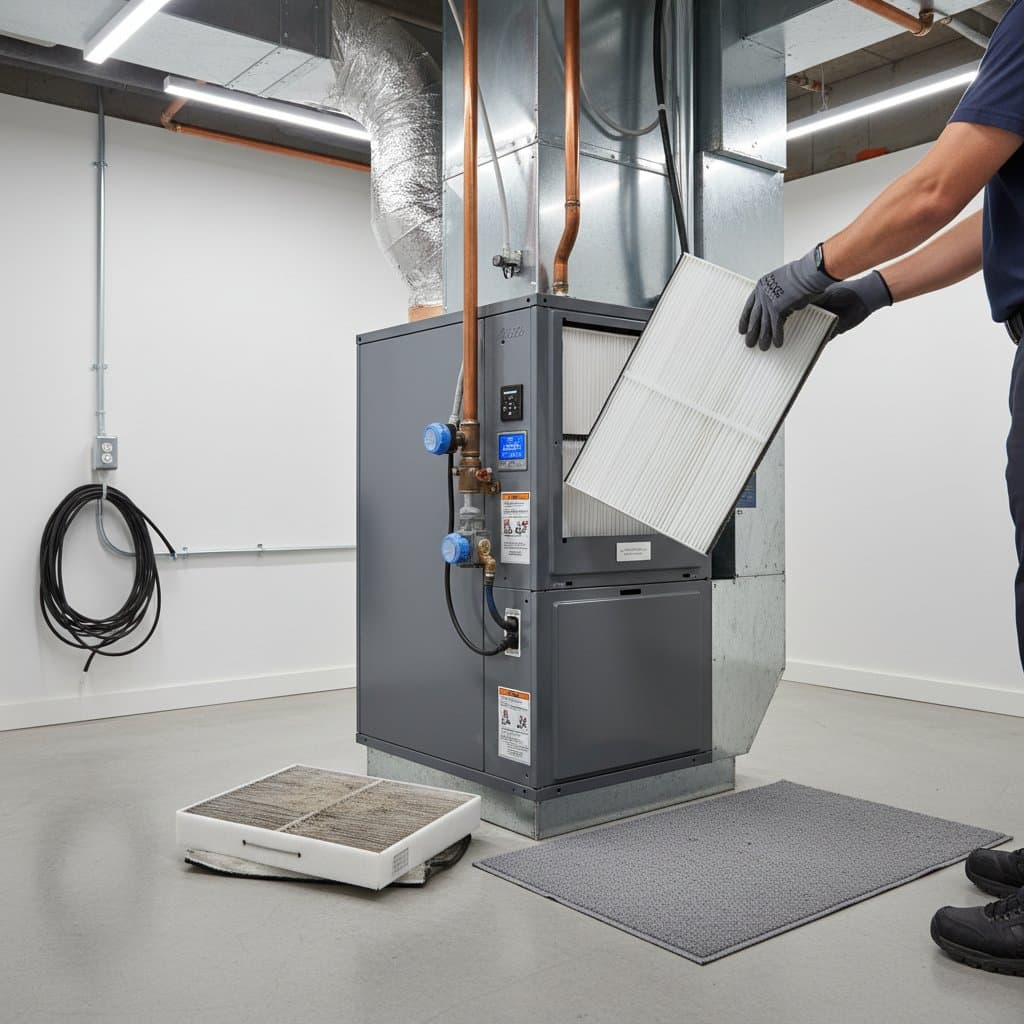
This guide details how to establish an effective HVAC filter replacement schedule, factors to evaluate for your residence, and strategies to maintain system efficiency while controlling expenses.
Understanding Filter Ratings
Grasp filter ratings before establishing a schedule. The primary metric is the MERV rating, which stands for Minimum Efficiency Reporting Value. Ratings span from 1 to 16, with lower numbers capturing larger particles and higher numbers trapping finer ones, such as smoke or bacteria.
Consider this breakdown:
- MERV 1–4: Basic options that capture large particles like lint. These suit older systems or temporary applications.
- MERV 5–8: Standard choices for residences, effective against dust, mold spores, and pet dander.
- MERV 9–12: Advanced filters that elevate air quality, ideal for allergy-prone households.
- MERV 13–16: Hospital-level filtration for ultrafine particles. These demand systems designed for high resistance to avoid airflow restrictions.
Consult your system manual or a certified technician if compatibility remains unclear. Excessive airflow restriction from an incompatible filter generates pressure imbalances and accelerates component degradation.
Recognizing When to Replace Filters
A schedule provides guidance, yet monitor for indicators that necessitate earlier action. Watch for these signals:
- Dust accumulation visible on vents or household surfaces
- Reduced airflow from supply registers
- Elevated energy bills despite stable usage patterns
- Musty or dusty smells during system operation
- Worsening indoor allergy or sneezing episodes
Perform a straightforward visual check. Remove the filter and hold it against light; replacement becomes necessary if light fails to pass through.
Selecting Appropriate Filter Types
Filters vary by material, each addressing specific requirements and financial considerations.
Fiberglass models offer the lowest cost yet minimal efficiency. They safeguard equipment but contribute little to air purification.
Pleated filters incur higher expense but capture finer particles and endure longer. Homeowners often select these for optimal cost-performance balance.
Electrostatic filters employ static charge to attract particles and support washing for reuse. Initial investment proves higher, yet long-term savings emerge through reduced replacements.
High-efficiency filters exceeding MERV 12 suit individuals with respiratory issues, though professional assessment ensures adequate airflow.
Verify exact dimensions match your system specifications. Improper fits create gaps, permitting unfiltered air to bypass and diminish overall effectiveness.
Balancing DIY and Professional Approaches
Filter replacement ranks among the easiest do-it-yourself procedures. Access the slot, extract the old filter, align airflow arrows correctly, and insert the new one; tools prove unnecessary.
Professional servicing extends further, encompassing coil cleaning, refrigerant verification, and blower evaluation. Experts recommend annual comprehensive inspections to sustain optimal function and detect potential problems promptly.
Regular DIY replacements control ongoing costs, whereas expert interventions avert substantial future repairs. Integrate both methods for superior outcomes.
Planning Costs Effectively
Expenses fluctuate by type. Basic fiberglass units cost mere dollars, whereas premium pleated options command greater sums. Reusable electrostatic varieties demand upfront payment but endure years with diligent cleaning.
Calculate annual outlay by multiplying replacement frequency by unit price. For instance, quarterly swaps of a mid-range pleated filter total under the price of a modest family meal. This modest expenditure averts hundreds in repairs and trims utility statements.
Subscription services like FilterBuy or Second Nature deliver replacements on schedule, minimizing oversight risks.
Prioritizing Safety and Health
Clean filters extend beyond energy savings to safeguard indoor air. Clogged units permit pollutant circulation, potentially exacerbating asthma or allergies.
Environments with chemical cleaners, tobacco use, or pets accelerate saturation. Increase replacement frequency and opt for elevated MERV ratings in such scenarios; inspect every three to four weeks for pet-heavy homes.
Power down the HVAC unit prior to filter access. This precaution avoids drawing contaminants into the system during the open interval.
Leveraging Tools for Filter Monitoring
Modern devices simplify oversight. Thermostats from brands like Ecobee or Nest issue alerts based on runtime hours, adapting to variable system demands.
Air quality sensors detect rising particulates, signaling potential clogs. These instruments harmonize comfort, efficiency, and ease of upkeep.
Achieving Lasting System Efficiency
Sustained filter management ensures operational smoothness, purified air, and diminished expenses. Schedule checks with seasonal shifts or digital reminders; stock spares to facilitate prompt action.
Pair routine maintenance with expert evaluations and monitoring technology to prolong HVAC longevity by years. Expect reduced failures, stable costs, and salubrious environments.
Dedicate effort seasonally to reap annual rewards. Position filter care as integral to residence upkeep, yielding dependable operation and fiscal benefits indefinitely.




