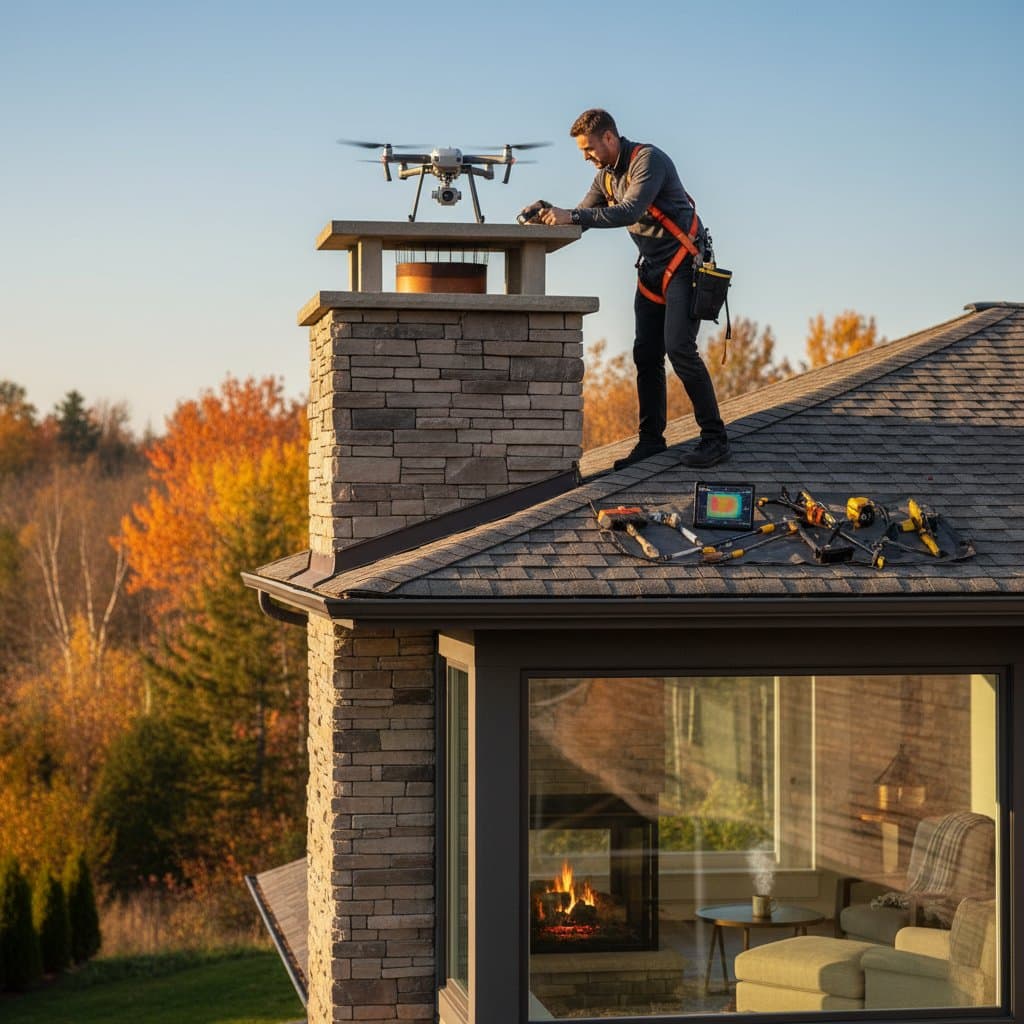
Safeguard Your Home with Fall Chimney Checks
A crackling fire enhances the enjoyment of cooler weather, yet potential safety issues may lurk within the chimney. Throughout the seasons, chimneys accumulate creosote, debris, and moisture. Without inspection before regular use, these elements pose significant fire hazards. Fall chimney checks serve as the primary defense against structural damage, smoke backdrafts, and expensive repairs during winter.
Why Fall Is the Ideal Time for a Chimney Inspection
During warmer months, chimneys often remain idle, allowing dust, animal nests, and rainwater to accumulate. An inspection scheduled before temperatures decline confirms the fireplace operates safely and efficiently. The National Fire Protection Association recommends annual evaluations for all solid-fuel heating systems, irrespective of usage frequency. Even infrequent fires lead to creosote and soot deposits that heighten ignition risks. Fall timing identifies problems before they escalate into seasonal crises.
Quick Inspection Checklist
- Visual check: Examine the chimney structure for cracks, discoloration, or instability.
- Flue condition: Use a flashlight to inspect for blockages or excessive soot accumulation.
- Cap and crown: Verify integrity and proper sealing to prevent entry of elements.
- Damper operation: Operate it multiple times to ensure smooth movement.
- Smoke test: Ignite a small piece of newspaper and observe if smoke vents correctly.
What a Professional Chimney Sweep Looks For
Certified chimney sweeps conduct thorough assessments beyond basic visuals. They employ cameras, brushes, and diagnostic tools to detect structural and airflow deficiencies that evade casual observation.
Detailed Inspection Steps
- Creosote buildup: Professionals measure thickness; deposits exceeding 1/8 inch require immediate removal to mitigate fire risks.
- Flue liner damage: Inspect for fractures or eroded mortar joints that permit heat transfer to nearby combustibles.
- Chimney cap condition: Evaluate for absence or corrosion, which exposes the system to precipitation and wildlife.
- Smoke chamber shape: Assess transitions from firebox to flue for irregularities causing smoke leakage.
- Masonry stability: Identify loose bricks or degraded mortar that compromise the chimney's foundation.
Inspection and cleaning services typically cost between $150 and $350, varying by chimney dimensions and deposit severity. Taller structures or those with multiple flues demand additional effort and equipment, increasing fees accordingly.
DIY vs. Professional Inspection
Homeowners manage routine upkeep, yet comprehensive evaluations demand expert intervention. Specialized equipment and protocols surpass standard household resources.
What You Can Do Yourself
- Clean the hearth and firebox using a stiff brush to remove surface residues.
- Verify the damper opens completely and forms a secure seal.
- Employ binoculars to survey the exterior for apparent defects.
- Position a carbon monoxide detector in proximity for ongoing monitoring.
When to Call a Professional
- Persistent smoky smells occur without active use.
- Debris or particles drop into the fireplace.
- Water marks appear on ceilings or walls adjacent to the chimney.
- Inadequate draft results in smoke entering the living space.
Inspections adhere to levels established by the Chimney Safety Institute of America. Level 1 suits annual needs for most residences, while Level 2 incorporates video analysis, particularly during property transactions or renovations.
Common Problems Found During Fall Chimney Checks
Well-constructed chimneys still encounter concealed defects over time. Awareness of prevalent issues prepares homeowners for inspector discoveries.
| Problem Type | Description | Risk Level | Recommended Fix |
|---|---|---|---|
| Creosote buildup | Thick, tar-like residue from wood combustion | High | Professional cleaning |
| Cracked flue liner | Heat escapes through compromised material | High | Relining or targeted patching |
| Missing chimney cap | Permits water and animal intrusion | Medium | Install or replace cap |
| Deteriorated mortar | Eroded joints undermine structural integrity | Medium | Repointing or application of sealant |
| Blocked flue | Obstructions from nests or fallen debris | High | Clear blockage and add screen |
Accessibility and Safety Considerations
Individuals facing mobility limitations or restricted roof access prioritize caution. Avoid roof climbs absent appropriate harnesses. Opt for extendable mirrors or engage certified technicians who supply photographic or video documentation of internal conditions.
For homes equipped with gas fireplace inserts, evaluations emphasize venting integrity, seals, and ignition mechanisms over soot clearance. Select inspectors versed in both wood-burning and gas configurations.
Tools Professionals Use for Safe and Thorough Checks
- Chimney brushes attached to flexible fiberglass rods enable deep scrubbing.
- HEPA-grade vacuums capture microscopic ash and particles.
- Inspection cameras provide clear views of flue interiors.
- Moisture meters identify concealed water infiltration.
- Drop cloths and seal-off barriers shield indoor areas from debris.
These instruments guarantee cleanliness and enduring safety. Reputable providers furnish before-and-after imagery with each service.
Common Mistakes to Avoid
Homeowners often forgo inspections assuming a pristine appearance or infrequent operation suffices. Such oversights precipitate substantial expenses.
- Assuming light use means low risk: Sporadic burns still generate hazardous deposits.
- Ignoring minor leaks: Water rapidly deteriorates mortar and liners.
- Relying solely on chemical chimney logs: These mitigate buildup but substitute for mechanical cleaning.
- Overlooking cap inspections: An absent cap welcomes pests, foliage, and moisture.
- Postponing repairs until winter: Freezing conditions exacerbate masonry issues and complicate fixes.
Cost and Time Considerations
Routine cleaning and inspection require one to two hours. Necessary repairs, such as masonry patching, range from $200 to $800, whereas complete relining surpasses $2,000. Early scheduling circumvents seasonal demands and allows resolution prior to heating reliance.
Schedule Your Inspection for Lasting Protection
A maintained chimney extends beyond warmth provision. It shields families from flames, toxic gas exposure, and deterioration. Book the fall assessment promptly, maintain service documentation, and request detailed reports following each visit.