Understanding Greywater System Installation Costs by Type
Greywater recycling systems provide homeowners with an effective method to reduce water consumption and promote sustainability. However, determining the full expense involves evaluating components, regulatory approvals, and plumbing modifications, which can complicate initial estimates. A thorough grasp of these elements enables realistic planning and prevents unforeseen financial burdens.
This guide details the expenses associated with residential greywater systems, ranging from basic laundry-to-landscape configurations to advanced whole-home integrations. Readers will gain insights into pricing influences, scenarios requiring professional expertise, and strategies for managing both upfront and ongoing costs.
Overview of Typical Costs
To establish a baseline, consider the following summary of common greywater system types, including approximate price ranges, suitability for do-it-yourself efforts, and primary applications:
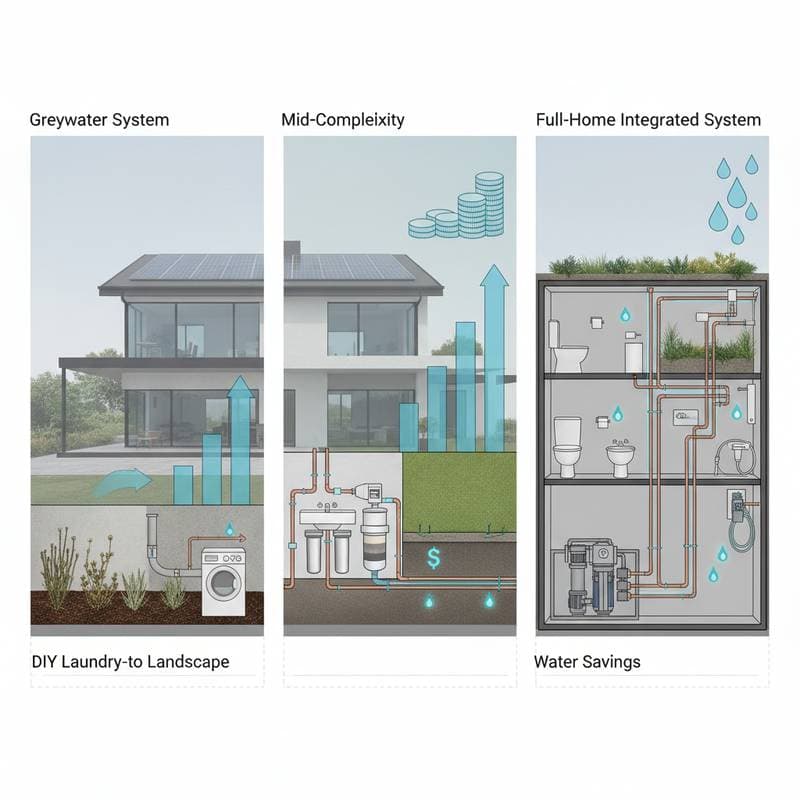
| Type of System | Typical Cost Range | DIY Feasibility | Common Use |
|---|---|---|---|
| Laundry-to-landscape | $500 to $2,000 | High | Irrigating trees and shrubs |
| Simple branched drain | $1,500 to $4,000 | Moderate | Whole-house greywater for landscaping |
| Filtered and pumped | $4,000 to $9,000 | Low | Irrigation and toilet flushing |
| Fully treated with storage | $9,000 to $14,000+ | Low | Irrigation, toilets, and laundry |
These figures encompass materials and labor, excluding permits that may range from $200 to $1,000 based on local regulations. Factors such as system scale, site conditions, and material quality further influence final totals. For instance, systems in arid regions often incorporate additional filtration to handle sediment, increasing costs by 10 to 20 percent.
Comparing Do-It-Yourself and Professional Approaches
Individuals with plumbing knowledge may complete a laundry-to-landscape system over a weekend using readily available kits priced between $500 and $800. Essential tools include PVC cutters, pipe adhesive, hose clamps, and a power drill. Success depends on verifying that the washing machine pump generates sufficient pressure to direct water uphill, particularly on sloped properties; a simple pressure test with a garden hose can confirm this beforehand.
In contrast, whole-home systems demand professional intervention due to their complexity. These setups require precise cuts into existing drain lines, installation of diverter valves, and extension of irrigation piping. Licensed plumbers or specialized greywater installers ensure adherence to plumbing codes, such as those outlined in the Uniform Plumbing Code, while minimizing risks like water contamination.
Indicators for professional involvement include:
- Plans to redirect greywater from multiple sources, including showers and sinks
- Incorporation of pumps, storage tanks, or advanced filters
- Locations mandating building inspections or system certification
- Desire for durable performance backed by manufacturer warranties
Hiring experts typically adds $2,000 to $5,000 in labor fees. This investment safeguards against issues such as pipe leaks, sediment blockages, or regulatory fines, which could exceed correction costs in the long term. Professionals also assess soil percolation rates to optimize irrigation efficiency, potentially enhancing system lifespan by years.
Addressing Accessibility and Safety in Design
Designers can adapt greywater systems to accommodate users with mobility limitations through features like lever-operated valves, elevated filter housings, and self-cleaning backflush mechanisms. For storage tanks, ground-level placement with wide access panels facilitates routine inspections and desludging without excessive physical strain.
Safety remains paramount: greywater must avoid surface application or accumulation in play areas frequented by children or pets. Implement subsurface delivery systems buried at least four inches beneath the soil surface to limit human and animal contact. Additionally, select non-toxic piping materials and incorporate overflow safeguards to prevent backups during heavy use periods, such as family laundry days.
Strategies to Minimize Expenses
Homeowners can implement several approaches to lower initial outlays while preserving system integrity.
- Initiate with a basic configuration. Opt for a laundry-only diversion to landscape elements, allowing for phased expansions as budgets permit.
- Integrate with current infrastructure. Connect to established drip or soaker hoses instead of laying fresh piping, which can save up to 30 percent on materials.
- Favor gravity-based operations. Select designs that rely on natural flow to bypass the need for electric pumps, thereby reducing purchase and electricity expenses.
- Handle manual tasks independently. Activities like digging trenches or constructing mulch basins require effort but demand minimal specialized skills and tools.
- Pursue financial incentives. Contact local water districts for rebate programs; qualifying installations often receive $300 to $1,000 in reimbursements, offsetting upfront investments.
Beyond these, sourcing materials from eco-friendly suppliers may yield bulk discounts, and timing installations during off-peak seasons can negotiate lower contractor rates.
Steps to Implement Your System Effectively
With cost insights in hand, align system selection with specific objectives and financial constraints. For primary irrigation reductions, gravity-fed branched drains frequently provide optimal value, recouping expenses through annual water bill decreases of 20 to 40 percent in water-scarce areas.
During new construction or extensive renovations, embed whole-home greywater provisions early. Collaborate with architects to route drain lines, position filters adjacent to fixtures, and delineate irrigation zones, which cuts retrofitting expenses by half compared to post-build additions.
For established residences, conduct a preliminary evaluation: catalog greywater-generating appliances by volume, quantify landscape watering needs via meter readings, and review municipal codes for allowable diversions. This information informs appropriate system capacity, such as sizing tanks to hold 50 gallons per day for a four-person household.
Greywater integration yields tangible advantages in resource conservation and economic efficiency. Thoughtful execution results in vibrant outdoor spaces, diminished utility demands, and a residence engineered for enduring environmental harmony.