
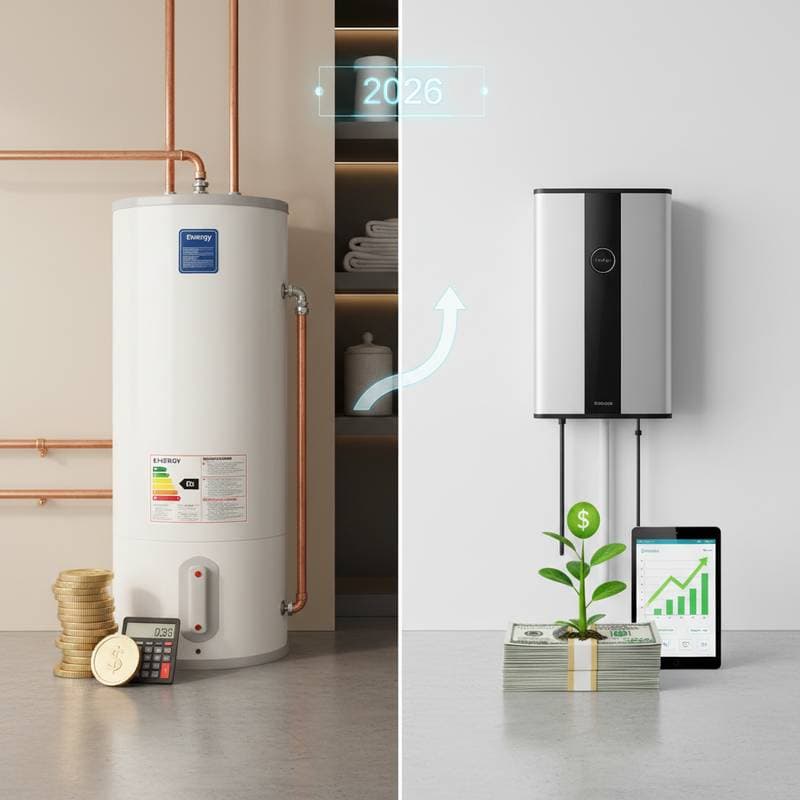
Tank vs. Tankless: 2026 Water Heater Cost Breakdown
Homeowners replacing water heaters face a key choice between traditional tank models and on-demand tankless units. Initial costs guide many decisions, yet a full view of pricing elements ensures informed selections. This analysis covers essential cost drivers, service options, and factors shaping expenses in various regions.
Core Cost Elements for Water Heaters
Nationwide, installing a tank water heater costs between $1,000 and $2,200, varying by size and energy rating. Tankless units range from $2,500 to $4,800, covering equipment and labor. Local conditions adjust these figures, with urban areas adding premiums due to higher labor rates.
Coastal zones and bustling cities often incur 25 percent more in installation fees than rural spots. In colder regions, expenses rise for larger tanks or gas systems that sustain performance. Winter peaks drive up rates as failures increase, while broader economic shifts, like fuel price hikes, elevate both supplies and services.
Pricing Approaches in the Industry
Installers apply varied models to fit project needs. Hourly billing, at $75 to $150, suits complex adaptations. Flat rates dominate routine swaps, delivering cost certainty.
Bulk per-unit deals appeal to managers handling multiple setups. Comprehensive project bids merge supplies, work, and approvals into one figure. Bundles simplify processes by incorporating transport, old unit haul-away, and paperwork, often at a modest upcharge.
Rental plans emerge as options, with monthly payments of $40 to $75 covering upkeep and eventual swaps, ideal for those avoiding large outlays.
Service Levels and Associated Costs
Entry-Level Options
Basic 30- to 40-gallon tank heaters install for $1,000 to $1,400, fitting modest homes with basic coverage and warranties. Entry tankless setups begin at $2,500, emphasizing space savings and solid performance.
Mid-Range Selections
50- to 60-gallon tanks in this category cost $1,500 to $1,900 installed, featuring better insulation for quicker heating. Mid-tier tankless models, priced $3,200 to $4,000, support homes with two or three baths via steady supply.
Advanced Configurations
Efficient tank hybrids exceed $2,500, incorporating smart features for reduced consumption. High-end tankless with condensing tech reach $4,000 to $4,800, boasting superior ratings and warranties up to 15 years.
Custom Solutions
Tailored setups like solar integrations or circulation systems surpass $5,000, particularly with infrastructure changes. These suit energy-conscious properties prioritizing peak efficiency.
Factors Shaping Overall Expenses
Installation scale determines much of the budget. Direct tank swaps proceed smoothly, but tankless conversions demand gas, vent, or power modifications, inflating labor by hundreds.
Project duration varies: simple tanks finish in three hours, tankless overhauls extend to a day. Premium components, such as durable connectors or enhanced vents, contribute further.
Extended protections and service pacts increase initial spends yet minimize future fixes. Data from service platforms indicate 40 percent of tankless buyers opt for these, valuing reliability over savings now.
Additional Fees and Enhancements
Beyond core work, expect these extras:
- Removal and disposal of existing unit: $100 to $200
- Permit and inspection charges: $50 to $150
- Adjustments to water lines: $100 to $300
- Gas or vent system updates: $200 to $600
- Rush scheduling: $150 to $300 for prompt service
Tankless upgrades may require mounts, drains, or outlets, prompting further line items. Securing three bids reveals these details and uncovers potential discounts.
Efficiency and Financial Angles
Ongoing energy use impacts total ownership costs. Tankless designs consume 25 to 40 percent less power than tanks, per sector analyses, recouping premiums through decade-long reductions.
Gas variants carry higher starts but cheaper runs than electric counterparts. Incentives narrow differences: rebates up to $500 apply to certified tankless in select areas, aiding eco-upgrades.
Insights from Experts and Users
Plumbers note usage patterns as pivotal. John Keller, a licensed contractor, observes that high-demand families gain from tankless endless flow, whereas compact setups favor tanks for simplicity.
Maintenance differs: tankless requires yearly hard-water flushing at $150 per call in affected zones, a factor for long-term planning.
Steps to Optimize Your Upgrade
Beyond upfront figures, assess running costs, care needs, and incentives for a complete picture. Budget-limited or small-space dwellers often thrive with upgraded tanks.
Partner with certified pros offering itemized quotes on parts, efforts, and safeguards. Dissecting these aids in pinpointing efficiencies and securing value-driven choices.




