Evaluating Home Backup Costs: Generators Versus Batteries
Power outages disrupt daily life by affecting heating, cooling, and critical appliances. Homeowners now prioritize backup solutions to maintain essential functions. This analysis compares traditional generators with advanced battery systems, focusing on costs, reliability, and sustainability for informed decision-making in 2026.
Key Features of Each Backup System
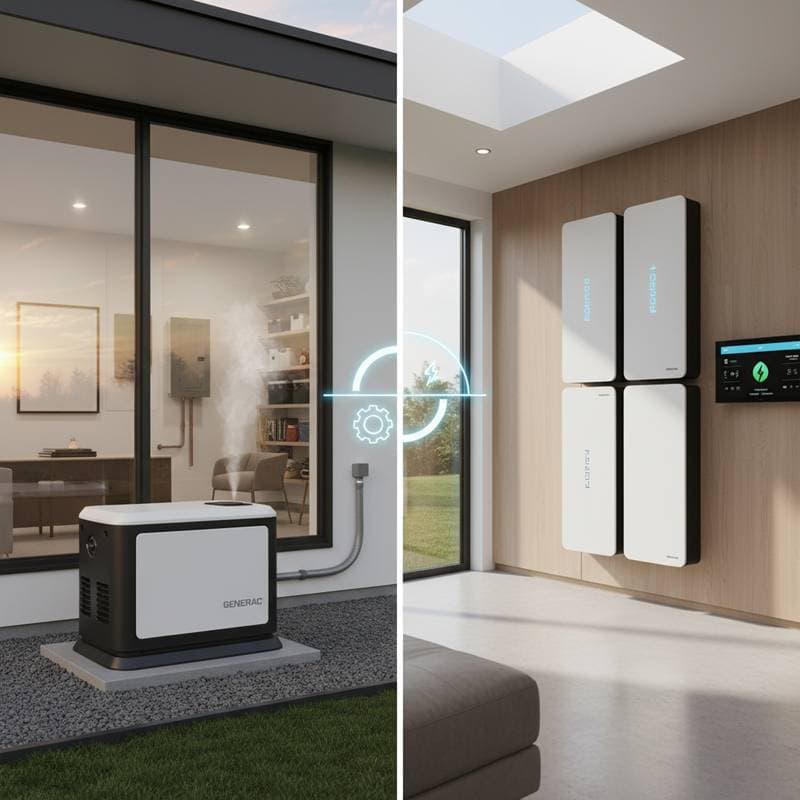
Generators operate by combusting fuel sources such as natural gas, propane, or diesel to produce electricity. These systems function continuously with a steady fuel supply, proving ideal for outages lasting days. They connect to the home's electrical panel to power multiple circuits simultaneously.
Battery systems store energy from the utility grid or solar installations for release during interruptions. These units activate seamlessly without fuel, emphasizing quiet performance and integration with renewable sources. Capacity varies by model, typically supporting key loads for several hours to a day.
Upfront Investment and Installation
Whole-home generators range in price from $6,000 to $15,000, inclusive of installation by certified technicians. Factors influencing cost include fuel type, output capacity in kilowatts, and automatic transfer switches. For instance, a 20-kilowatt natural gas model suits larger households, while portable diesel options under $2,000 handle basic needs like refrigerators and lights.
Battery backups, often integrated with solar arrays, cost between $10,000 and $25,000. Lithium-ion batteries drive this premium due to their efficiency and longevity. Federal tax credits, such as the 30% Investment Tax Credit, can reduce effective costs by thousands, alongside state rebates for energy storage. Professional setup ensures compatibility with existing wiring and inverters.
Annual Operating and Upkeep Costs
Generators demand scheduled servicing to prevent failures, including oil changes every 100 hours of use, fuel filter replacements biannually, and annual tune-ups. Expect $200 to $500 yearly, plus fuel at $3 to $5 per gallon during operation. In a 48-hour outage, a mid-sized unit might consume 50 gallons, adding $150 to $250 in expenses.
Batteries require little intervention, lacking mechanical components that wear over time. Owners perform visual checks quarterly and firmware updates via manufacturer apps. Replacement occurs after 10 to 15 years, with costs around $8,000 to $12,000 for equivalent capacity. Long-term, batteries lower electricity bills by 20% to 30% through peak shaving and solar self-consumption.
Reliability During Outages
In areas prone to storms or grid instability, generators excel by managing high-demand appliances like air conditioners and well pumps without capacity limits. Startup takes 10 to 30 seconds, and they refuel easily from home tanks or deliveries. Challenges include noise levels exceeding 70 decibels and carbon monoxide risks, necessitating outdoor placement and detectors.
Batteries provide instantaneous failover, often within milliseconds, preserving sensitive devices like computers and medical equipment. They prioritize circuits via smart panels, ensuring lights, outlets, and Wi-Fi remain active. Limitations arise in multi-day events; a 13-kilowatt-hour unit powers essentials for 8 to 12 hours before needing recharge, which solar input can extend in daylight.
Sustainability and Energy Efficiency
Batteries align with green initiatives by capturing excess solar production and avoiding fossil fuel use. They enable participation in demand-response programs, earning credits from utilities for grid support. Over time, this setup cuts carbon emissions equivalent to planting 50 trees annually for an average home.
Generators depend on combustible fuels, emitting greenhouse gases and particulates. Natural gas variants produce 40% fewer emissions than diesel, yet they contribute to air quality concerns. Eco-conscious owners might opt for biofuel-compatible models, though availability varies by region.
Selecting the Optimal System for Your Needs
Assess outage frequency and duration using local utility data or historical weather patterns. For rural properties with well water or electric heat, generators handle sustained loads effectively. Urban dwellers benefit from batteries' compact design and noise-free operation.
Budget plays a central role; calculate return on investment over 10 years, factoring incentives and energy savings. Test scenarios: a battery might suffice for 90% of short outages, while a generator covers extremes.
Hybrid configurations merge strengths, using generators to recharge batteries during prolonged events. This approach, starting at $20,000, maximizes uptime with minimal emissions by running the generator intermittently.
Ensuring Long-Term System Performance
Conduct monthly load tests on generators to verify automatic startup and fuel flow, storing propane in ventilated areas to avoid degradation. Batteries benefit from annual diagnostics to monitor cell health and optimize discharge cycles.
Engage certified service providers for inspections every two years, documenting maintenance for warranty claims up to 25 years on premium models. These practices not only comply with safety codes but also enhance resale value by demonstrating reliable power readiness.
Investing in the appropriate backup safeguards against disruptions, preserving comfort and security. By balancing costs with practical benefits, homeowners secure resilient energy solutions tailored to 2026 demands.