- Garden hose equipped with a spray nozzle.
- Soft-bristle brush.
- Coil cleaning solution from a hardware supplier.
Procedure:
- Shut off power at the disconnect box or circuit breaker.
- Clear leaves, grass clippings, or other debris, ensuring at least 24 inches of clearance on all sides.
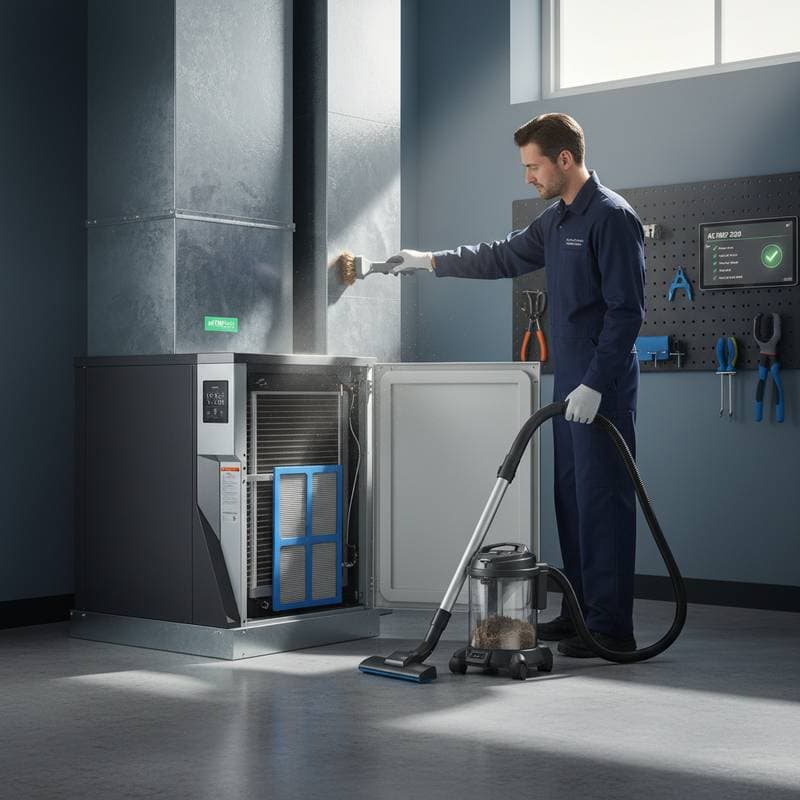
- Gently brush surface dirt from the fins.
- Apply coil cleaner, allow it to sit as directed, then rinse from the inside outward to prevent fin damage.
- Inspect fan blades for bends, cracks, or imbalance.
Avoid pressure washers, as high force can deform delicate fins and impair efficiency.
Step 3: Inspect Condenser and Evaporator Coils
Coils in both the outdoor condenser and indoor evaporator accumulate dust and grime over time, reducing cooling capacity. Thorough inspection identifies buildup that demands attention.
Procedure for evaporator coils:
- Access the indoor unit, often in the attic, basement, or closet.
- Remove the access panel after powering off the system.
- Visually check for dirt layers; use a flashlight to examine hard-to-reach areas.
- If heavily soiled, apply evaporator coil cleaner and rinse carefully, or schedule professional service.
For condenser coils, refer to Step 2 cleaning. Annual professional cleaning of evaporator coils prevents refrigerant issues and maintains airflow.
Step 4: Verify Thermostat and Controls
The thermostat directs your cooling system, and any fault can lead to inconsistent temperatures or excess energy use. Accurate calibration ensures precise operation.
Testing steps:
- Replace batteries in battery-powered models.
- Switch to cooling mode and set a temperature below the current room reading.
- Confirm the compressor and indoor fan activate promptly without unusual noises.
- For programmable or smart models, adjust schedules to align with daily habits.
Consider installing a smart thermostat, which can lower annual energy consumption by up to 10 percent through adaptive learning and remote adjustments.
Step 5: Test System Startup and Airflow
Proper startup confirms electrical and mechanical integrity, while airflow assessment reveals blockages or imbalances. These checks validate overall system health.
Procedure:
- Restore power and run the system for 10 to 15 minutes.
- Listen for smooth compressor engagement and steady fan operation.
- Measure airflow at supply vents using an anemometer if available, or feel for even distribution.
- Check return vents for unrestricted intake.
Weak or uneven airflow signals deeper problems, such as blower issues or obstructions.
Step 6: Examine Visible Wiring and Insulation
Exposed wiring and insulation degrade from weather and wear, posing safety risks and efficiency losses. Routine visual checks prevent electrical hazards.
Inspection points:
- Look for frayed wires, loose connections, or corrosion at the outdoor unit.
- Verify insulation on refrigerant lines remains intact and free of tears.
- Tighten any accessible screws or terminals.
If damage appears, consult a licensed electrician or HVAC technician immediately to avoid fire risks or system failure.
Step 7: Ensure Proper Drainage and Condensate Line Flow
Blocked condensate lines cause water backup, leading to coil freezing or indoor flooding. Clear paths maintain humidity control and prevent damage.
Procedure:
- Locate the condensate drain line exiting the indoor unit.
- Flush the line with a vinegar-water solution using a wet-dry vacuum or pour from the drain pan.
- Inspect the drain pan for cracks and clean residue.
- Verify the outdoor drain outlet remains unobstructed.
Install a condensate overflow switch if your system lacks one, to shut down operations during backups.
Advanced Maintenance: Lubricate Moving Parts and Seal Ducts
Beyond basics, lubricate accessible motors and bearings to reduce friction. For ductwork, seal leaks to recapture lost air.
Lubrication:
- Identify oil ports on fan motors per the manufacturer's manual.
- Apply HVAC-specific lubricant sparingly to avoid excess buildup.
- Ensure fans rotate freely without resistance.
Duct sealing:
- Feel for air escaping at joints and seams.
- Apply mastic sealant or foil tape to gaps; steer clear of standard duct tape.
- For inaccessible areas, arrange a professional duct blaster test to quantify losses.
Leaky ducts waste 20 to 30 percent of cooled air, making sealing a high-impact upgrade.
Indicators for Professional Service
Homeowners handle many tasks effectively, yet complex issues require expert intervention. Engage a certified technician for:
- Ice formation on coils or lines.
- Burning odors from electrical components.
- Diminished airflow after filter cleaning.
- Cycles that start and stop too frequently.
- Unexplained spikes in energy costs.
A routine professional inspection ranges from 100 to 200 dollars, a fraction of the 1,000-dollar-plus cost of major repairs like compressor replacement.
Efficiency Gains and Cost Overview
Pre-season efforts yield measurable returns in savings and reliability. The following table outlines key tasks, expenses, and benefits.
| Maintenance Task | Cost Range | Efficiency Improvement | Frequency Recommendation |
|---|---|---|---|
| Filter Replacement | 10 to 30 dollars | 5 to 10 percent | Every 1 to 3 months |
| Coil Cleaning | 75 to 150 dollars | 10 to 15 percent | Annually |
| Duct Sealing | 250 to 600 dollars | 15 to 30 percent | Every few years |
| Professional Tune-Up | 100 to 200 dollars | 10 percent | Annually |
These investments accumulate to substantial long-term savings compared to full system overhauls.
Proactive Steps for Lasting Comfort
Homeowners who maintain their AC systems proactively experience fewer disruptions and lower operational costs. Initiate the checklist well before peak heat to allow time for any necessary adjustments.
Combine self-performed tasks with annual professional reviews for comprehensive care. This disciplined routine delivers consistent cooling, energy efficiency, and peace of mind through the hottest months.