
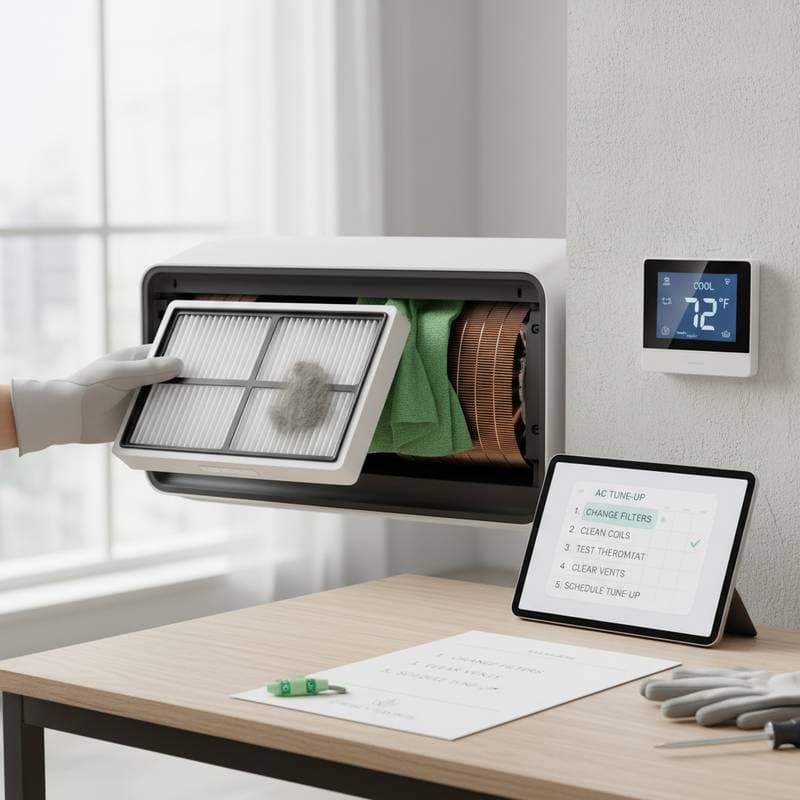
5 Essential Tasks to Prevent Summer AC Breakdowns
Intense summer heat transforms a comfortable home into an uncomfortable space when the air conditioner fails. Many homeowners encounter this issue due to overlooked maintenance. A structured routine addresses common vulnerabilities, maintains efficiency, and avoids expensive repairs. This guide details five core tasks to prepare your system for the season.
Importance of Seasonal AC Maintenance
Cooling systems endure significant stress from dust, pollen, and continuous operation during warm months. Neglect leads to reduced efficiency, higher utility bills, and accelerated component wear. Regular upkeep extends unit lifespan by up to five years and prevents minor problems from escalating. Proactive care identifies issues early, ensuring reliable performance and substantial cost savings.
Core Maintenance Tasks
Focus on these five tasks to safeguard your air conditioner. Perform them before temperatures rise to optimize cooling and minimize risks.
-
Replace or Clean Air Filters: Clogged filters impede airflow, causing the system to overwork and potentially freeze. Standard sizes include 16 by 25 inches or 20 by 25 inches; verify your model specifications. Swap disposable filters every 30 to 60 days, or rinse washable ones monthly with mild soap and water, ensuring complete drying before reuse. In pet-heavy or dusty environments, inspect every 30 days to enhance air quality and protect the blower motor.
-
Clean the Outdoor Condenser Unit: Debris around the condenser hinders heat dissipation, forcing inefficient operation. Shut off power at the disconnect box, then clear leaves, grass, and dirt within a 24-inch radius. Use a soft brush or vacuum to remove buildup from fins, followed by a gentle hose spray from inside out. Straighten bent fins with a fin comb if needed; this improves heat exchange for quieter, faster cooling.
-
Test Thermostat and Inspect Vents: Inaccurate thermostats waste energy by misreading temperatures. Set to 74 to 78 degrees and compare with a separate thermometer; recalibrate if the discrepancy exceeds two degrees, or replace batteries. Ensure all vents remain open and unobstructed, moving furniture at least 12 inches away and vacuuming dust from covers. Address uneven room cooling through professional duct sealing, which can boost efficiency by 20 percent.
-
Clear the Condensate Drain Line and Clean Evaporator Coil: Blocked drains cause water backups, leading to leaks and mold. Locate the PVC line near the indoor unit and flush with a cup of white vinegar monthly to dissolve algae. For the evaporator coil, access the panel above the blower, apply no-rinse cleaner to fins, and allow drainage. These actions prevent humidity issues, musty smells, and efficiency losses of up to 15 percent.
-
Schedule a Professional Tune-Up: Experts handle complex checks like refrigerant levels, electrical connections, and component integrity. Visual inspections reveal leaks via oily spots on copper lines or corrosion. Technicians tighten wires, test capacitors, and lubricate parts, averting failures such as compressor damage. Annual service, costing 100 to 200 dollars, reduces energy use by 15 percent and uncovers hidden problems.
Avoiding Common Maintenance Errors
Homeowners often overlook details that compromise system health. Limit thermostat adjustments to 5 to 7 degrees when away to prevent strain upon return. Keep the outdoor unit free from coverings or dense vegetation that trap heat. Investigate unusual noises like grinding or rattling promptly, as they indicate loose parts or bearing issues. Annual professional inspections remain essential for detecting refrigerant loss or electrical degradation.
Enhancing Accessibility and Comfort
Households with mobility or respiratory needs require tailored adjustments. Position return air filters 36 to 48 inches from the floor for easy access. Select MERV 10 to 13 rated filters to trap particles without airflow restriction. Variable-speed blower motors provide consistent cooling at lower noise levels, improving overall circulation.
Essential Tools for Maintenance
Prepare with these items for effective upkeep:
- Screwdrivers (Phillips and flathead)
- Soft bristle brush or vacuum attachment
- Garden hose with adjustable nozzle
- Fin comb
- Wet-dry vacuum
- Flashlight
- Thermometer
- Gloves and safety glasses
Store them conveniently near the system for quick routines.
Strategies for Energy Efficiency
Combine maintenance with usage habits to maximize savings. Seal window and door gaps with weatherstripping to retain cooled air. Pair ceiling fans with a 4-degree thermostat increase for perceived comfort. Block sunlight with closed blinds to cut heat gain by 30 percent. Upgrade attic insulation to R-30 and consider zoning systems for targeted cooling. These measures, alongside upkeep, lower bills by 20 to 30 percent.
Monitoring System Performance
Maintain a log of filter changes, cleanings, and inspections, noting any anomalies like leaks or cycling irregularities. This documentation aids technicians in diagnostics and supports warranty processes. Patterns in records, such as frequent clogs, signal underlying concerns for timely resolution.
Advanced Maintenance Practices
Power down at the disconnect before any inspection. Allow five minutes post-shutdown before restarting to avoid overload. Verify the condenser pad levelness; correct tilts over half an inch to reduce vibrations. Annually inspect refrigerant line insulation, replacing damaged sections with foam sleeves to minimize losses.
Sustaining Long-Term Reliability
Invest time in these tasks to protect your cooling investment. A weekend review establishes the routine, with reminders for ongoing care. Results include reduced noise, cleaner air, lower costs, and dependable operation through the hottest days.




