-
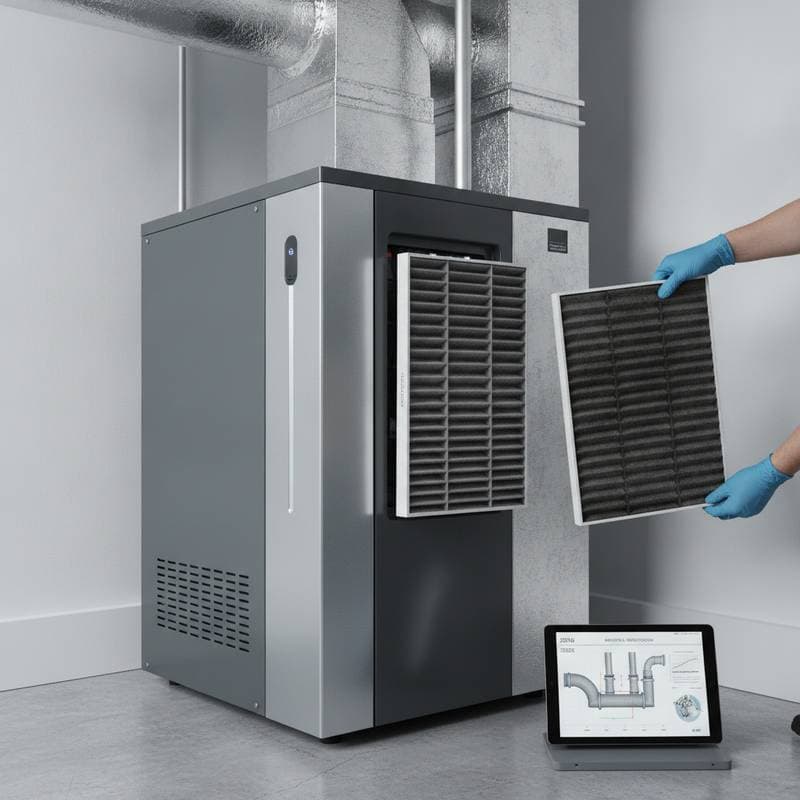
Locate the Filter Slot: Access the return air duct or furnace compartment where the filter resides, typically near the blower.
-
Inspect the Current Filter: Note its size, MERV rating, and condition to guide your replacement choice.
-
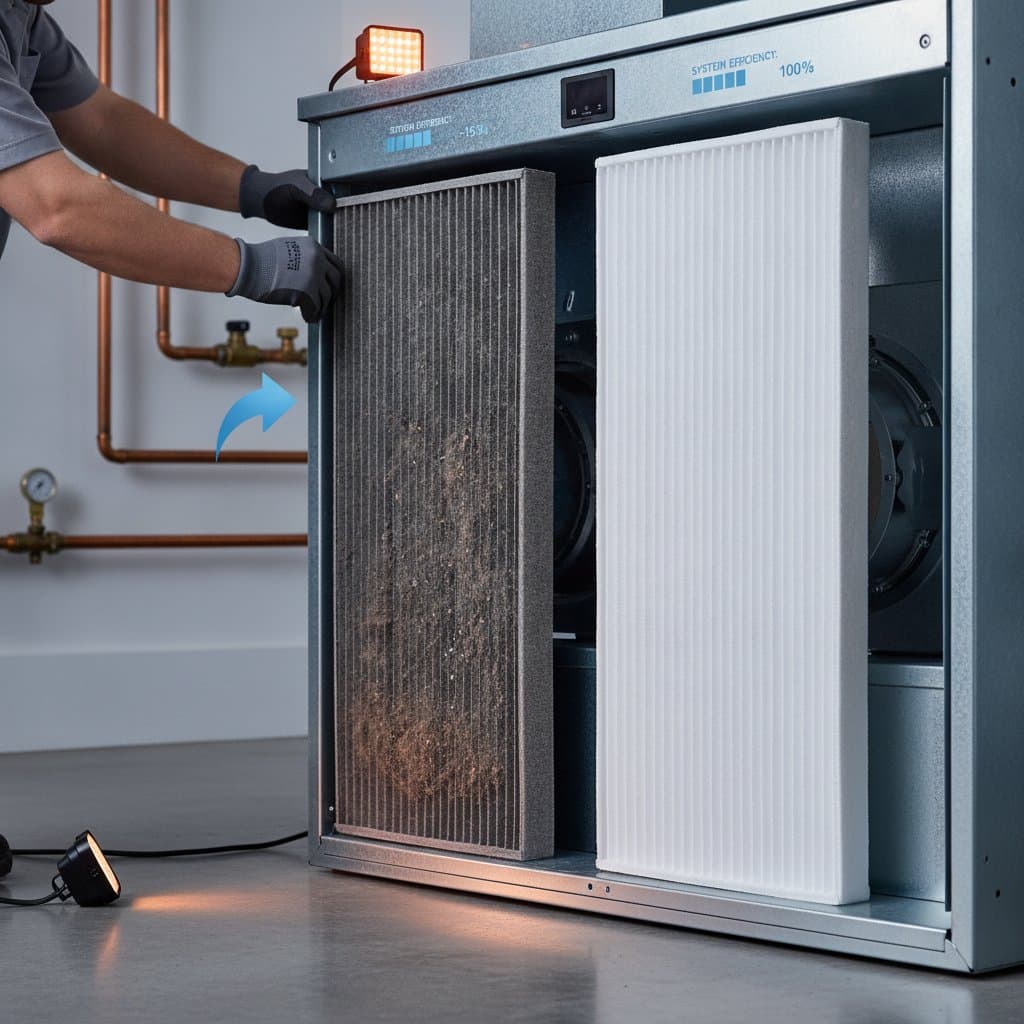
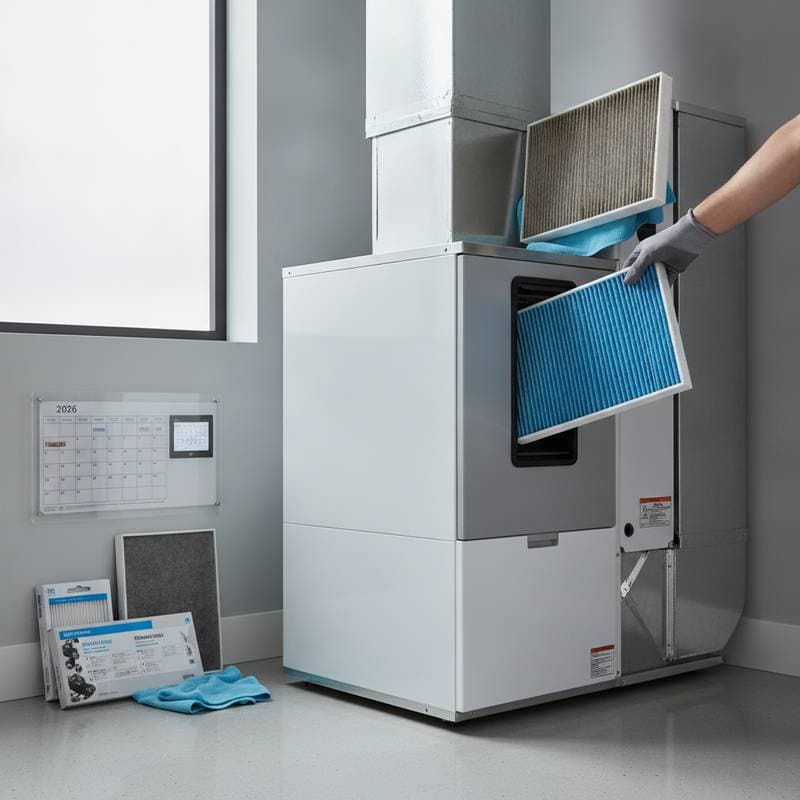
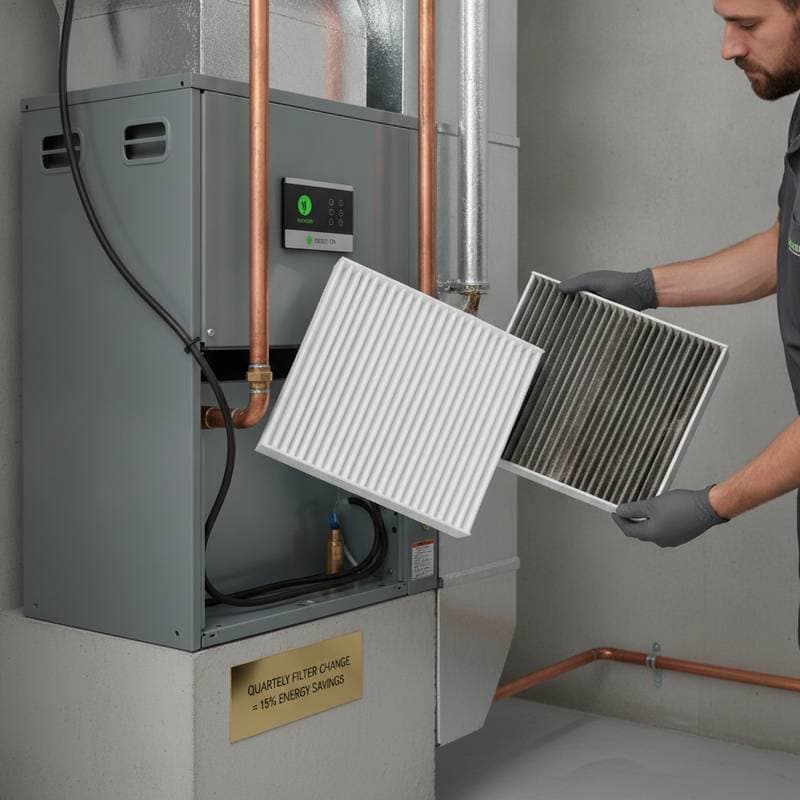
Remove the Old Filter: Slide it out carefully to avoid releasing dust back into the air.
-
Insert the New Filter: Align it with the airflow arrows printed on the frame, ensuring the arrow points toward the blower.
-
Restart and Monitor: Restore power, run the system for a few minutes, and verify consistent airflow from vents.
Safety Considerations
Handle filters gently to minimize dust disturbance. Wear a mask if you have sensitivities, and dispose of the old filter in a sealed bag. Never force a filter into place; if resistance occurs, double-check dimensions or seek technician assistance to avoid damaging the system.
Costs and Long-Term Savings
Higher MERV filters carry a premium price, often 50 to 100 percent more than basic options. A MERV 13 filter might cost 20 dollars compared to 10 dollars for a MERV 8 equivalent. However, these investments yield returns through extended filter life, reduced energy bills, and fewer system repairs.
Over a year, consistent use of quality filters can save hundreds in utility costs by preventing efficiency drops. Track your maintenance with a simple schedule: list filter type, MERV rating, replacement interval, and estimated cost in a table format. For example:
| Location | Filter Type | MERV Rating | Replacement Frequency | Cost per Replacement |
|---|---|---|---|---|
| Main Furnace | Pleated | 13 | Every 2 months | $20 |
| Upstairs Return | Fiberglass | 11 | Every 3 months | $15 |
This tool simplifies planning and ensures timely changes.
Addressing Common Concerns
Can Higher MERV Filters Harm My System?
Exceeding the recommended rating risks restricted airflow, which forces the motor to work harder and increases energy use. Test compatibility by monitoring system performance after installation; if noise levels rise or airflow weakens, downgrade to a lower MERV.
How Frequently Do Replacements Occur?
Standard filters require changes every one to three months, influenced by home size, pet presence, and outdoor air quality. Higher MERV models may endure slightly longer due to denser construction, but inspect monthly for visible dirt buildup.
Does Filter Thickness Affect Performance?
Thickness contributes to surface area for particle capture, but MERV rating remains the primary indicator of efficiency. A thin, high-MERV filter often outperforms a thick, low-MERV one in capturing fine particles.
When to Involve a Professional?
If your system is older or you notice unusual sounds post-installation, hire a technician. They can measure static pressure to confirm filter suitability and perform a full system tune-up.
Sustaining HVAC Performance Over Time
Incorporate filter replacement into a broader maintenance plan that includes annual professional inspections, coil cleaning, and duct sealing. These practices minimize dust ingress and maintain peak efficiency. Homeowners who adhere to such routines report up to 20 percent lower energy costs and fewer breakdowns.
By embracing the 2026 standards and proactive care, you secure a healthier living environment with reliable comfort year-round. Start with a filter upgrade today to realize these advantages immediately.