Get Your Chimney Ready for Fall with This Safety Check
As cooler weather approaches, many homeowners look forward to lighting their fireplaces again. Before you strike that first match, take time to inspect and prepare your chimney. A neglected chimney can cause smoke buildup, carbon monoxide leaks, or even fires. A seasonal safety check ensures your fireplace runs efficiently and your home stays safe all season.
Why Chimney Maintenance Matters
Chimneys work by directing smoke and gases safely out of your home. Over time, soot and creosote accumulate on the inner walls. Creosote is a sticky, flammable residue that can ignite with high heat. Even a thin layer can cause dangerous flare-ups. Birds and small animals may also build nests inside the flue, blocking airflow and forcing smoke back into your living space.
Most chimney fires start from neglected buildup. Regular inspection and cleaning reduce this risk dramatically. A clean chimney also improves draft efficiency, allowing fires to burn hotter and cleaner, which saves wood and reduces smoke.
Step-by-Step Chimney Safety Check
1. Inspect the Exterior
Start by standing outside and looking up at your chimney. Check for cracks in the masonry, loose bricks, or missing mortar. Damage can allow moisture to seep inside, which weakens the structure. If you have a metal chimney, look for rust or sagging joints. Any visible deterioration should be repaired before use.
The chimney cap is another critical component. It keeps rain, debris, and wildlife out. Ensure the cap is securely fastened and that the screen is free from blockage. A missing or damaged cap is an open invitation for animals to enter and nest.
2. Examine the Fireplace Interior
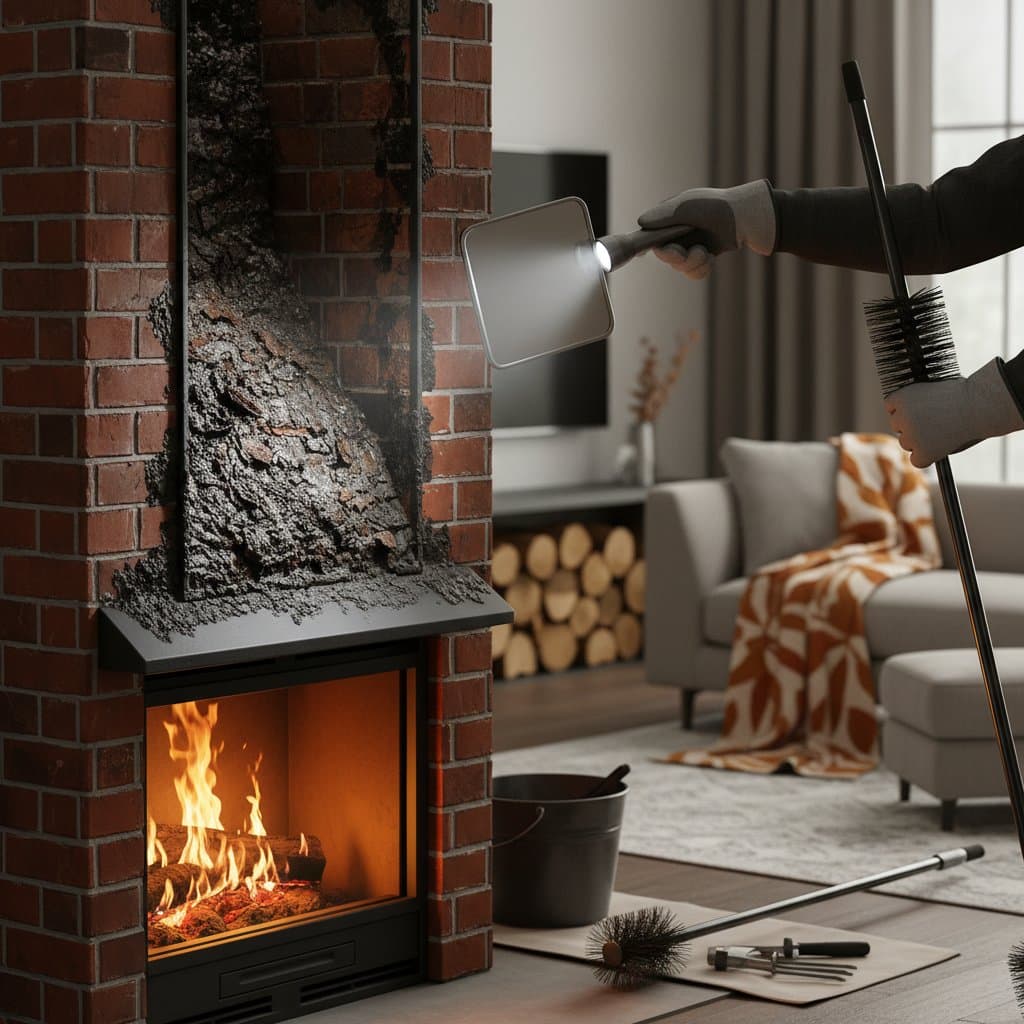
Inside your home, open the fireplace damper and look up into the flue with a flashlight. Check for soot buildup, cracks, or debris. If you notice thick black residue or shiny, tar-like deposits, that is heavy creosote. This level of buildup requires professional cleaning. Make sure the damper opens and closes smoothly. A stuck damper can trap smoke inside your home.
Inspect the firebox for cracked bricks, gaps in mortar, or loose panels. Even small gaps can allow heat to reach surrounding wood framing, creating a fire hazard over time. If any damage is visible, mark it for repair before lighting the fireplace.
3. Clean or Replace the Chimney Liner
The chimney liner protects the walls from heat and corrosion. Clay tile liners are common but can crack after years of use. Metal liners last longer but can warp or rust. If you see broken sections or corrosion, call a certified chimney technician. Replacing a liner costs between 2000 and 5000 dollars depending on size and material, but it prevents far more expensive structural repairs later.
4. Schedule a Professional Inspection
Even if your visual check looks fine, a certified sweep can spot hidden problems. Professionals use specialized cameras to view the entire flue length and identify cracks or blockages you cannot see from below. A standard chimney inspection and cleaning typically costs between 150 and 400 dollars. The service takes about one to two hours.
Common Chimney Issues and How to Handle Them
Creosote buildup: If you notice black flakes or a strong burnt odor, you likely have creosote in the flue. Avoid burning unseasoned wood since it produces more residue. A professional cleaning once a year keeps levels safe.
Draft problems: Smoke spilling into the room often means a blocked flue, closed damper, or negative air pressure. Opening a nearby window slightly can improve draft until the cause is fixed.
Water damage: Stains or a musty smell near the fireplace indicate moisture intrusion. Check flashing around the chimney crown and apply waterproof sealant if needed. Water damage can lead to costly repairs if ignored.
Animal nests: Chirping or scratching sounds from the chimney mean an animal has moved in. Do not light a fire. Contact wildlife control or a chimney professional to remove the nest safely and install a screened cap.
DIY Cleaning vs. Hiring a Professional
Homeowners can handle basic upkeep, like removing ash and checking visible parts of the chimney. However, deep cleaning requires the right brushes, rods, and safety gear. Climbing a roof or working inside a narrow flue poses real risk. A professional sweep ensures thorough cleaning and inspection, including soot removal, camera inspection, and draft testing. For families planning to use their fireplace often, professional service is worth the investment.
Safety Devices That Protect Your Home
Every home with a fireplace should have working smoke alarms and carbon monoxide detectors nearby. Test both devices monthly and replace batteries regularly. Add a fire extinguisher rated for wood fires in the same room as your fireplace. These small precautions can prevent serious damage and protect your family.
Seasonal Maintenance Tips
Keep your fireplace glass doors clean with a non-abrasive cleaner to prevent soot buildup. Remove ashes after each use once they are fully cold. Store ashes in a metal container with a lid, away from any flammable surfaces. Stack firewood in a dry area at least several feet from your home exterior walls to avoid pests and moisture exposure.
If you use your fireplace frequently, plan for another quick inspection midway through the burning season. Soot accumulation can vary based on wood type and frequency of use.
Preventing Future Issues
After completing your fall safety check, mark a reminder to schedule your next inspection before the next heating season. Consistent maintenance extends the life of your chimney and lowers the risk of expensive repairs. Homeowners who keep detailed maintenance records often find it easier to estimate costs and prove upkeep when selling their property.
For those planning home upgrades, consider installing an energy-efficient insert or gas log set. These systems reduce soot and heat loss while maintaining the charm of a traditional fireplace. Many homeowners report savings of up to 30 percent on heating costs after upgrading.
Protecting Your Home Investment
A clean and well-maintained chimney keeps your home safe, comfortable, and energy-efficient throughout the colder months. Taking the time to inspect, clean, and repair your chimney before lighting the first fire can prevent dangerous situations later.