
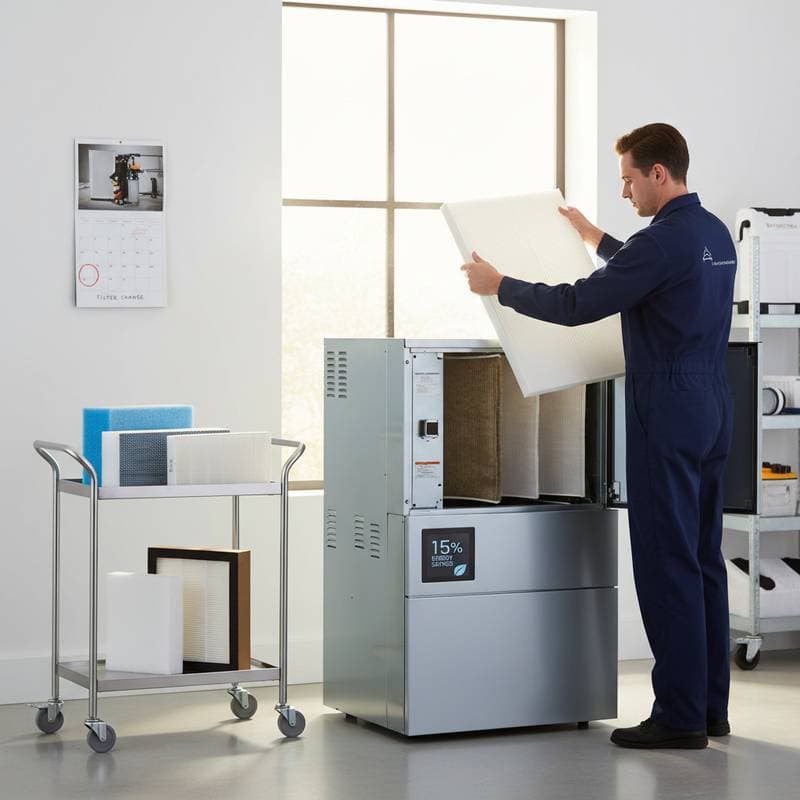
Fall HVAC Filter Changes for Better Efficiency
As temperatures drop, heating systems operate for longer periods. This increased runtime makes clean filters essential for maintaining airflow and controlling energy consumption. Homeowners who follow a consistent replacement plan notice steadier temperatures and fewer dust particles settling on furniture.
The schedule for each filter depends on its design, local air quality, and household activity levels. Regular checks prevent restricted airflow that forces the system to work harder.
Filter Replacement Schedules by Type
Fiberglass Filters
These basic filters capture large particles and protect equipment rather than enhance air quality. They fit homes with low dust and no pets.
Replace them every thirty days. They cost between one and four dollars each and install in under a minute.
Pleated Filters
Pleated models trap smaller particles than fiberglass options while maintaining good airflow. They suit households with moderate allergy concerns.
Change them every sixty to ninety days. Prices range from five to fifteen dollars per unit.
Electrostatic Filters
Electrostatic filters use static charge to attract dust and pollen. Disposable versions last longer than fiberglass, while washable versions require monthly attention.
Replace disposable units every ninety days. Clean reusable units with mild soap, rinse well, and allow complete drying before reinstallation. Costs fall between ten and sixty dollars depending on the style.
HEPA Filters
HEPA filters capture ninety nine point nine seven percent of airborne particles down to three microns. They work well in homes where residents need the highest level of air cleanliness.
Install a new filter every six to twelve months. Expect to pay fifty to one hundred fifty dollars for each replacement.
Media Filters
Media filters provide extended surface area inside a cartridge housing. They handle larger homes effectively and reduce the frequency of changes.
Inspect them every three months and replace them between six and twelve months of use. Unit prices range from forty to eighty dollars.
Signs Your Filter Needs Immediate Replacement
Schedules serve as starting points. Watch for these indicators that a filter requires earlier attention:
- Weak or uneven air coming from supply vents
- Longer heating cycles than normal
- Visible dust buildup on shelves and floors
- Dark discoloration or debris on the filter surface
- Increased sneezing or congestion while indoors
Swap the filter when any sign appears, then monitor system performance for the following week.
Maintenance Habits That Protect Equipment
Set calendar reminders for each filter type at the start of the season. Keep a spare filter on hand to avoid delays. Record the date of each change in a simple notebook or phone note.
Vacuum around the return vent monthly to reduce the load on the filter. Close off unused rooms to limit overall system runtime. These small steps keep energy use low and extend the life of the blower motor.
Lower Energy Costs and Cleaner Indoor Air
Consistent filter care reduces monthly utility expenses and prevents premature equipment failure. Homeowners who stay on schedule report fewer service calls and more reliable comfort from fall through spring.




