
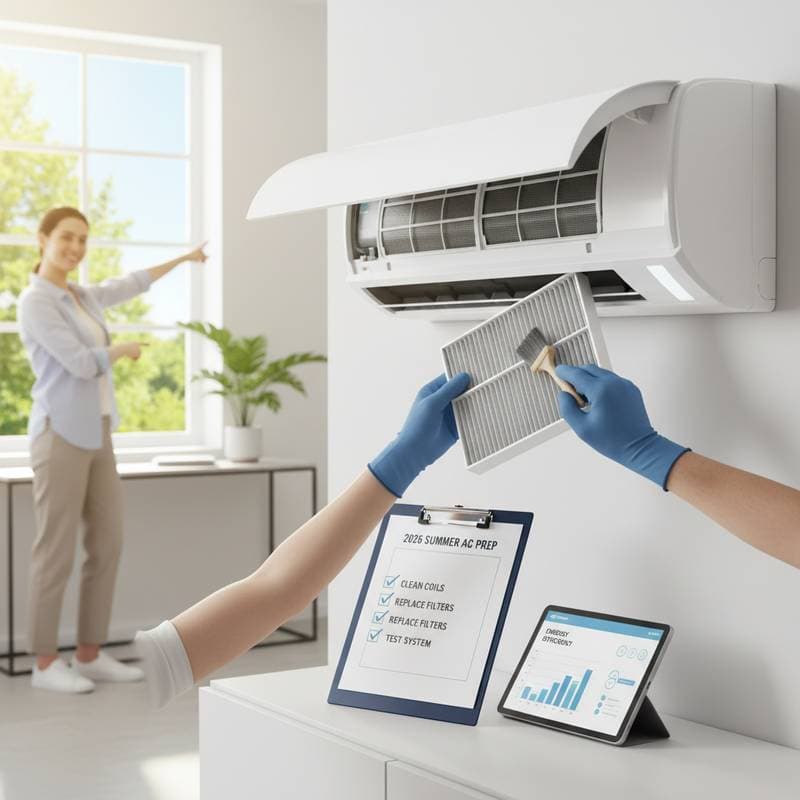
Maximize Savings on AC Repairs: Your 2026 Summer Preparation Checklist
A properly maintained air conditioner delivers consistent cooling while controlling energy expenses through the hottest months. Homeowners who postpone inspections until temperatures soar frequently encounter expensive fixes and inefficient operation. Early preparation eliminates unexpected failures, enhances overall performance, and sustains indoor comfort throughout the season. The following checklist provides targeted actions to minimize repair expenses, prolong equipment durability, and optimize cooling efficiency.
Essential Steps for Summer AC Preparation
This structured checklist identifies critical maintenance procedures to equip your air conditioner for intensive summer demands. Each step targets prevalent issues that escalate costs or impair cooling effectiveness.
1. Replace or Clean the Air Filter
A dirty air filter impedes airflow, compelling the system to strain and consume excess energy. Homeowners should replace disposable filters or rinse reusable versions every one to two months amid high usage periods. Select filters that match the unit's dimensions and efficiency rating precisely. Marking the installation date on the filter frame establishes a reliable reminder for future changes.
Suggested image: Close-up photo of a homeowner installing a fresh AC filter, labeled “Efficient Filter Replacement.”
2. Remove Debris from the Outdoor Unit
Accumulated leaves, twigs, and dirt around the condenser unit obstruct vital airflow. Always disconnect power to the unit prior to any cleaning efforts. Employ a gentle brush to dislodge debris and prune surrounding vegetation to maintain at least two feet of clearance on all sides. This unobstructed space facilitates effective heat dissipation and averts overheating risks.
3. Verify Thermostat Calibration
An accurately set thermostat significantly influences both comfort levels and operational efficiency. Establish a suitable temperature and verify alignment with the room's actual conditions. For smart thermostats, revise the programming to accommodate summer routines. These advanced devices lower expenses by automatically modulating temperatures during unoccupied periods.
Suggested image: Image of a wall-mounted digital thermostat displaying an optimized energy-saving schedule.
4. Examine the Condensate Drain Line
The condensate drain line manages excess moisture generated during cooling operations. Blockages in this line permit water accumulation, potentially leading to leaks or mold growth within the system. Introduce a solution of vinegar mixed with warm water to cleanse the line thoroughly. Confirm unobstructed flow by observing consistent drainage outdoors and addressing any evident obstructions promptly.
5. Clean the Evaporator and Condenser Coils
Dust and debris on the coils hinder efficient heat transfer, diminishing cooling capacity. Apply a soft-bristled brush or a specialized no-rinse cleaner to eliminate accumulations carefully. Take precautions to avoid damaging the delicate fins, which could further limit airflow. Thorough coil maintenance elevates cooling performance and alleviates stress on the compressor component.
6. Secure Electrical Connections
Frayed or loose electrical connections may result in voltage fluctuations and electrical hazards. Deactivate the circuit breaker and access the unit's panel for inspection. Identify signs of discoloration, corrosion, or unusual odors indicating potential issues. Tighten connections with care, and engage a qualified professional for instances of severe corrosion or insulation damage.
7. Evaluate Fan Blades and Motor Condition
Both indoor and outdoor fans require scrutiny for structural integrity and cleanliness. Search for fractures, imbalance, or surface dirt on the blades. Wipe them down meticulously and verify smooth motor rotation. Proper lubrication ensures the motor operates with minimal noise and reduced component wear.
8. Conduct a Full System Test
Activate the air conditioner and allow it to operate for an extended period. Monitor for atypical sounds and assess airflow consistency across all vents. Document any indications of inadequate cooling or irregular cycling patterns. Such observations enable timely intervention by a technician to forestall major complications.
Indicators for Professional Assistance
While certain tasks suit homeowner capabilities, specialized procedures demand expert intervention. Tasks involving electrical diagnostics, refrigerant evaluation, and intricate internal cleaning necessitate certified technicians equipped with precise instruments. Professionals can assess system pressure, examine duct integrity, and confirm refrigerant concentrations accurately. Annual professional servicing preserves warranty validity and guarantees optimal system adjustment.
Select contractors holding valid licenses, backed by strong customer feedback and transparent fee structures. Numerous HVAC providers extend membership programs encompassing routine inspections and expedited support. These programs typically recoup their value through prevention of even a single major repair.
Establishing an Effective Maintenance Schedule
Reliability stems from consistent adherence to a structured seasonal routine. Schedule comprehensive reviews twice annually, aligning one with the onset of cooling season and the other with heating demands. Maintain a detailed log documenting filter updates, cleaning activities, and service appointments. This documentation aids in monitoring trends and pinpointing recurring concerns.
Suggested image: Printable template for an AC maintenance schedule, titled “Annual Home Cooling Maintenance Plan.”
Utility companies in many regions publish comprehensive guides on upkeep and efficiency strategies via their websites. Certain providers issue incentives for tune-up services or installations of advanced thermostats. Exploring these offerings diminishes personal expenditures and yields dependable referrals for local experts.
Strategic Enhancements for Long-Term Efficiency
Contemporary air conditioning systems incorporate innovations that lessen operational demands and elevate performance. For aging units, targeted modifications yield rapid returns on investment:
- Install programmable thermostats to automate temperature adjustments seamlessly.
- Integrate variable-speed fans for precise airflow regulation.
- Upgrade to high-efficiency filters that trap particulates effectively without impeding circulation.
- Apply insulation to ductwork, minimizing loss of cooled air during distribution.
Sustaining Peak Performance Through Summer
Implementing these maintenance practices ensures your air conditioner operates at peak efficiency, delivering reliable cooling without unforeseen interruptions. Homeowners who prioritize early tune-ups experience fewer repairs, lower utility costs, and extended system longevity. Commit to this routine for a cooler, more economical summer ahead.




