
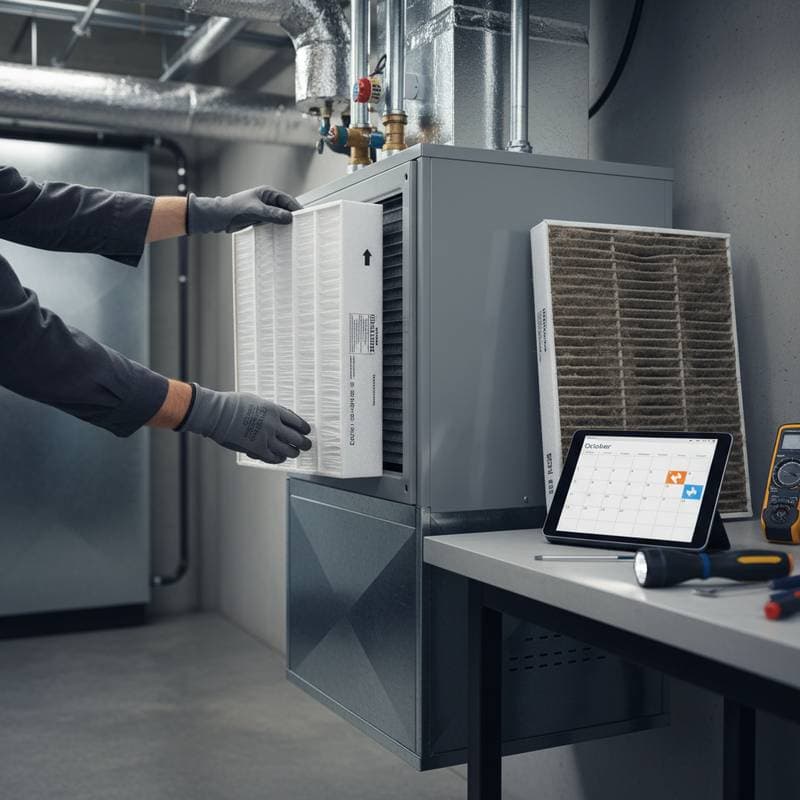
Fall HVAC Filter Replacement: When & What Type
As the air cools and heating systems start running more often, one of the simplest but most important maintenance tasks for homeowners is replacing the HVAC filter. This small component plays a big role in keeping your indoor air clean, your equipment efficient, and your energy bills under control. Choosing the right filter and knowing when to change it can save you from costly repairs and help your system perform at its best all season long.
Understanding HVAC Filter Costs
Replacing an HVAC filter is one of the most affordable maintenance steps in home care, but the price can vary depending on the type of filter and your system’s requirements.
DIY Filter Replacement Costs
For most homeowners, DIY filter replacement is straightforward and inexpensive. Basic fiberglass filters cost very little, while pleated filters, which offer better air filtration, are slightly higher in price. High-efficiency particulate air (HEPA) filters, used in certain systems, are more expensive but trap much finer particles.
When replacing the filter yourself, consider the following costs:
- Filter cost: Basic fiberglass filters are inexpensive. Mid-range pleated filters cost a bit more. High-efficiency filters or allergen-rated models cost the most.
- Tools and supplies: Most filters slide in and out of a slot in the return air duct, meaning you likely need no tools at all. Some systems may require a screwdriver or light cleaning supplies.
- Time investment: Replacing a filter takes about 5 to 10 minutes. Checking the airflow direction and ensuring proper fit is the most important step.
Professional Filter Replacement Costs
If you hire an HVAC technician to handle filter replacement, the price often includes a full system inspection. This can be part of a seasonal maintenance package, which may include checking refrigerant levels, inspecting wiring, cleaning coils, and testing thermostat function. The added cost covers both labor and expertise.
Professional service is especially useful if:
- The filter is located in a hard-to-reach area such as a ceiling return or attic.
- You are unsure about the correct filter size or rating.
- You want to ensure the system is properly cleaned and inspected before heavy seasonal use.
Factors That Affect Pricing
Several factors influence total costs:
- Filter size and type: Larger filters and higher-rated ones cost more.
- System design: Some HVAC systems use multiple filters or custom sizes.
- Indoor air quality needs: Homes with pets, allergies, or smokers may require higher-grade filters changed more often.
- Usage level: A system that runs daily will clog filters faster than one used occasionally.
- Location: Labor rates and material costs differ by region.
When DIY Might Save or Cost More
Replacing a filter yourself saves on labor costs, but using the wrong type or installing it incorrectly can reduce airflow and strain your system. If your system is under warranty, confirm that DIY filter changes do not affect coverage. In many cases, doing it yourself is safe and effective as long as you follow the manufacturer’s directions.
DIY vs Professional: Making the Right Choice
Choosing between DIY and professional filter replacement depends on comfort level, system design, and maintenance goals.
DIY Filter Replacement: Benefits and Drawbacks
Benefits:
- Quick and affordable
- Easy to learn
- No scheduling needed
- Immediate improvement in air quality
Drawbacks:
- Possible errors in sizing or placement
- No inspection of other HVAC components
- May overlook deeper issues like airflow restrictions or coil buildup
Professional Filter Replacement: Benefits and Drawbacks
Benefits:
- Complete system check and cleaning
- Guaranteed proper installation
- Expert advice on filter quality and maintenance frequency
- Detection of early signs of mechanical problems
Drawbacks:
- Higher cost than DIY
- Requires service scheduling
- May not be necessary for simple systems
Skill Level and Tools Needed for DIY
Most homeowners can confidently replace a filter with minimal instruction. The key is reading the old filter’s label for the correct size and airflow direction. Keep a flashlight handy to inspect the slot and confirm there is no dust buildup. Never force a filter into place. If it does not fit easily, it is likely the wrong size.
Risks and Safety Considerations
A dirty or incorrectly installed filter can restrict airflow, leading to overheating, frozen coils, or short cycling. For safety:
- Always turn off the system before removing the old filter.
- Avoid bending or damaging the filter frame.
- Dispose of used filters properly, especially if they contain visible dust or allergens.
Time Commitment Comparison
DIY replacement usually takes less than 15 minutes. Professional maintenance can take an hour or more because it involves additional cleaning and inspection steps. Both approaches are valuable depending on how much time you want to invest and how confident you are in handling your HVAC system.
Your HVAC Filter Questions, Answered
Answers to commonly asked questions from industry experts.
How often should I change my HVAC filter in the fall?
Most households benefit from changing filters every one to three months. During the fall, when heating use increases, it is wise to check the filter monthly and replace it if it appears dark or clogged.
What type of filter is best for my home?
For general use, pleated filters with a moderate MERV rating balance airflow and dust capture. Homes with pets or allergy concerns may benefit from higher-rated filters that trap finer particles.
What does MERV rating mean?
MERV stands for Minimum Efficiency Reporting Value. It measures how effectively a filter captures particles. Higher MERV numbers mean finer filtration, but filters that are too restrictive can reduce airflow in some systems.
How can I tell if my filter needs replacement before the scheduled time?
Visible dust accumulation, reduced airflow, or unusual odors from vents are signs that the filter is dirty. If you notice these symptoms, replace it immediately.
Can I vacuum or wash a disposable filter?
Disposable filters should never be cleaned and reused. Doing so damages the fibers and reduces effectiveness. Washable filters, on the other hand, are designed for cleaning and reinstallation.
Are reusable filters worth it?
Reusable filters cost more upfront but save money over time. They require regular washing and drying. If maintained properly, they can last for several years.
What happens if I forget to replace the filter?
A clogged filter forces the system to work harder, increasing energy use and wear on components. It can also cause uneven heating, poor air quality, and possible system shutdowns.
Should I replace filters more often if I have pets?
Yes. Pet hair and dander can clog filters faster. Homes with multiple pets should check filters monthly and replace them when visibly dirty.
Do I need a special filter for allergy relief?
Allergen or HEPA-style filters reduce pollen, mold spores, and dust mites. They are excellent for allergy sufferers but should be used only if the system supports them.
How do I find the right filter size?
The size is printed on the edge of the existing filter and usually written as width by height by thickness. Always match this exactly to avoid airflow issues.
Are there filters that help eliminate odors?
Activated carbon filters absorb odors from cooking, pets, and smoke. They are ideal for households concerned about indoor freshness.
Can I use a higher MERV filter than recommended?
Not always. High MERV filters restrict airflow in systems not designed for them. Follow your manufacturer’s recommendations to maintain efficiency and avoid strain.
Should filters be changed more often in winter?
Yes, heating systems run longer during cold months, which means the filter traps more airborne particles. Check monthly to prevent buildup.
Do HVAC technicians replace filters during maintenance visits?
Yes, most technicians include filter replacement as part of seasonal maintenance. They also inspect ducts, thermostats, and mechanical components.
Is there a reminder system for filter changes?
Many smart thermostats or home automation apps allow you to set filter replacement reminders based on time or usage hours.
How to Decide: Your Step-by-Step Guide
Step 1: Assess Your Situation
Consider your household size, presence of pets, and sensitivity to allergies. These factors influence how often you should change filters and what type you need.
Step 2: Evaluate Your Skills and Resources
If you are comfortable locating the filter compartment and reading the airflow direction arrows, DIY replacement is simple. If your system is complex or located in tight spaces, professional help is safer.
Step 3: Calculate True Costs
Look beyond the filter price. Include factors like energy efficiency, health benefits, and potential repair prevention. A clean filter can reduce heating costs by improving airflow and system performance.
Step 4: Perform a Risk Assessment
Consider what could go wrong if the filter is neglected. Over time, restricted airflow can cause overheating or damage to the blower motor. The small cost of regular replacement prevents these expensive problems.
Step 5: Make the Final Decision
If you prefer convenience and assurance, schedule a professional maintenance visit. If you enjoy hands-on projects and want to save money, stick to a regular DIY schedule with high-quality filters.
Preparing for Your HVAC Filter Project
Research and Planning
Before starting, identify your system’s filter location and specifications. Check your owner’s manual or the old filter’s label for the correct size and recommended MERV rating.
Gathering Supplies
Buy filters in multipacks to have spares on hand. Keep a permanent marker available to note the installation date on the filter frame. This helps you track replacement timing easily.
Site Preparation
Turn off the HVAC unit before removing the old filter. Use a damp cloth to wipe dust from the surrounding area. Avoid letting debris fall into the duct opening.
Timeline Considerations
Budgeting Tips
Maintaining Your Air Quality Investment
Replacing your HVAC filter regularly is one of the easiest ways to protect your home comfort system. Clean filters improve airflow, reduce strain on equipment, and keep indoor air fresher. Whether you choose a quick DIY replacement or schedule professional maintenance, staying consistent is the key to long-term system health.




