
Essential AC Preparation Before Heat Waves to Minimize Repair Costs
Heat waves often arrive without warning, placing immense strain on air conditioning systems. Homeowners face the risk of substantial repair expenses if preparation is overlooked. Proactive maintenance before temperatures rise significantly reduces costs, optimizes energy consumption, and maintains indoor comfort reliably.
The Importance of Preseason AC Maintenance
Air conditioners perform at peak demand during periods of extreme heat, where inefficiencies or accumulated grime can escalate into serious malfunctions. Consistent upkeep extends equipment longevity by up to 40 percent and boosts operational efficiency by 15 percent. These improvements yield tangible financial benefits and eliminate the need for urgent service during peak demand periods.
Essential Preseason Checklist
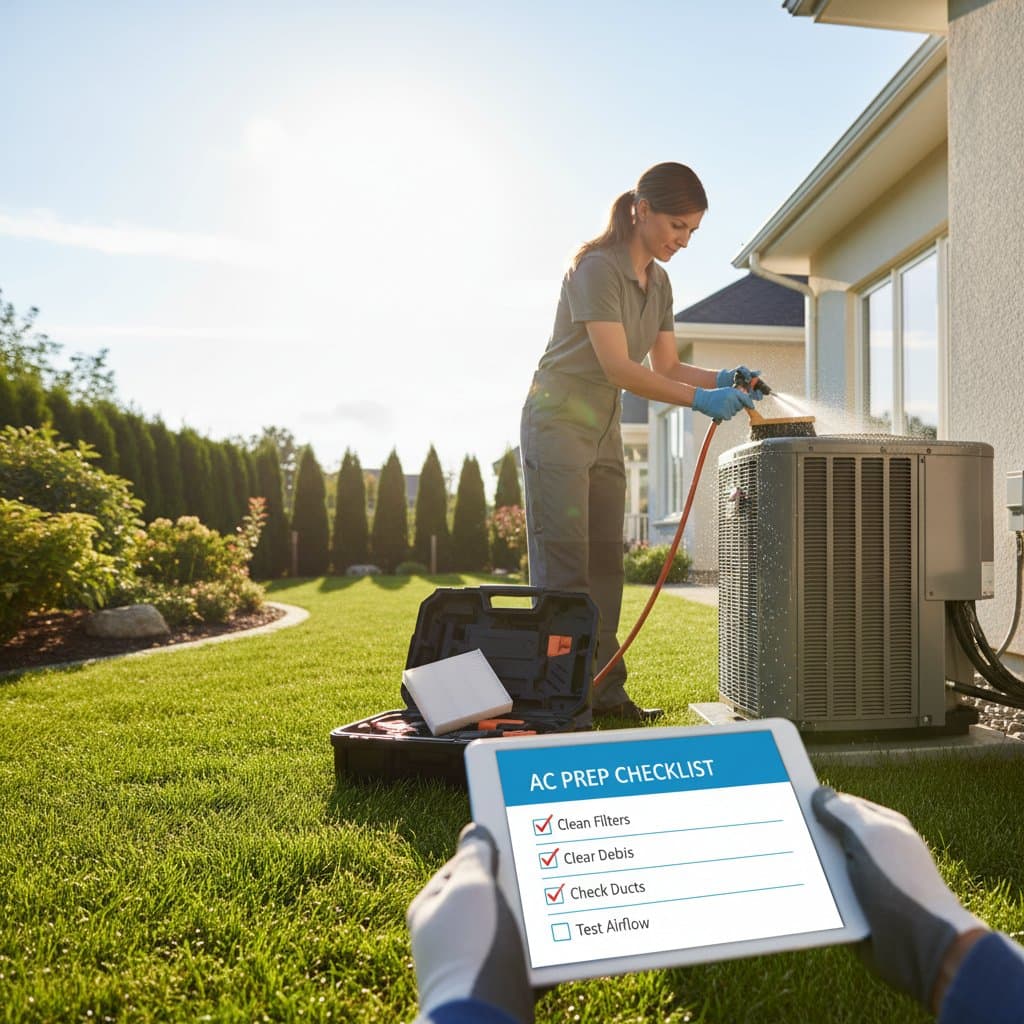
Complete these foundational tasks before the onset of hot weather:
- Replace or clean air filters at intervals of 30 to 60 days.
- Remove debris from the outdoor condenser unit and ensure 24 inches of surrounding clearance.
- Verify thermostat precision with an independent thermometer.
- Examine ductwork for leaks, focusing on joints and vents.
- Operate the system for 15 minutes to confirm steady cool airflow.
The following sections detail each procedure for effective implementation.
Procedure 1: Cleaning or Replacing Air Filters
Obstructed filters represent the primary cause of diminished air conditioning performance. Restricted airflow forces the unit to labor excessively, elevating energy demands and accelerating compressor degradation.
Key specifications include:
- Minimum filter thickness of 1 inch for typical setups.
- MERV rating between 8 and 11 for residential applications.
- Replacement every 30 days during summer months, or more frequently in homes with pets or allergy sufferers.
Power down the system prior to filter handling. For washable types, rinse thoroughly under water, allow full drying, and reinstall. This routine action averts coil icing and averts expensive interventions.
Procedure 2: Cleaning the Outdoor Condenser Unit
The exterior condenser requires unobstructed airflow to dissipate heat effectively. Blockages from foliage, clippings, or soil cause the compressor to overheat, thereby curtailing its operational duration.
Follow these cleaning steps:
- Disconnect power via the designated switch.
- Employ a soft brush or vacuum attachment to dislodge surface debris.
- Direct a garden hose spray from the unit's interior toward the exterior to rinse fins.
- Maintain 24 inches of open space around the unit and prune adjacent vegetation.
Exercise care to avoid deforming the fins. Should any become bent, utilize a fin comb for restoration to facilitate proper air circulation.
Procedure 3: Examining Ductwork Integrity
Compromised ducts result in the loss of up to 30 percent of conditioned air prior to room distribution. Such inefficiencies drive up utility expenses and produce inconsistent indoor temperatures.
Conduct inspections as follows:
- Review accessible ducts in attics, crawl spaces, or basements for separations or loose fittings.
- Apply UL 181-rated foil tape to seal minor breaches; avoid conventional duct tape.
- Install insulation with an R-6 rating or higher in non-conditioned areas to minimize thermal transfer.
Audible whistling or excessive dust near outlets may indicate the need for professional pressure testing.
Procedure 4: Verifying System Functionality
Initiate system operation for a 15-minute cycle before seasonal heat intensifies. Confirm that chilled air emerges uniformly from all vents and monitor for atypical noises like rattling or humming. Disparities in cooling may point to refrigerant shortages or blower malfunctions. Early identification frequently permits minor adjustments rather than major overhauls.
Procedure 5: Calibrating the Thermostat
Inaccurate thermostats prompt inefficient cycling or excessive runtime. Position a separate thermometer adjacent to the device for 15 minutes and compare readings. Discrepancies exceeding two degrees necessitate recalibration or unit replacement. Transitioning to a programmable model can curtail cooling expenditures by 10 percent or greater.
Enhancements for Accessibility and Comfort
In residences with mobility challenges, mount thermostats 48 to 52 inches above floor level for optimal reach. Select models featuring oversized buttons or voice activation to simplify control. Ensure vents face no obstructions from furnishings or flooring to promote balanced air distribution for all occupants.
Pitfalls to Sidestep in AC Maintenance
- Neglecting initial system trials: Delaying activation until intense heat arrives frequently precipitates crisis interventions.
- Overlooking minor auditory cues: Subtle vibrations or tones often denote unsecured components; prompt securing averts subsequent motor issues.
- Enclosing outdoor units: Plastic sheaths retain humidity and foster rust; prioritize open exposure for adequate ventilation.
- Programming thermostats below 72 degrees: Such settings seldom enhance perceived comfort and markedly inflate energy usage.
Indicators for Professional Intervention
Should the system fail to achieve adequate cooling post-basic care, or if frozen coils or moisture appear near the handler, engage a certified HVAC specialist. Routine professional servicing ranges from 100 to 250 dollars and encompasses refrigerant evaluation, drainage clearance, and electrical assessments.
Implementing Your Maintenance Plan
Schedule AC preparation several weeks ahead of anticipated heat waves to safeguard both residence and finances. Dedicate a half-day to filter servicing, debris clearance, and performance verification. Maintain a dedicated log recording filter updates and professional visits to track compliance effortlessly.




