Prevent Fall Fire Hazards with Chimney Maintenance
When temperatures drop, homeowners often rely on fireplaces for warmth and comfort. However, an unmaintained chimney poses serious risks, including creosote buildup, hidden cracks, and animal nests that can lead to fires or smoke damage. Fall provides the perfect opportunity to inspect, clean, and prepare the chimney system before winter arrives.
Why Chimney Maintenance Matters
A chimney serves as a critical ventilation system, expelling smoke, gases, and particles from the home. Blockages or damage in this system can result in chimney fires, smoke infiltration, or dangerous carbon monoxide accumulation. The National Fire Protection Association indicates that a significant portion of home heating fires originate in chimneys lacking proper cleaning or inspection.
Creosote, the tar-like residue from burning wood, represents the primary culprit behind chimney fires. This substance accumulates in layers and ignites easily under intense heat. Routine maintenance eliminates these deposits, restores airflow, and prevents smoke from entering living areas.
The Ideal Time for Chimney Inspection
Schedule a professional inspection in fall to allow ample time for any necessary repairs before cold weather sets in. This timing avoids the rush and potential delays that occur during peak winter demand. A comprehensive check covers the flue, liner, damper, and external masonry.
Certified chimney sweeps employ cameras and brushes to examine all components thoroughly. The Chimney Safety Institute of America recommends at least one annual inspection, or more frequently if substantial wood burning occurs. Even gas fireplaces benefit from checks to verify clear venting and overall safety.
Common Chimney Hazards Found in Fall Inspections
Inspectors frequently uncover unexpected issues within chimneys. Birds and squirrels construct nests in flues over summer, obstructing ventilation and forcing smoke back into the home. Moisture infiltration through damaged caps or flashing erodes bricks and corrodes metal parts.
Creosote buildup appears in progressive stages: first as a sooty powder, then a tacky glaze, and finally a hard, flammable tar. Advanced buildup proves challenging to remove without specialized equipment. Signs of accumulation include excessive smoke during fires or a persistent burnt odor when the fireplace remains unlit.
Steps for Homeowners Before Scheduling a Professional
Homeowners can conduct preliminary assessments to spot obvious problems. Direct a flashlight into the firebox to detect flaky soot or glossy creosote. Verify that the damper operates smoothly by opening and closing it fully.
From outside, scan for dislodged bricks, mortar gaps, or rust on the cap and flashing. White, powdery efflorescence on the exterior signals moisture absorption in the masonry. Address such issues quickly to prevent freeze-thaw damage in winter, though these checks do not substitute for expert evaluation.
Professional Cleaning Process and What to Expect
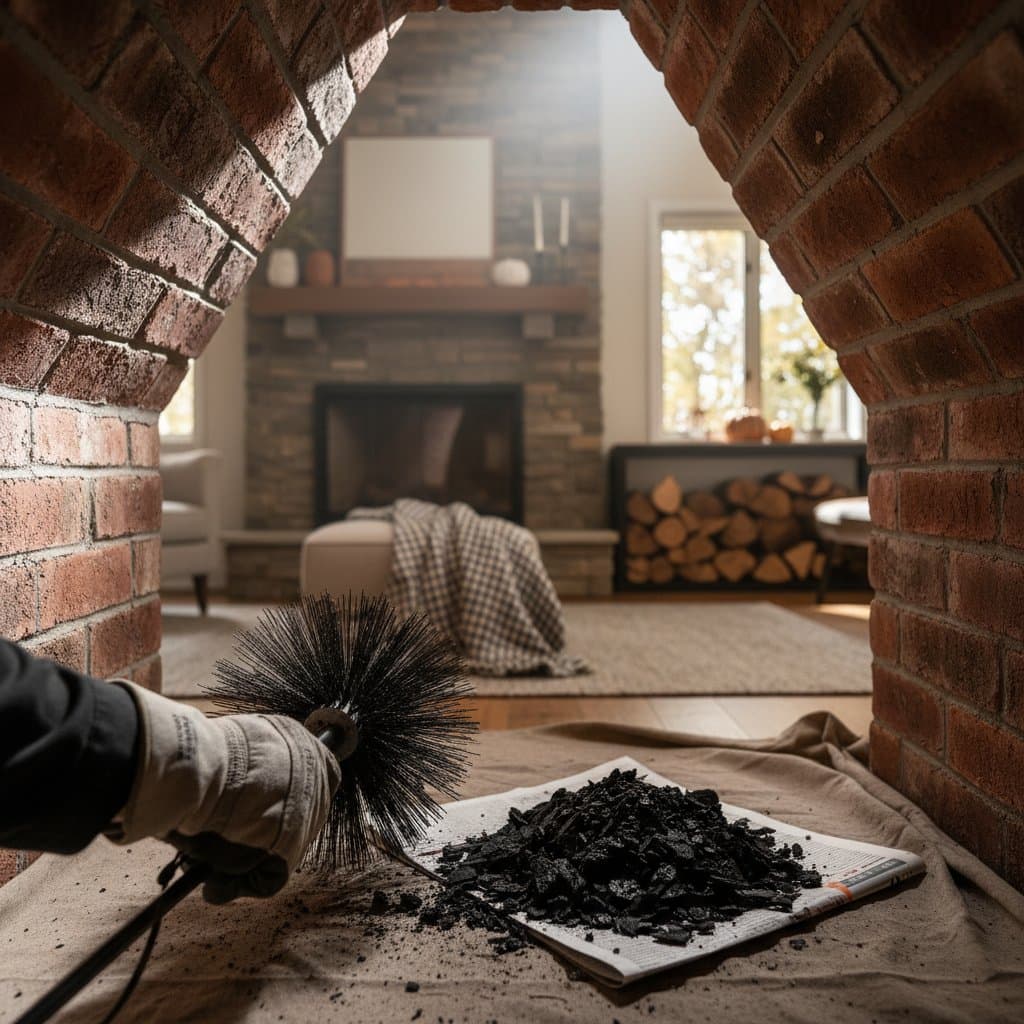
Chimney sweeps utilize brushes, vacuums, and rods to scrub soot and creosote from the flue, smoke chamber, and firebox. The procedure typically lasts one to two hours, based on chimney size and condition. Expect costs of $150 to $350 for a basic cleaning; additional repairs like relining may add several hundred dollars.
Professionals also assess structural stability, test damper function, and ensure safety features operate correctly. They often suggest installing a chimney cap or spark arrestor if absent, which blocks debris, animals, and errant sparks from reaching the roof.
DIY vs. Professional Service
Attempting a DIY chimney clean aims to cut expenses but introduces hazards. Inexperienced efforts may overlook concealed buildup or structural flaws, while roof access heightens injury risk. Basic DIY kits suffice for minor soot removal but fall short of professional thoroughness.
Trained sweeps adhere to safety protocols and detect subtle problems invisible to novices. They furnish inspection reports that satisfy insurance requirements. For optimal safety and value, engage a certified professional annually.
Preventing Future Chimney Problems
Consistent maintenance safeguards against fires while prolonging chimney lifespan and boosting efficiency. Burn only seasoned hardwoods, dried to under 20 percent moisture, to minimize creosote production. Refrain from combusting trash, cardboard, or pressure-treated lumber, as these deposit harmful residues.
Position the damper fully open prior to igniting any fire for unrestricted airflow. Install a durable chimney cap with fine mesh to deter animals and precipitation. In rainy or snowy regions, apply a masonry sealant to repel water and avert cracks.
Cost and Time Planning for Fall Chimney Care
Allocate $200 to $500 for combined inspection and cleaning, varying by chimney design and buildup extent. Major repairs, such as liner replacement or brick repointing, escalate expenses further. Plan the service in early fall to secure availability before heavy usage.
The process demands little time, usually under half a day. Prepare by shifting furniture from the fireplace and protecting surfaces with drop cloths. Post-service, enjoy fires with confidence in the system's reliability.
Build Lasting Chimney Safety Habits
After professional care, adopt straightforward routines to sustain performance. Clear ashes after each fire, retaining a thin base layer for insulation. Monthly damper checks confirm free movement.
Monitor for off odors or irregular smoke during peak seasons, which may indicate emerging blockages. These practices ensure ongoing protection, efficiency, and enjoyment from your fireplace investment.