Essential Fall Chimney Maintenance Checklist to Prevent Winter Fire Hazards
When cooler weather sets in, many people turn to their fireplaces for comfort. However, a neglected chimney poses significant risks, including fires from creosote buildup or structural failures. Proper fall maintenance ensures safe operation, better efficiency, and long-term protection for your home.
This comprehensive guide outlines key steps for inspecting, cleaning, and maintaining your chimney. Follow these actions to create a worry-free winter environment.
Step 1: Examine the Chimney Exterior
Begin your maintenance routine outdoors, where the chimney endures harsh weather. Rain, wind, and freeze-thaw cycles erode bricks, mortar, and seals over time.
Inspect for these common problems:
- Cracked or missing mortar joints, which permit water entry and further deterioration.
- Spalling or loose bricks, indicating moisture damage.
- Compromised flashing around the roof-chimney junction, leading to leaks.
- Any leaning or shifting in the structure, suggesting deeper issues.
Address minor mortar repairs through tuckpointing, typically costing $300 to $800. Flashing fixes range from $200 to $600, based on roof access. Use binoculars for a ground-level view on multi-story homes, but engage a professional for hands-on assessments to avoid injury.
Step 2: Inspect the Interior Firebox and Damper
Move inside to evaluate the firebox and damper, components that directly influence fire safety and performance. The firebox holds the fire, while the damper controls airflow.
Check for:
- Cracks or deterioration in the firebrick lining.
- A damper that opens and closes smoothly without sticking.
- Ash buildup or debris on the hearth.
Clean ashes regularly to maintain airflow. If the damper shows rust or poor seals, replacement costs $100 to $300. These elements prevent smoke backup and embers from escaping.
Step 3: Clean the Chimney Flue Thoroughly
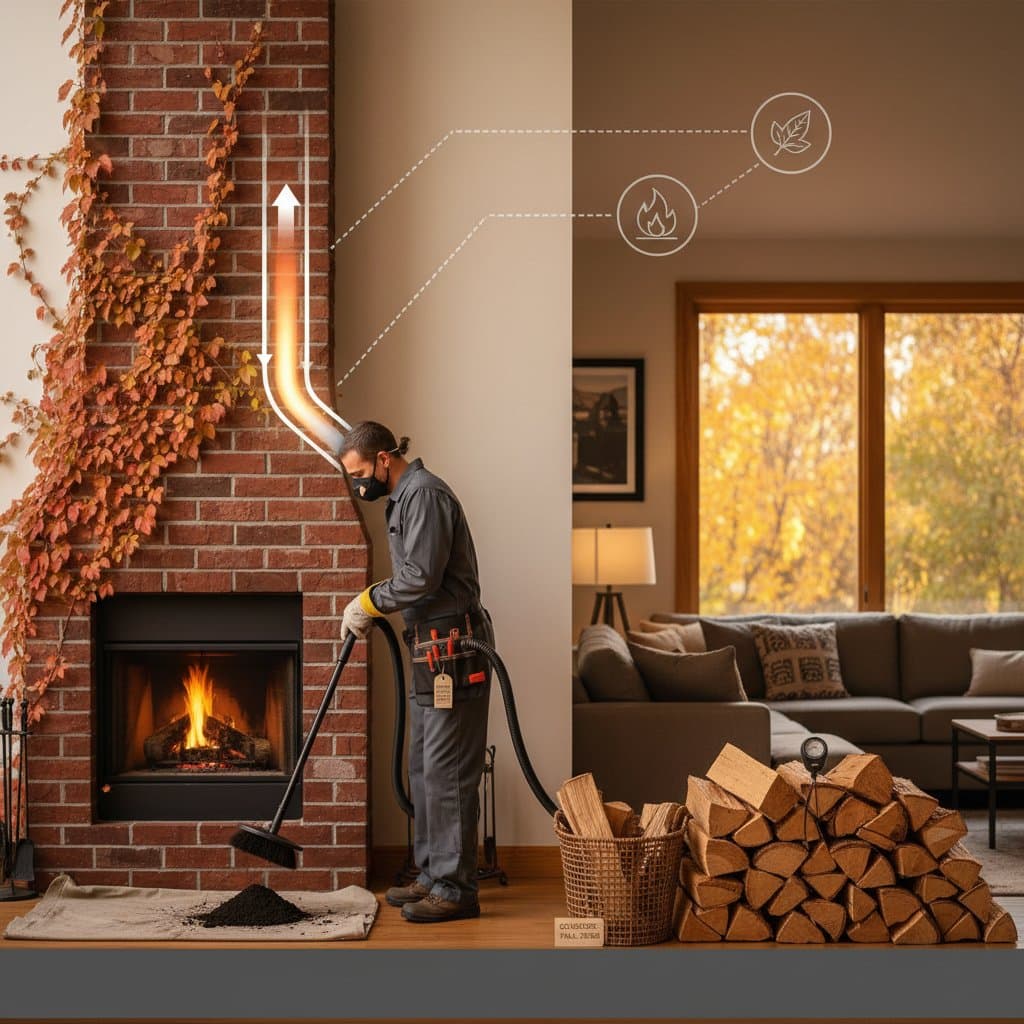
Creosote accumulation in the flue represents the primary fire hazard. This sticky residue from wood smoke hardens and ignites easily, with the National Fire Protection Association advising removal at one-eighth inch thickness.
Decide between DIY and professional service. Basic kits suit simple flues in single-story homes, but experts recommend certified sweeps for comprehensive results using brushes, vacuums, and cameras.
Expect costs of $150 to $300 for routine cleaning, $300 to $500 for heavy deposits, and $100 to $200 extra for inspections. Professionals verify liner integrity and code compliance during the process.
Step 4: Assess the Flue Liner Condition
The flue liner protects your home from heat and gases while directing smoke upward. Damage here can lead to leaks or collapses.
Look for signs of separation, corrosion, or cracks, often revealed during cleaning. Clay tile liners crack from thermal stress, while metal ones rust from condensation.
Relining options include stainless steel ($1,000 to $3,000) or clay ($800 to $2,500), depending on chimney height. Annual checks catch issues early, preserving structural safety.
Step 5: Test Draft and Airflow Performance
Effective draft pulls smoke out efficiently, avoiding room fill-up. Modern energy-efficient homes sometimes disrupt this with negative pressure.
Perform a simple test by burning newspaper in the firebox; observe if smoke ascends promptly. Room spillage indicates blockages or design flaws.
Technicians employ smoke tests or gauges for accuracy, suggesting remedies like exterior air intakes or draft inducers ($200 to $500 installed). Optimal airflow enhances burning efficiency and reduces pollutants.
Step 6: Clear Obstructions and Debris
Seasonal debris such as leaves, nests, or bird remains blocks the chimney, causing poor venting or carbon monoxide risks.
Listen for unusual sounds signaling animal activity. Professionals use tools to extract materials safely without damaging the interior.
Prevent recurrence with mesh caps ($50 to $150) or seasonal covers, removed before use. Clear paths ensure unobstructed exhaust.
Step 7: Verify the Chimney Crown and Chase Cover
The crown caps the chimney top, shedding water, while chase covers protect framed enclosures on certain designs.
Inspect for cracks, pooling water, or deteriorated sealant. A faulty crown invites interior moisture damage.
Repairs cost $200 to $500; full replacements run $400 to $1,000. Apply silicone sealant annually to maintain waterproofing.
Step 8: Schedule a Certified Professional Inspection
Self-inspections provide a strong start, but experts uncover concealed problems with advanced tools.
The Chimney Safety Institute of America defines levels: Level 1 for routine views ($100 to $200), Level 2 with cameras for changes or fires ($200 to $400), and Level 3 for destructive analysis if needed.
Request a detailed report outlining findings and repairs. Annual inspections align with safety standards and insurance requirements.
Step 9: Review Fuel and Burning Practices
Proper fuel selection minimizes creosote and maximizes heat. Use seasoned hardwoods like oak or maple, stored dry for at least six months.
Avoid softwoods, treated lumber, or trash, which produce excess smoke. Build fires gradually with smaller logs to control buildup.
Install a carbon monoxide detector near the fireplace and test monthly. These habits reduce hazards and extend chimney life.
Build Lasting Chimney Habits
Maintenance extends beyond fall; integrate routines for year-round reliability.
Adopt these practices:
- Remove ashes after three to five uses.
- Seal the damper when idle to block drafts.
- Monitor for water intrusion during rain.
- Schedule cleanings in early fall or spring.
Prompt attention to issues like odors or stains prevents costly emergencies. A well-maintained chimney delivers safe warmth season after season.
Indicators for Immediate Professional Help
Contact a specialist if you notice:
- Smoke entering the living area.
- Persistent creosote smells.
- Ceiling stains or leaks.
- Debris falling into the firebox.
- Visible flue damage.
Early intervention safeguards your family and property.