Keep Your Attic Mold-Free With Seasonal Maintenance
Mold in the attic often remains hidden for months. It thrives in dark, damp spaces where air circulation is poor and humidity is high. Once established, mold spreads quickly, weakens insulation, damages wood, and creates air quality problems that affect living areas below. Consistent seasonal maintenance that controls moisture, improves airflow, and addresses small problems early provides the best protection.
Why Mold Develops in Attic Spaces
Mold requires moisture, an organic surface, and warmth to grow. Attics supply wood rafters and cellulose insulation as organic material along with trapped air that holds warmth. Moisture typically enters through condensation, roof leaks, or inadequate ventilation. Warm indoor air rises and meets cooler attic surfaces, which causes condensation to form on rafters, insulation, and sheathing.
Roof leaks around flashing or vents also introduce enough dampness to start mold colonies. Homeowners frequently find mold on the underside of the roof deck or near vents and soffits where water collects.
Seasonal Inspection Steps
A structured inspection each season reveals early signs of mold or the conditions that encourage it.
- Spring: Check for condensation stains on rafters, musty odors, or damp insulation after snowmelt or heavy rain. Test vents for airflow and remove any debris.
- Summer: Measure humidity with a hygrometer after storms. Keep levels below 50 percent by improving ventilation or adding a dehumidifier when needed.
- Fall: Clear leaves and nests from vents. Replace wet insulation and seal gaps around light fixtures or plumbing that allow warm air to enter.
- Winter: Look for frost on nails or rafters, which signals air leaks. Strengthen insulation and seal bypasses to reduce ice dam risks.
Balanced Ventilation Practices
Proper ventilation moves air steadily and limits moisture accumulation. Intake vents at the soffits paired with exhaust vents at the ridge create a continuous path for moist air to exit. One square foot of net vent area for every 300 square feet of attic floor space, divided evenly between intake and exhaust, serves as a reliable guideline.
Clear blocked soffit vents and install baffles to maintain open airflow channels. Powered fans can supplement passive systems in some homes, yet they risk pulling conditioned air from living spaces if leaks exist. Passive setups with unobstructed paths usually deliver better energy efficiency.
Humidity and Condensation Management
Household moisture from cooking, bathing, and laundry rises through ceiling openings. Seal those gaps and operate exhaust fans in kitchens and bathrooms to reduce transfer. A vapor barrier placed between the ceiling and insulation further limits migration.
In humid climates, a compact dehumidifier with automatic sensors maintains stable levels at a cost of 150 to 300 dollars. Maintain even insulation depth to avoid warm spots that promote condensation. Blown-in insulation added at one to two dollars per square foot corrects thin or compacted areas.
Early Mold Detection and Treatment
Watch for black, green, or white patches on wood or insulation paper along with earthy odors. Areas smaller than ten square feet respond to detergent and water cleaning followed by thorough drying and a mold-resistant sealant.
Larger or recurring growth requires professional remediation that uses containment and HEPA filtration. Costs range from 500 to 3000 dollars based on extent. Always correct the moisture source after cleaning to prevent recurrence.
Safe Attic Work Procedures
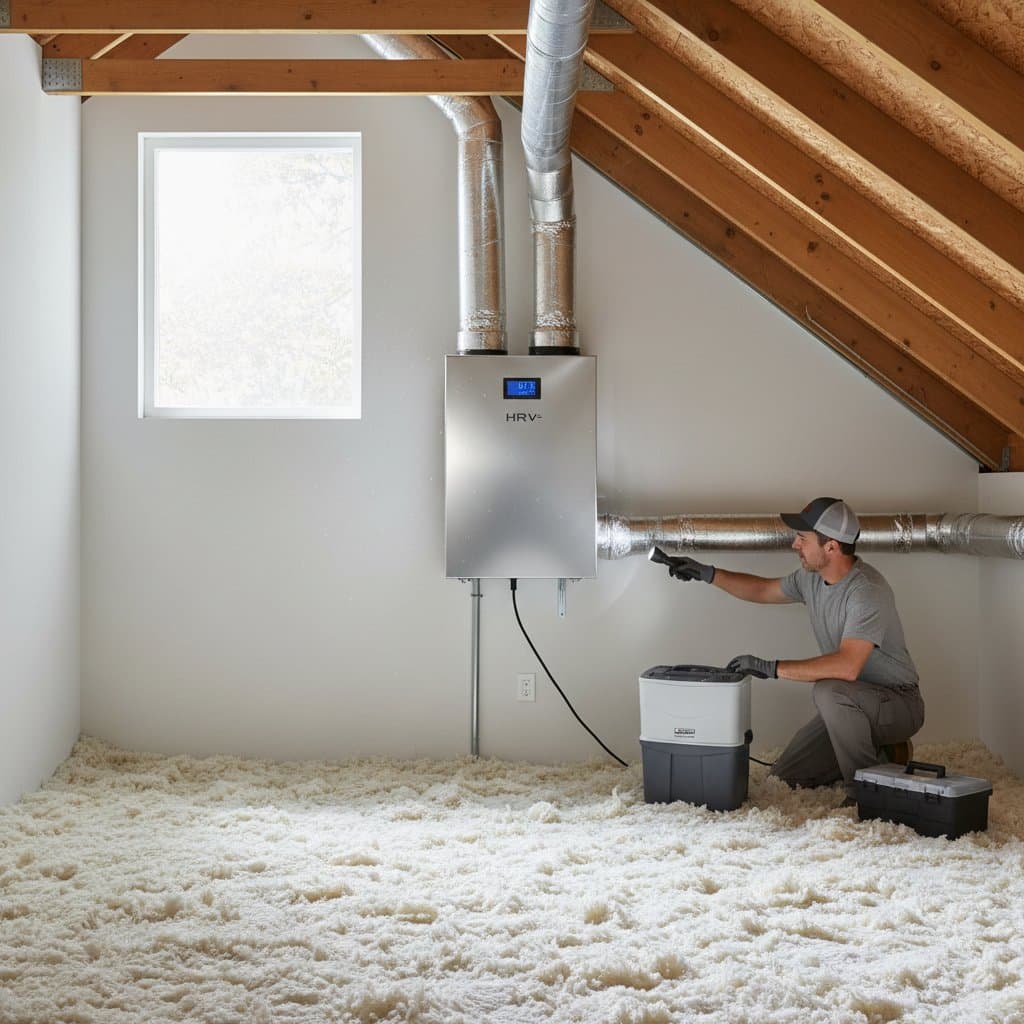
Wear gloves, goggles, and a mold-rated respirator during any inspection or cleaning. Lay boards across joists to distribute weight and avoid ceiling damage. Stop work and consult a professional if wiring or structural issues appear.
Use commercial mold cleaners or vinegar solutions rather than bleach on wood. Maintain open vents and direct fans outward when applying products.
Lasting Prevention Upgrades
Install a smart humidity sensor that alerts when levels rise. These devices cost 30 to 60 dollars and provide advance notice. Ridge and soffit vent upgrades create durable airflow that also extends roof life by lowering heat buildup. Mold-resistant insulation or antimicrobial coatings on rafters add another layer of protection under humid conditions.
Ongoing Attic Care Benefits
Seasonal checks protect indoor air quality, energy performance, and overall home durability. Maintain a simple checklist and log observations each season to identify recurring patterns in humidity or insulation condition. These steps keep the attic dry and support a healthier living environment year-round.