Fall Chimney Inspection Costs and Planning
A fall chimney inspection protects your home from fire risks and prepares the fireplace for winter use. Homeowners benefit from knowing typical prices, service levels, and decision factors before scheduling service.
Service Levels and Typical Prices
Chimney inspections are divided into three standard levels. Each level matches different home situations and chimney conditions.
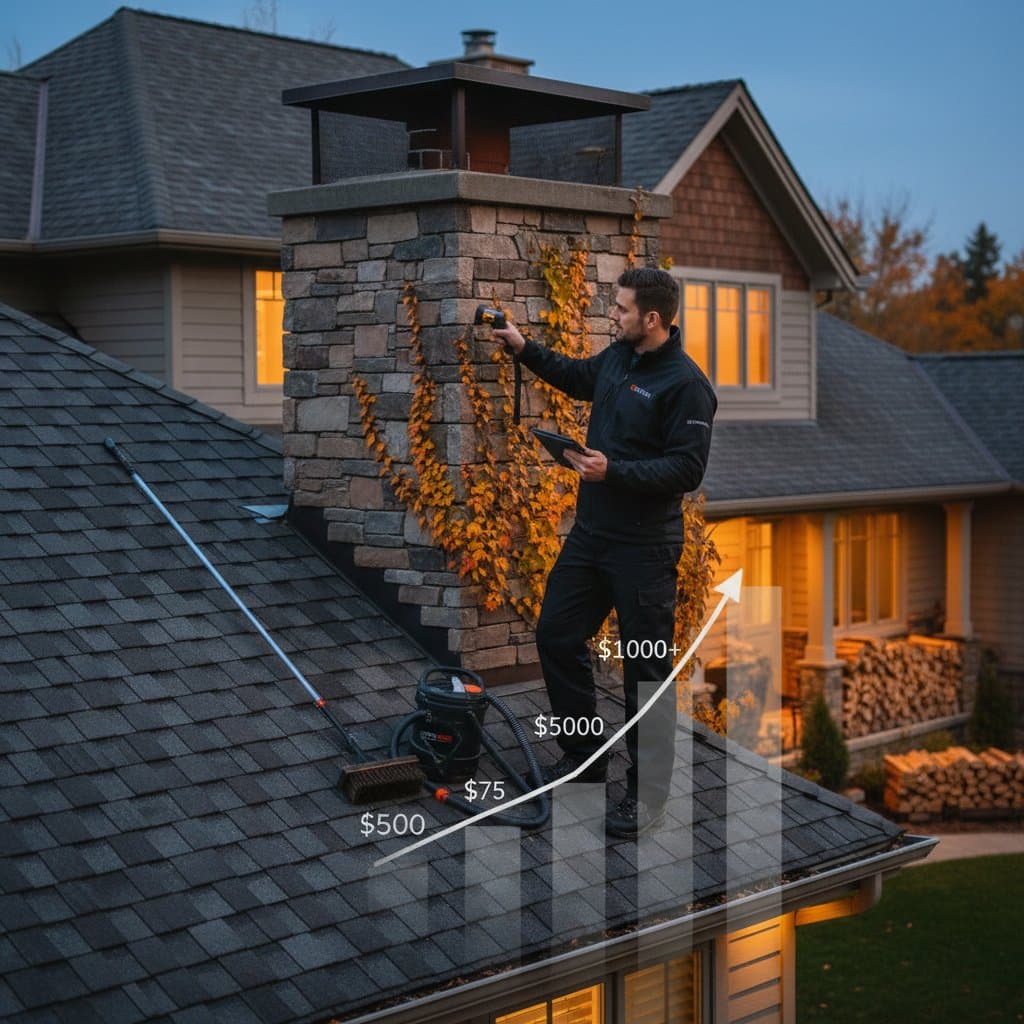
- Level 1 costs $75 to $200 and covers a visual check of accessible areas on regularly maintained systems.
- Level 2 costs $200 to $500 and adds video scanning after changes in ownership, storms, or repairs.
- Level 3 starts at $1,000 and requires partial disassembly when hidden damage is suspected.
| Inspection Level | Price Range | Best Used When | Tools Involved |
|---|---|---|---|
| Level 1 | $75 to $200 | Routine annual checks | Visual inspection only |
| Level 2 | $200 to $500 | Home sales or post-storm review | Camera scan included |
| Level 3 | $1,000+ | Suspected structural problems | Partial disassembly |
Elements That Change the Final Price
Several practical factors determine the exact cost quoted by a technician.
- Chimney height and number of flues increase time on site.
- Wood-burning units require more thorough checks than gas inserts.
- Neglected chimneys need longer evaluations than well-maintained ones.
- Steep roofs or limited ladder access raise labor charges.
- Urban locations with higher wages produce elevated rates.
- Peak fall demand can add a modest premium over slower months.
Weighing a Personal Check Against Professional Service
Homeowners sometimes consider a basic self-inspection before calling a technician. Tools for this approach run $50 to $150 and include a flashlight, mirror, and brush. Such an effort reveals surface soot or obvious cracks yet misses internal flue issues that require cameras and certification.
Professional service supplies a written report accepted by insurers and buyers. Technicians finish a full inspection in roughly one hour, while a homeowner may spend several hours on the roof with added fall risks.
Common Questions About Timing and Scope
How often should inspections occur? One inspection per year meets most manufacturer and safety guidelines. Schedule it in fall before regular use begins.
What areas receive attention? The review covers the firebox, damper, flue liner, cap, crown, and exterior masonry. A camera pass examines surfaces not visible from the hearth.
When does cleaning accompany inspection? Creosote thicker than one-eighth inch requires cleaning before any fire is lit.
Do gas fireplaces need the same attention? Yes. Gas systems develop corrosion and venting blockages that affect indoor air quality.
Are repairs part of the inspection fee? Repairs are quoted separately, although many companies supply estimates on the same visit.
Which warning signs require prompt action? Smoke rolling into the room, strong odors, loose bricks, or cracks inside the firebox indicate immediate need for evaluation.
How should the home be readied? Clear space around the hearth, remove ashes, and confirm roof access for the technician.
What questions help select a provider? Confirm certification, request sample reports, and ask about bundled cleaning discounts.
Steps to Schedule Service This Season
Assess fireplace use since the last inspection. Heavy or regular burning points to an earlier appointment. Compare personal equipment and comfort with roof work against professional capabilities. Calculate total expense by adding possible cleaning or minor repairs revealed during the visit. Book in late summer or early fall to secure an appointment before cold weather creates backlogs. A completed inspection confirms safe operation and supports efficient heating throughout winter.