AI Detection for Fall Roof Inspections Explained
A roof endures months of sun, wind, and rain before fall arrives. Shingles may curl, flashing may loosen, and gutters may clog. Many of these defects remain invisible from the ground. AI detection combined with drone photography reveals such issues early and supplies a clear plan for repairs.
Why Fall Maintenance Relies on AI Analysis
Fall offers the final window to address roof conditions before winter moisture arrives. Traditional visual checks from the ground or by ladder often overlook small cracks and lifted edges. AI systems examine high-resolution drone images for granule loss, discoloration, and subtle surface changes. Early identification prevents water from reaching decking or insulation.
How the Inspection Process Works
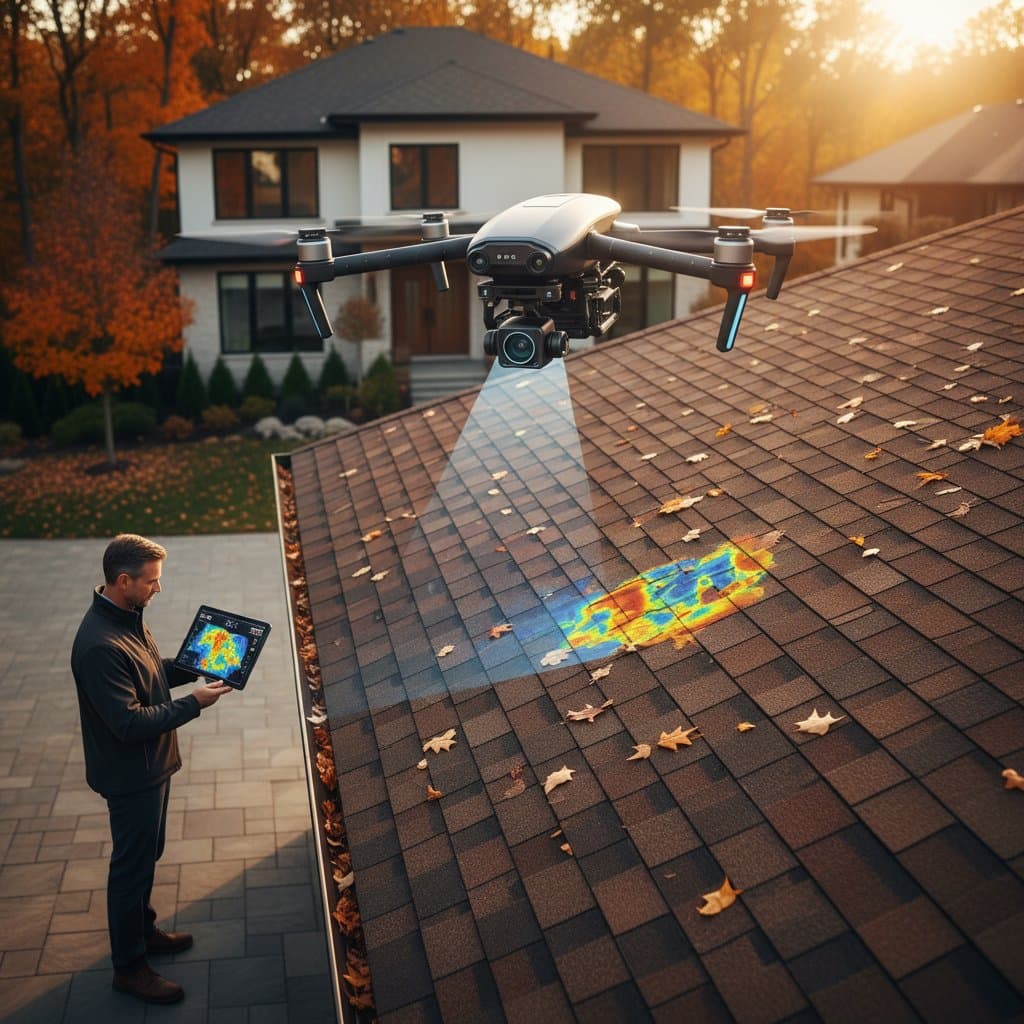
A certified operator flies a drone equipped with a high-resolution camera across the roof surface. The aircraft records overlapping images at close intervals. These files upload to an analysis platform that scores each section for wear and structural change.
| Issue Type | Typical Detection Accuracy | Recommended Action |
|---|---|---|
| Cracked shingles | 95% | Replace single shingles |
| Missing granules | 90% | Monitor or reseal area |
| Loose flashing | 97% | Re-secure and seal |
| Moisture intrusion | 92% | Inspect decking below |
| Gutter blockage | 99% | Clean and clear debris |
The resulting report ranks repairs by urgency and supplies a visual map for the homeowner.
Steps Homeowners Complete Before Arrival
Homeowners prepare the property in four straightforward ways. Vehicles and furniture are moved away from flight paths. Attic vents and windows are closed to limit dust entry. Branches within ten feet of the roof edge are trimmed. Property lines are marked so the operator can maintain legal flight boundaries.
A typical inspection of a 1,500 to 2,500 square foot home requires roughly thirty minutes of flight time. Digital analysis finishes within a few hours.
Cost Comparison and Long-Term Value
AI inspections range from 200 to 500 dollars based on roof size and complexity. Manual checks may cost less initially yet frequently miss early moisture or micro-cracks. The datacan avert leak repairs that range from 1,000 to 3,000 dollars. Repeated scans also track aging rates on older roofs and support informed replacement decisions.
Errors That Reduce Inspection Benefits
Several common oversights limit the value of an otherwise thorough report. Annual scans are skipped, breaking the ability to compare wear trends. Minor flags receive no follow-up until damage spreads. Uncertified operators are hired, creating compliance risks. Reports are filed without review by a qualified technician.
Safety and Access Improvements
Drone inspections remove the need for ladders or scaffolding. Homeowners with mobility limitations can review high-resolution images from a screen. The same images serve as documentation for insurance claims after storms. Steep or fragile roofs are examined without direct contact, protecting both technicians and materials.
Equipment and Software Requirements
Professional drones carry 4K or higher cameras along with GPS stabilization and optional thermal sensors. Cloud platforms apply neural networks trained on large roofing datasets. Consumer drones can capture basic images, yet reliable AI scoring requires licensed software and trained operators.
Situations That Require Professional Service
Certain roof features make professional analysis essential. Roofs steeper than 30 degrees, those with multiple valleys, or surfaces that include solar panels or skylights benefit from expert interpretation. Previous patch repairs also warrant a technician review of the AI findings.
Scheduling an Inspection This Season
An AI drone inspection supplies measurable data that replaces guesswork. The resulting repair map supports efficient planning and pairs well with routine tasks such as gutter cleaning. Continued advances in imaging and analysis will give homeowners greater control over maintenance timing and costs.