
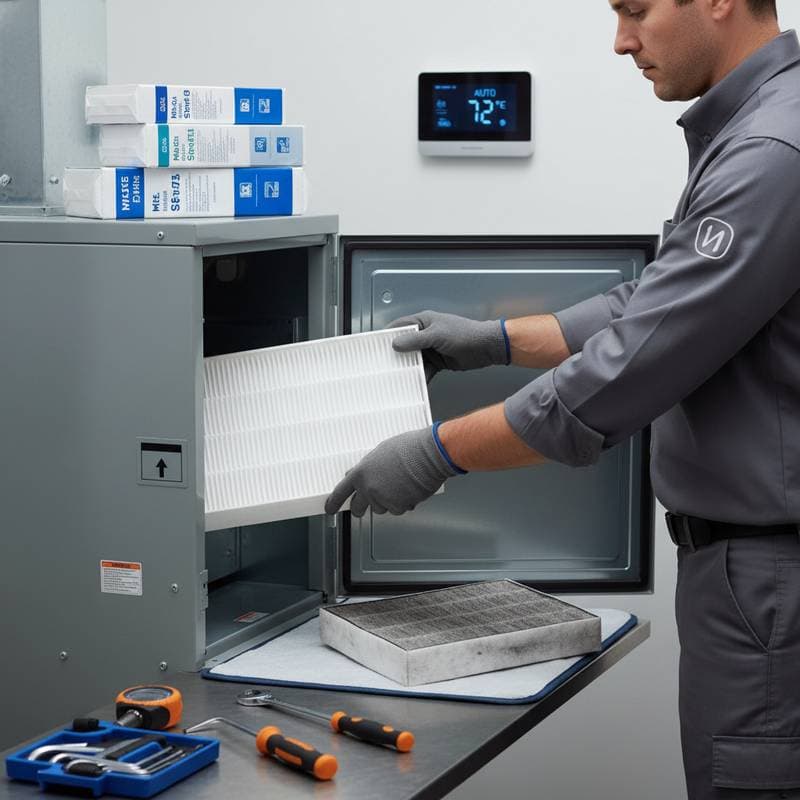
Fall HVAC Filter Replacement Guide
A home never feels quite as comfortable as it should when the air feels heavy or dusty. That stale feeling often comes from something simple. An old HVAC filter creates this issue in many homes. As cooler months approach, replacing the filter ranks among the easiest steps to maintain clean air and efficient system performance.
Why Filter Replacement Matters
A clogged filter restricts airflow and forces the furnace or heat pump to work harder. This strain raises energy bills and shortens equipment life. The filter also shields occupants from dust, pollen, and pet dander that accumulate in ductwork. Warning signs include uneven heating, visible dust buildup, and unusual odors when the system starts.
Recommended Replacement Schedule
Most homes benefit from filter changes every 30 to 90 days. Timing depends on filter type, household activity, and system use. A single occupant in a low-dust home may reach 90 days. Families with pets often need monthly changes.
| Filter Type | Thickness | Recommended Replacement Interval | Ideal For |
|---|---|---|---|
| Fiberglass | 1 inch | Every 30 days | Budget-friendly, minimal filtration |
| Pleated (MERV 8-13) | 1-2 inches | Every 60 to 90 days | Balanced efficiency and airflow |
| Washable Electrostatic | Reusable | Clean monthly | Eco-conscious homeowners |
| HEPA | 4-5 inches | Every 6 to 12 months | High allergen control and clean air |
Check for gray dust or reduced airflow and replace sooner if needed. Seasonal transitions provide good opportunities to install a fresh filter.
Selecting the Correct Size
Examine the current filter frame for printed dimensions. Common sizes include 16x20x1, 20x25x1, and 16x25x4 inches. Measure length, width, and thickness to verify fit. A filter that is too small allows unfiltered air to bypass the media. One that is too large fails to seat properly.
Align the arrow on the new filter frame with the direction of airflow, typically toward the furnace. Seat the filter snugly without forcing it into the housing.
Filter Types and Selection Criteria
Filter choice depends on priorities such as air quality, efficiency, or cost.
Fiberglass Filters
Fiberglass options cost between 2 and 5 dollars each. They capture large particles like lint yet provide limited allergen protection. These suit homes without pets or allergy concerns. Replace them every 30 days.
Pleated Filters
Pleated filters rated MERV 8 to 13 capture finer particles including mold spores and pet dander. Prices range from 10 to 30 dollars. They offer reliable performance for most households without excessive airflow restriction.
Electrostatic Filters
Electrostatic models use static charge to attract particles and can be washed for reuse. Initial cost falls between 30 and 50 dollars, with several years of service possible. Rinse monthly and allow complete drying before reinstallation.
HEPA Filters
HEPA filters remove up to 99.97 percent of particles as small as 0.3 microns. They suit allergy sufferers yet require system compatibility checks. Consult manufacturer guidelines or a technician before installation.
MERV Rating Overview
MERV measures particle capture efficiency between 0.3 and 10 microns. Higher ratings improve filtration but increase airflow resistance.
- MERV 1-4 provides basic protection against large dust.
- MERV 5-8 handles standard household dust and pollen.
- MERV 9-12 captures pet dander and mold spores.
- MERV 13-16 offers hospital-grade performance against bacteria and smoke.
A MERV 8 to 12 rating balances clean air with system efficiency for most residences.
Step-by-Step Replacement Process
Filter changes require less than 10 minutes for most homeowners.
- Turn off the system at the thermostat.
- Locate the filter slot behind the return grille or inside the furnace cabinet.
- Remove the old filter to avoid spilling dust.
- Note size and airflow direction on the old frame.
- Insert the new filter with the arrow pointing toward the blower.
- Replace the panel and restore power.
A screwdriver and flashlight assist with some installations.
Mistakes That Reduce Effectiveness
Several common errors undermine filter performance.
- Skipping scheduled changes allows dirt accumulation.
- Selecting the wrong size permits bypass or improper fit.
- Reversing airflow direction reduces filtration.
- Using high-MERV filters on incompatible systems restricts airflow.
- Neglecting washable filters lowers their efficiency.
Consistent attention protects both air quality and equipment.
Situations Requiring Professional Help
Contact an HVAC technician when the system continues to struggle after filter replacement. Unusual noises, burning smells, or damaged access panels also warrant service. Technicians evaluate duct conditions and confirm compatibility for advanced filtration upgrades.
Special Household Needs
Residents with respiratory conditions or allergies benefit from higher MERV ratings or whole-house purifiers. Position access panels for easy reach. Homes with pets gain from pleated filters that include activated carbon for odor control.
Energy Savings and Costs
Clean filters improve airflow and reduce energy use by 5 to 10 percent on average. Annual filter expenses range from 30 to 100 dollars. This investment avoids higher costs from service calls caused by restricted airflow.
Maintain Consistent Filter Care
Check the filter monthly during peak seasons. Replace or clean it at the first sign of visible dirt. Record the installation date on the frame to track future changes.




