2026 HVAC Filter Schedule: Best Types for Fall Changes
When cooler weather arrives, homeowners often focus on heating performance. They may overlook how the filter inside the HVAC system affects indoor air quality. A clear and consistent filter schedule allows the system to run efficiently. It also protects equipment and maintains cleaner air throughout the home.
This guide presents the recommended HVAC filter schedule for cooler months. It identifies which filter types suit fall conditions best. Practical steps for maintenance appear for both independent homeowners and those who prefer professional support.
Understanding MERV Ratings and Why They Matter
The Minimum Efficiency Reporting Value rating indicates how effectively a filter captures airborne particles. Higher ratings provide finer filtration. However, a rating that exceeds system capacity can restrict airflow and increase energy use.
- MERV 1 to 4 captures large particles such as dust and lint. These filters suit older systems or window units.
- MERV 5 to 8 traps smaller particles including mold spores and pet dander. Most residential systems perform well with this range.
- MERV 9 to 12 removes finer particles such as bacteria and fine dust. Households with allergies or pets benefit from this level.
- MERV 13 to 16 captures very fine particles including smoke and microscopic allergens. Homes with specific medical requirements or poor outdoor air quality often require this rating.
Match the selected rating to manufacturer specifications to avoid blower strain. When uncertainty exists, consult a licensed technician before purchase.
Recommended Filter Types for Fall Air Quality
Fall conditions require filters that balance particle capture with adequate airflow. The following options address common household needs during this season.
Pleated Filters
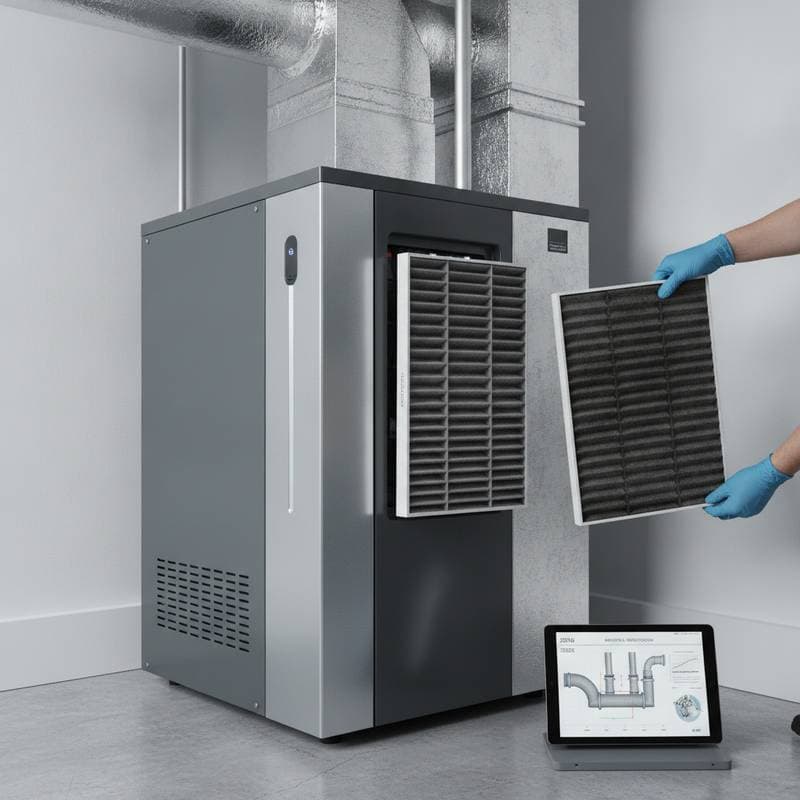
Pleated filters consist of polyester or cotton folds. They capture small particles while maintaining longer service life than fiberglass models. Most homeowners achieve good results with MERV 8 to 12 pleated filters during fall.
Electrostatic Filters
Electrostatic filters employ self charging fibers that attract particles. They are available in disposable or washable forms. Families with pets or allergy concerns find these filters effective when windows remain closed.
High Efficiency Filters
Filters rated MERV 13 to 16 capture microscopic contaminants. They improve air quality yet may reduce airflow in systems not designed for higher pressure drops. Install them only after confirming system compatibility.
Activated Carbon Filters
Activated carbon filters address odors from fireplaces, cooking, or outdoor sources. They remove gases that standard filters cannot capture. Many homeowners pair carbon filters with pleated models for combined particle and odor control.
Washable Filters
Washable filters reduce long term replacement costs. They require thorough cleaning and complete drying after each use. Consistent maintenance prevents mold growth in these units.
Deciding Between DIY and Professional Service
Filter replacement remains straightforward for accessible systems. The choice between independent work and professional service depends on equipment layout and personal comfort.
Independent Replacement
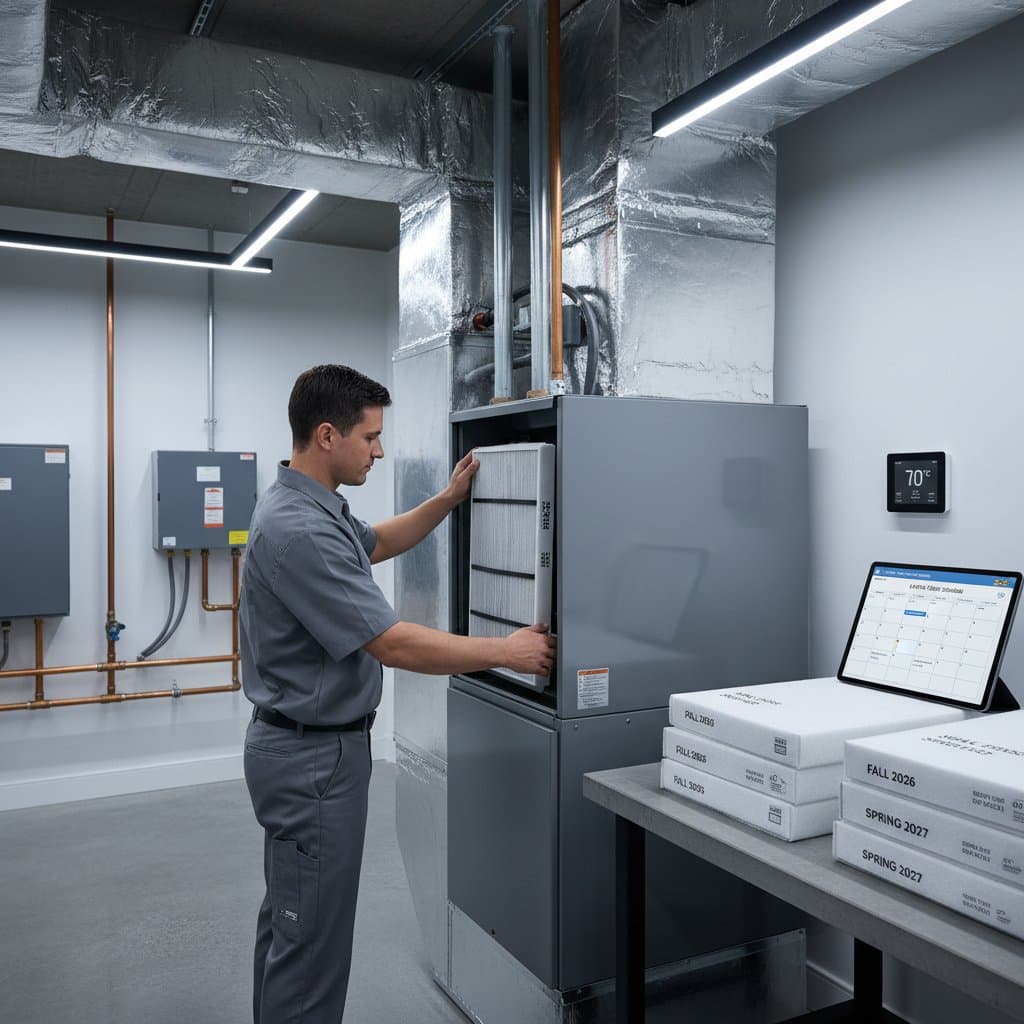
Independent replacement works best for central systems with accessible panels. Turn off the HVAC unit. Locate the filter housing near the return vent. Remove the old filter and note the airflow arrows. Insert the new filter with arrows oriented correctly. Restore power and verify operation. The process requires under ten minutes and no tools.
Professional Service
Professional service suits complex systems, rooftop units, or homes with integrated air purifiers. Technicians measure pressure drops, inspect duct seals, and verify temperature differentials. They also supply specialized filters unavailable at retail outlets.
Setting Up a Reliable Replacement Reminder System
Consistent timing prevents performance decline. Several methods help maintain schedule adherence.
- Enable filter reminders on smart thermostats that track runtime hours.
- Mark replacement dates on a calendar or phone application.
- Write the installation date on the filter frame with a permanent marker.
- Use dedicated home maintenance applications that send timed alerts.
Protecting Your HVAC System Long Term
Regular filter changes preserve coil efficiency and reduce fan wear. Homeowners who maintain schedules avoid unexpected repairs and stabilize utility costs. Select filters according to system requirements and replace them on schedule. This approach delivers cleaner air and reliable heating performance throughout the season.