2026 Greywater Recycling: True Installation Costs
Homeowners confront escalating water bills alongside heightened interest in sustainable practices. Greywater recycling captures water from sinks, showers, and laundry for reuse in irrigation or toilet flushing. Environmental advantages are evident, yet the financial implications of establishing a functional system warrant thorough examination. Grasping the actual installation expenses enables informed decisions regarding alignment with budgets and enduring objectives.
What Greywater Recycling Entails
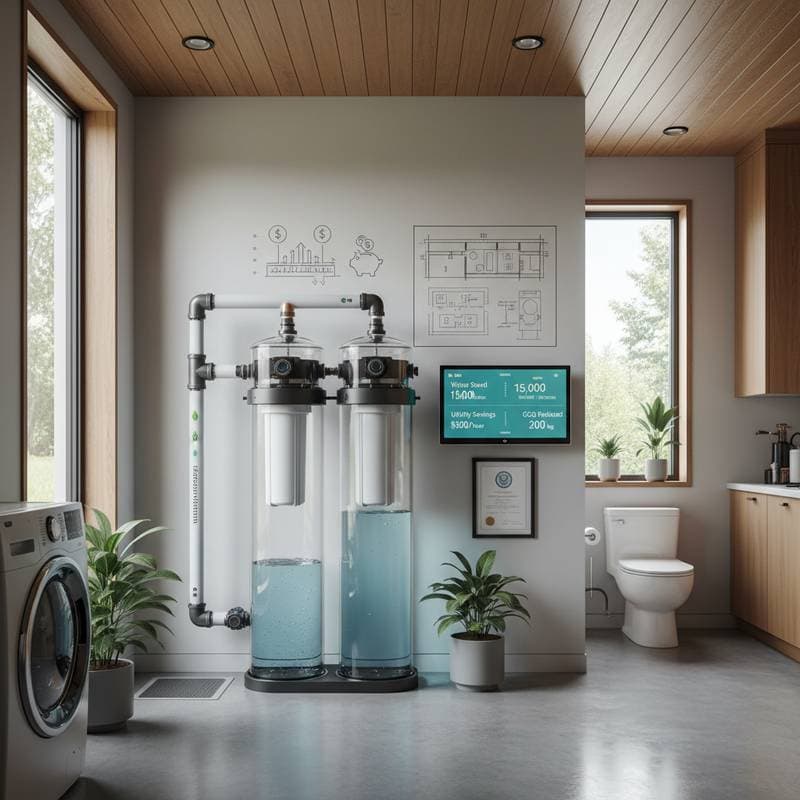
Greywater systems gather mildly contaminated water, apply filtration, and occasionally disinfection, then direct it through dedicated plumbing for non-potable applications. Configurations range from straightforward diverter setups that channel laundry effluent to gardens, to intricate arrangements featuring filtration reservoirs, pumps, and automated regulators.
Systems typically divide into two primary types:
- Diverter systems: These intercept water from a single point, such as a washing machine or shower outlet, and convey it to exterior irrigation zones. Such options present the lowest expense and demand minimal plumbing modifications.
- Treatment systems: These incorporate filtration chambers, sedimentation basins, and disinfection mechanisms to render water appropriate for indoor purposes like toilet replenishment. Higher costs accompany these, but they expand utility possibilities.
Distinguishing these variants proves essential for precise cost projections.
Basic Cost Breakdown
Expenses for greywater recycling systems hinge on household scale, plumbing integration points, and purification extent. Typical ranges include:
- Compact diverter system: $800 to $2,500, encompassing materials and labor.
- Intermediate filtered system: $2,500 to $6,000, incorporating reservoirs, strainers, and propulsion units.
- Comprehensive whole-house treatment system: $6,000 to $15,000 or higher, scaled to volume and mechanization levels.
These estimates generally account for expert installation. Self-directed efforts may lower outlays, provided adherence to plumbing regulations through permits and evaluations.
Key Factors Influencing Cost
System Complexity
A setup recycling solely laundry output incurs lower costs than one managing multiple bathrooms and lavatories. Additional integration sites and purification phases elevate expenditures. Elaborate designs frequently necessitate supplementary pumps and reserve reservoirs to sustain hydraulic equilibrium.
Existing Plumbing Configuration
Structures with readily accessible conduits facilitate economical retrofits. In aged dwellings, where conduits lie embedded in walls or foundations, modifications may involve incisions and diversions, potentially doubling workforce charges. Fresh builds afford optimal integration, as infrastructure accommodates greywater pathways from inception.
Treatment Intensity
Elementary strainers employing mesh or granular media remain economical and straightforward to service. Configurations with ultraviolet irradiation or chlorination for pathogen elimination incur greater costs yet permit interior applications. Each supplementary element introduces material outlays and upkeep obligations.
Local Regulations and Permits
Building standards differ across regions. Certain areas mandate engineered schematics and sanitary oversight prior to deployment. Authorization charges span $100 to $800, while verification postponements may inflate labor fees. Prospective installers must consult municipal directives before acquiring components to circumvent expensive alterations.
Storage and Distribution Mechanisms
For irrigation reuse, containment vessels store effluent pending plant uptake. Capacities from 100 to 500 gallons cost $300 to $1,200, varying by dimensions and composition. Propulsion devices and regulatory fixtures contribute $150 to $500. Gravity-dependent flows prove less costly but necessitate downhill positioning for recipient areas.
Overlooked Expenses
Beyond initial bids, subsequent charges emerge. Frequently disregarded items encompass:
- Upkeep and strainer renewal: Anticipate $100 to $300 yearly for cleansing and replacements.
- Power consumption: Mechanized propulsion incurs modest ongoing electricity, totaling $20 to $60 annually.
- Periodic evaluations or repairs: Jurisdictions may stipulate certified technician reviews at $75 to $200 each.
- Site modifications: Delivery networks might require precision emitters or humidity detectors for secure dispersal.
Omitting these elements skews return timelines; incorporate them into fiscal strategies.
DIY Versus Professional Installation
Self-managed initiatives appeal to capable individuals seeking labor savings. Fundamental diverter assemblies utilize conventional plumbing implements. However, errors in conveyance or reflux safeguards pose sanitary risks or regulatory infractions. Experts guarantee conformity and enhance efficiency via precise component scaling.
Qualified plumbers levy $60 to $120 hourly, with elementary projects spanning 10 to 20 hours. Intricate multi-zone deployments may involve electrical and horticultural collaboration, extending to 40 hours. Elevated initial investments often avert subsequent corrective expenditures.
Projecting Returns and Economies
Investment recovery varies with regional tariffs and consumption patterns. Arid locales with premium rates accelerate recoupment. A household of four conserves 15,000 to 25,000 gallons yearly via irrigation and lavatory recycling. At standard civic rates, savings reach $150 to $300 per year.
For a $5,000 intermediate system, recoupment spans 15 to 30 years. Escalating tariffs and scarcity mandates may compress this interval. Many regard such installations as ecological pledges enhancing asset durability over mere fiscal ventures.
Available Incentives
Heightened scarcity consciousness prompts rebate initiatives in select areas, offsetting 10 to 30 percent of totals. Providers furnish credits for reservoirs, strainers, or dispersal regulators. Inquirers should engage local water entities or peruse regional conservation offerings for qualifying reductions. Eligibility typically demands verified expert deployment and verification.
Installation Hurdles
Water Composition Fluctuations
Effluent attributes shift with cleansing agents and formulations. Robust designs accommodate variances to avert obstructions or phytotoxicity. Opt for eco-compatible, sodium-scarce products to preserve operational integrity.
Obstructions and Aromas
Inadequate straining or prolonged retention fosters scents or algal proliferation. Routine purging and media exchanges mitigate accumulations. Access panels streamline decontamination.
Component Scaling
Excessive capacities invite stagnation or inefficiency. Experts compute effluent yields from domestic routines to calibrate reservoirs and drivers accurately.
Regulatory Adherence
Provisions often bar edible crop applications or mandate potable segregation. Absent reflux barriers invite penalties. Pre-purchase consultations with licensed specialists forestall conformity pitfalls.
Broader Advantages
Greywater recycling diminishes municipal withdrawals, eases treatment facility loads, and sustains aridity-resistant landscapes. Adopters cultivate heightened usage mindfulness. For certification pursuits or market enhancement, operational systems bolster appeal.
A 2023 r/HomeImprovement survey indicated over 60 percent of installers valued ecological gains above fiscal outlays, underscoring a pivot to viable conservation.
Practical Implementation Strategies
- Initiate modestly with laundry diversion to assess viability prior to expansion.
- Employ accessible mesh or granular strainers to prolong mechanical longevity.
- Denote conduits distinctly to preclude potable mix-ups.
- Log conservation metrics routinely to detect anomalies.
- Schedule upkeep cycles for straining and linkages quarterly.
Sustaining System Efficacy
Post-deployment, diligent care upholds reliability. Renew straining media upon flow impediments, and secure reservoirs against vectors. Routine audits preempt deteriorations.
Greywater integration fosters enduring autonomy, nurtures environs, and advances collective stewardship. During overhauls or builds, such incorporations optimize fiscal and functional outcomes.