New Water Heater Standards Add Costs, Cut Energy Waste
New federal water heater standards are setting the stage for major changes in home energy performance. Homeowners, installers, and manufacturers will all experience shifts in how systems are built, priced, and maintained. These updates emphasize improved efficiency and reduced wasted energy, leading to lower long-term operating costs despite higher upfront expenses for many units.
What the New Rules Mean for Homeowners
The updated rules establish higher minimum efficiency levels for both tank and tankless water heaters. Larger storage models must incorporate advanced heat pump or condensing technology. Smaller units require enhanced insulation and precise control systems. Gas and electric systems now meet stricter performance targets, resulting in cleaner and more efficient operation.
For the average homeowner, these changes translate to reduced energy waste and faster hot water recovery. Systems retain heat longer and convert energy more effectively into usable hot water. Although monthly bills may decrease, purchasers will encounter elevated prices for new units.
Expected Cost Changes
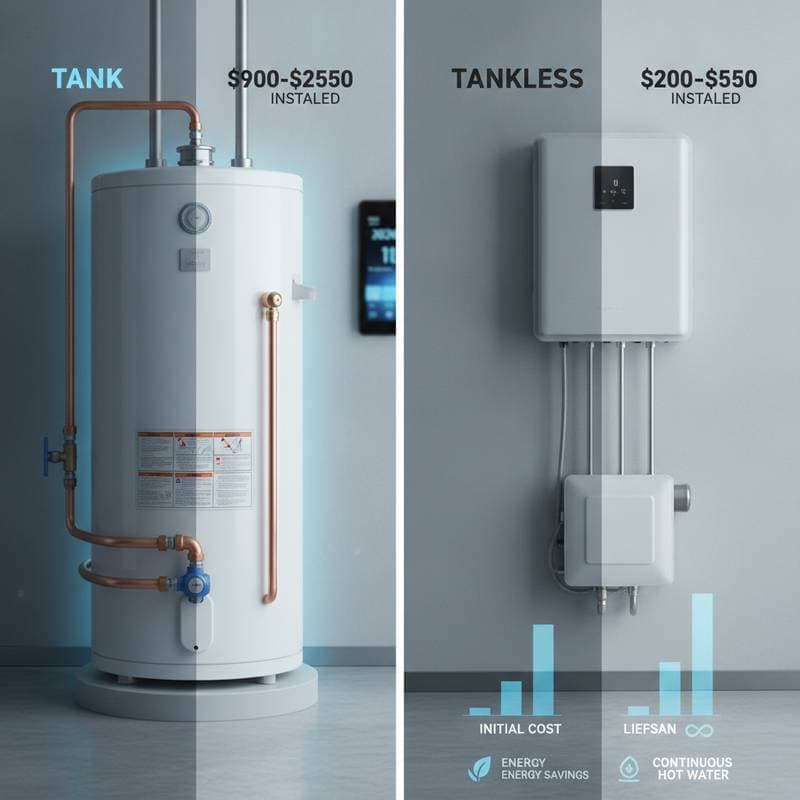
Compliance costs differ by model type. Tank-style water heaters may increase in price by 300 to 600 dollars due to added insulation, integrated sensors, and upgraded venting systems. Tankless models, which often already surpass current standards, might see modest increases of 100 to 300 dollars.
Estimated price ranges for new compliant units:
- Standard tank models: 800 to 1,500 dollars
- Hybrid or heat pump models: 1,500 to 3,000 dollars
- Tankless models: 1,000 to 2,500 dollars, based on capacity and features
Homeowners replacing older units should consider both equipment and installation expenses, which can add 500 to 1,000 dollars. Space needs may adjust, as heat pump models require clear airflow around the unit. Homes transitioning from gas to electric systems might need electrical panel upgrades to handle increased loads.
Suggested visual: A bar chart comparing current average costs with projected costs under the new standards.
Alt text: Chart showing expected price increases for tank, hybrid, and tankless water heaters after new efficiency rules.
Energy Efficiency Gains and Payback
The elevated initial costs deliver enduring advantages through substantial energy savings over the unit's lifespan. A typical family of four might reduce annual energy use by 20 to 40 percent, depending on household size and hot water usage patterns. These savings frequently recover the additional purchase expense within three to five years.
Tank models with heat pump technology can achieve efficiencies up to twice that of standard electric heaters, drawing ambient air to generate heat. Gas condensing systems recapture exhaust heat that standard models vent away, boosting overall performance by 15 to 25 percent. Over 10 to 15 years, cumulative savings on utility bills can exceed 1,000 dollars per household.
Installation and Maintenance Considerations
Transitioning to a compliant model often involves more than a direct replacement. Installers must adhere to manufacturer specifications to optimize efficiency and safety. Homeowners should prepare for the following steps:
- Proper sizing: Choose a unit based on peak-hour hot water demand, calculated from daily usage and fixture counts.
- Ventilation: Provide at least six inches of clearance for gas or hybrid systems to ensure safe operation.
- Drainage: Install condensate lines for models that produce moisture during operation.
- Electrical checks: Confirm that circuits support at least 30 amps and upgrade breakers if necessary.
Ongoing maintenance is essential for sustained performance. Inspect filters quarterly, wrap insulation jackets annually, and test safety valves every six months. Heat pump systems benefit from annual coil cleaning to prevent efficiency loss from dust buildup.
Questions Homeowners Often Ask
Will older water heaters need replacement right away? No, existing systems remain operational until they fail or reach the end of their service life. The rules apply only to new purchases after the 2026 effective date.
Can I still buy a gas water heater? Yes, provided it complies with the new efficiency thresholds. In regions with low gas prices, these units may remain viable, though electric heat pumps often prove more economical over time due to superior efficiency.
Do the rules affect tankless heaters? Tankless systems generally align well with the standards, but updated labeling and standardized testing will provide more accurate efficiency ratings for consumers to compare.
Steps to Prepare Your Home
Begin by evaluating current hot water needs through a simple audit of usage patterns. Research models certified under the new standards via manufacturer websites or energy efficiency databases. Obtain multiple quotes from certified installers to gauge full project expenses, including any required modifications.
Explore available rebates from utilities or federal programs, which can offset 200 to 500 dollars for qualifying high-efficiency installations. Schedule assessments early to avoid delays as demand rises. This proactive approach secures reliable hot water supply while minimizing future energy costs and environmental impact.