Fall Septic Pumping: Key Timing and Cost Considerations
A properly maintained septic system manages one of the essential operations in a residence with minimal notice. Neglect leads to unpleasant, costly, and inconvenient outcomes. Fall stands out as the optimal period to arrange a septic pumping service. Cooler temperatures, a decreased water table, and reduced household water consumption create the most favorable conditions for inspection and upkeep. Thoughtful scheduling of pumping prevents extensive repairs and prolongs the operational life of the system.
Reasons Fall Excels for Septic Pumping
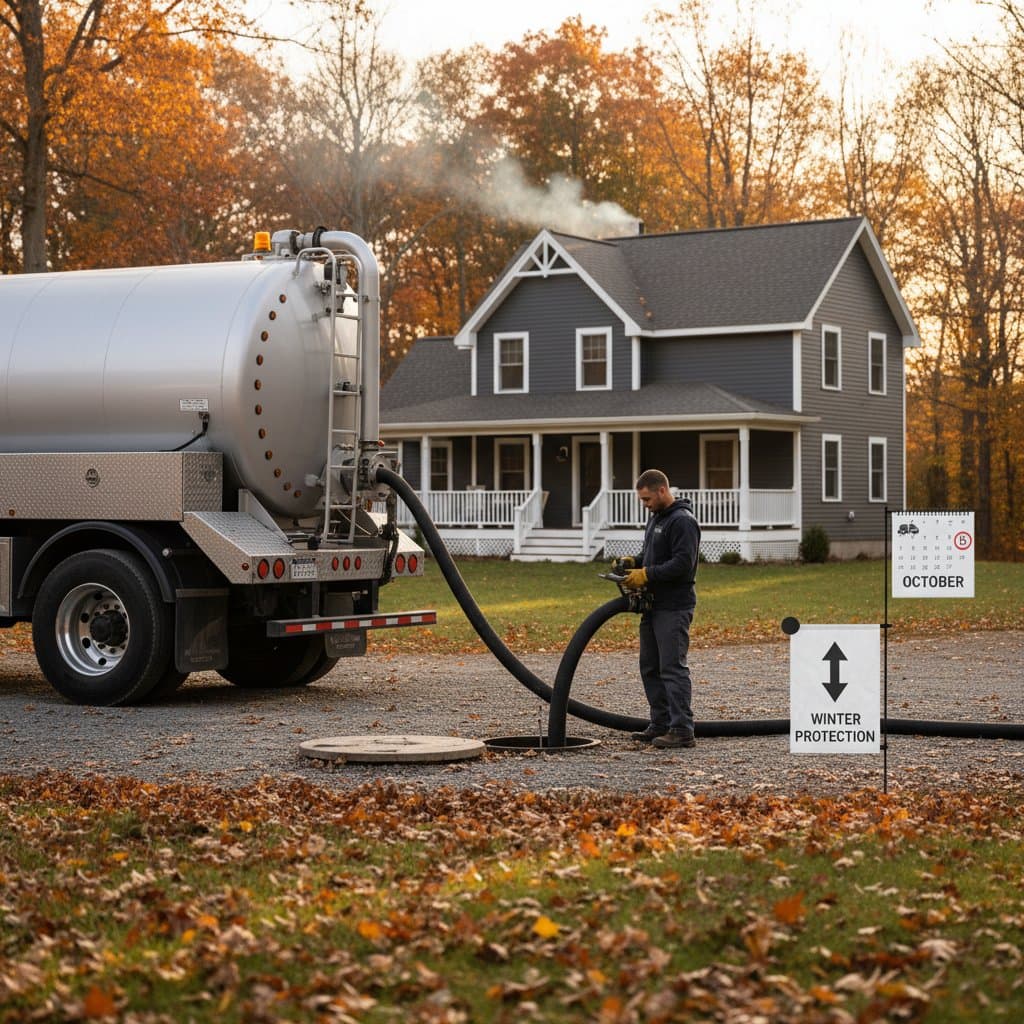
Septic systems function most effectively under consistent, moderate usage. Summer months impose additional stress through increased water demands from visitors, irrigation, and exterior washing. As fall sets in, this pressure eases. Pumping at this juncture readies the system for winter challenges, such as frozen soil or waterlogged earth that complicate access.
Service professionals favor fall appointments because the ground remains solid for heavy machinery. Mild daytime conditions allow the system to stabilize post-pumping without severe thermal fluctuations. Pre-winter pumping avoids solid accumulation that could trigger overflows during cold snaps.
Homeowners appreciate the practicality of fall service. Providers experience lighter schedules following peak summer demand, resulting in shorter wait times. A fall evaluation often uncovers minor concerns, such as slight leaks, obstructed baffles, or emerging root intrusions. Resolving these early averts winter disruptions and eliminates the need for urgent interventions.
Determining Pumping Intervals
Optimal pumping frequency hinges on household composition, tank dimensions, and consumption patterns. A standard family with a conventional setup requires service every three to five years, though variations occur. Homes equipped with garbage disposals, water softeners, or those hosting regular visitors demand more frequent attention.
Homeowners benefit from maintaining logs of service dates and findings. Numerous local health authorities and service firms provide digital calculators to predict intervals based on residents and tank capacity.
A practical guideline involves annual assessment of sludge and scum accumulation. Pumping becomes necessary when these layers combined occupy one-third of the tank volume. Professionals perform accurate measurements, as visual estimates prove unreliable.
Fall evaluations facilitate forward planning. Technicians forecast future needs even if immediate pumping proves unnecessary. Advance booking secures slots and sidesteps haste when symptoms appear.
Identifying Septic System Distress Signals
Distinct indicators reveal a full tank or malfunctioning setup. Drains that empty slowly across the residence, bubbling fixtures, or unpleasant smells near the leach field signal initial problems. Pooled water or excessively green vegetation above the drain field points to improper effluent dispersal.
Individuals occasionally confuse these for internal plumbing faults. When several fixtures exhibit issues that intensify with high water volume, the septic tank serves as the probable source.
Systems featuring pumps or sophisticated treatment often include alarms for elevated liquid levels, which precede overflows. Immediate professional contact follows activation, alongside water restriction until resolution.
Septic Pumping Procedure Overview
At the service visit, the expert identifies tank entry points and removes lids. A vacuum apparatus then withdraws all fluids and debris. Professionals agitate settled solids for thorough extraction. Post-emptying, examination checks for fractures, seepage, and the state of inlet and outlet devices.
The operation spans one to two hours, influenced by tank scale and site ease. Technicians subsequently introduce a modest water volume to verify circulation and component integrity.
Certain providers furnish electronic summaries with images and observations. These documents aid in historical tracking and prove useful during property transactions. Retaining service records assists in spotting patterns, such as accelerated accumulation or persistent faults.
Fall Pumping Expense Breakdown
Pumping fees differ by location, tank dimensions, and site challenges. Expect $200 to $600 for a typical home system. Oversized tanks or obstructed approaches elevate charges through extended labor or specialized tools.
Key pricing elements include:
- Tank Dimensions: Greater capacity demands prolonged effort and higher disposal quantities.
- Internal State: Dense or solidified waste necessitates additional agitation and removal.
- Site Accessibility: Excavation for buried covers or maneuvering in confined areas boosts labor expenses.
- Disposal Logistics: Fees fluctuate with regulatory requirements and transport to processing facilities.
Annual contracts from some firms lower per-service rates and incorporate evaluations. Consistent adherence to schedules minimizes long-term expenditures by forestalling repairs and after-hours fees. Routine care may also support insurance claims related to septic-induced damages.
Homeowner Actions Between Professional Services
Licensed experts handle pumping, yet residents can ease system burden via everyday practices. Distribute laundry cycles, install water-efficient appliances, and fix drips to lessen inflow. Refrain from disposing of non-degradables, fats, or harsh substances, which harm microbial activity and obstruct conduits.
Route downspouts and yard drainage clear of the drain field to avoid overload. Document tank position to prevent harm from vehicles or excavations.
Commercial bacterial enhancers receive promotion as helpers, but specialists deem them redundant. Indigenous microbes suffice for decomposition. Emphasize conservation and periodic checks instead.
Developing a Fall Maintenance Routine
Establish a structured plan with a task inventory covering assessments, extractions, and upkeep. Position fall as the core service phase. A sample timeline encompasses:
- Initial Fall Review: Engage a specialist to gauge accumulation, structural soundness, and field performance.
- Central Fall Extraction: Arrange complete draining if thresholds exceed limits or prior service dates three years passed.
- End-of-Fall Safeguards: Shield visible piping, verify cover fastenings, and redirect surface water pre-freeze.
Calendar alerts or apps maintain adherence. Integrate septic tasks with autumn duties like debris removal or heating system checks. Consolidation streamlines management and budgeting.
Balancing Self-Monitoring with Expert Intervention
While personal vigilance and observations contribute, expert involvement proves indispensable. Specialists deploy tools for precise depth readings, baffle evaluations, and hydraulic testing. They ensure compliant waste handling per local codes.
Resident efforts center on proactive measures. Track consumption, log intervals, and preserve field clearance from vegetation or loads. Experts address the complexities that sustain longevity.
This hybrid strategy optimizes outcomes. Steady owner oversight paired with programmed professional support guarantees enduring reliability.
Securing Long-Term System Performance
Diligent septic management bolsters residential well-being, worth, and security. Fall service delivers ideal alignment of practicality and foresight. Preemptive winter preparation curtails emergency risks and amplifies asset durability.
Institute alerts for reviews, document service timelines, and uphold balanced usage throughout the year. Adhering to cycles every few years with thorough records minimizes unforeseen breakdowns.
Integrated into routine upkeep, septic attention turns routine and economical. Annual fall engagements avert substantial fixes and sustain seamless operations. Prioritize regularity, vigilance, and prompt responses to equip your system for sustained seasonal demands.